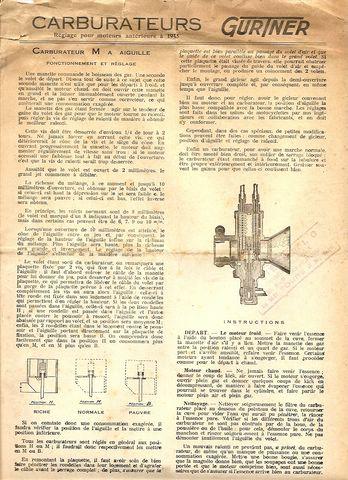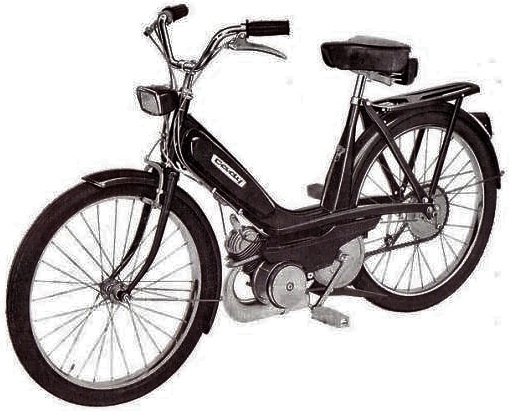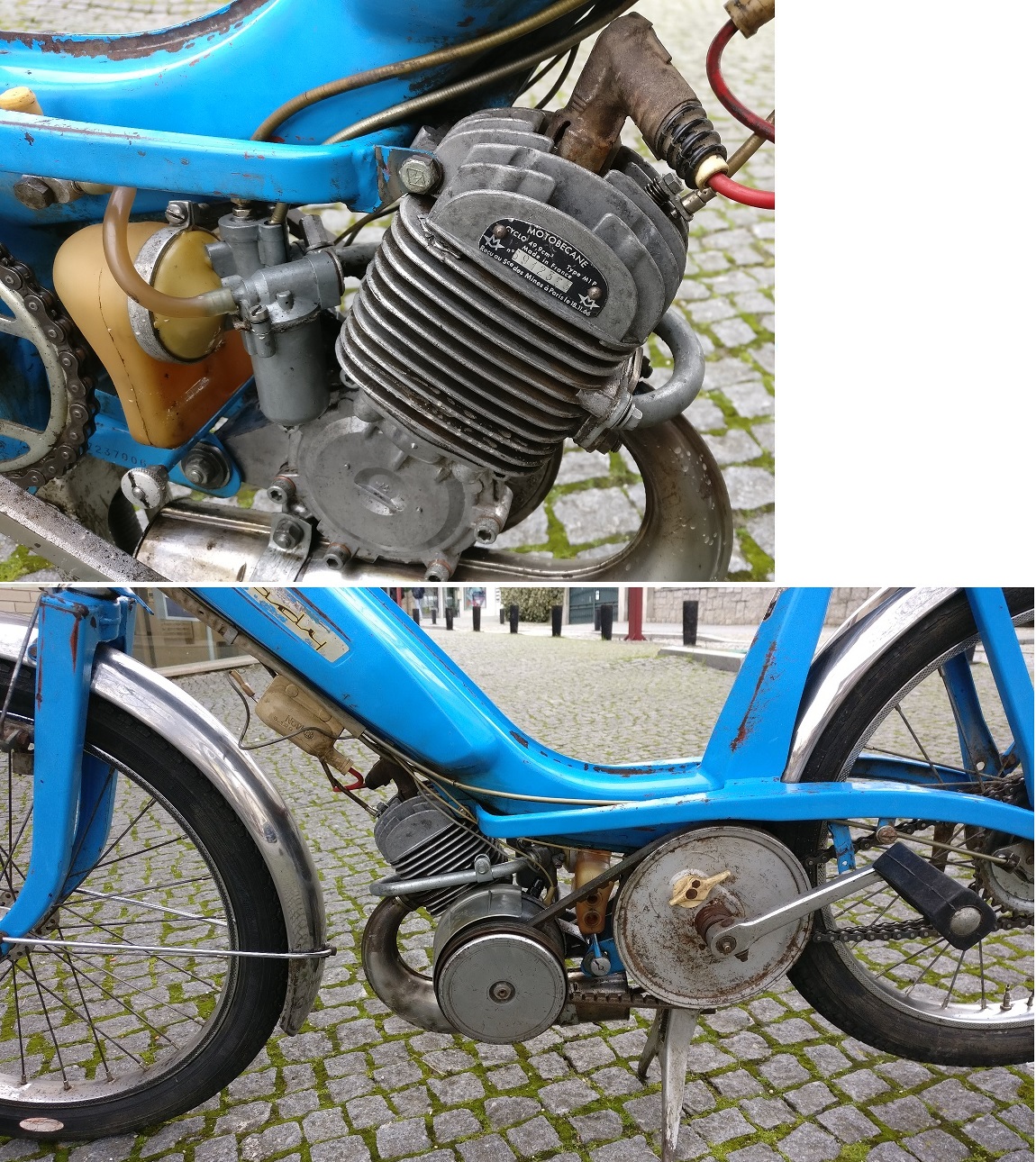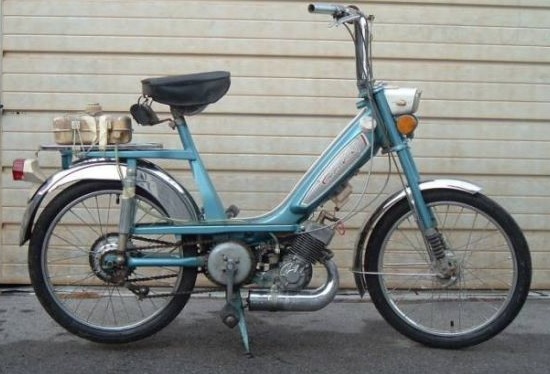
Gurtner Service

July 25, 2016

Contents:    1. Peugeot Carb Service     2. Motobecane Carb Service

1. Peugeot Carburetor ServicePeugeot 1980 tiny

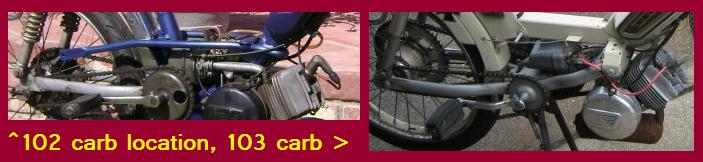
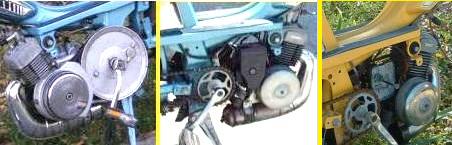
Welcome. Here is service information for 1976-1980 Peugeot 102 and 103 moped carburetors (US models).

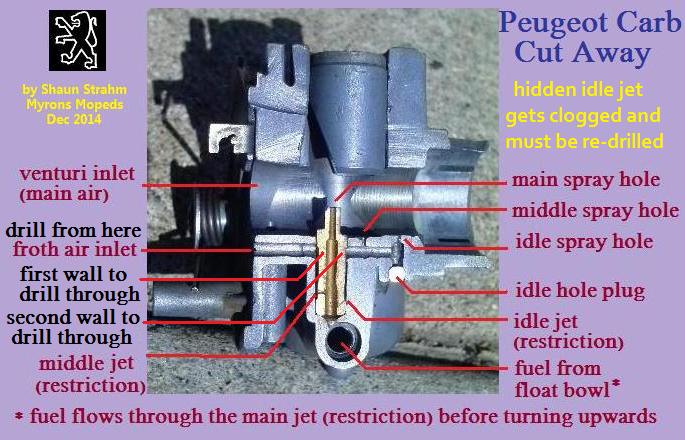
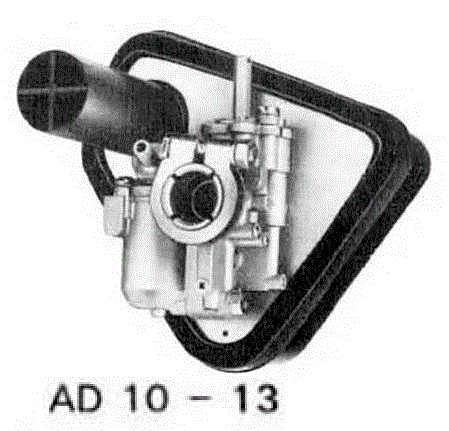
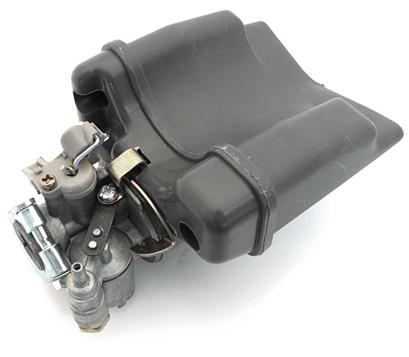
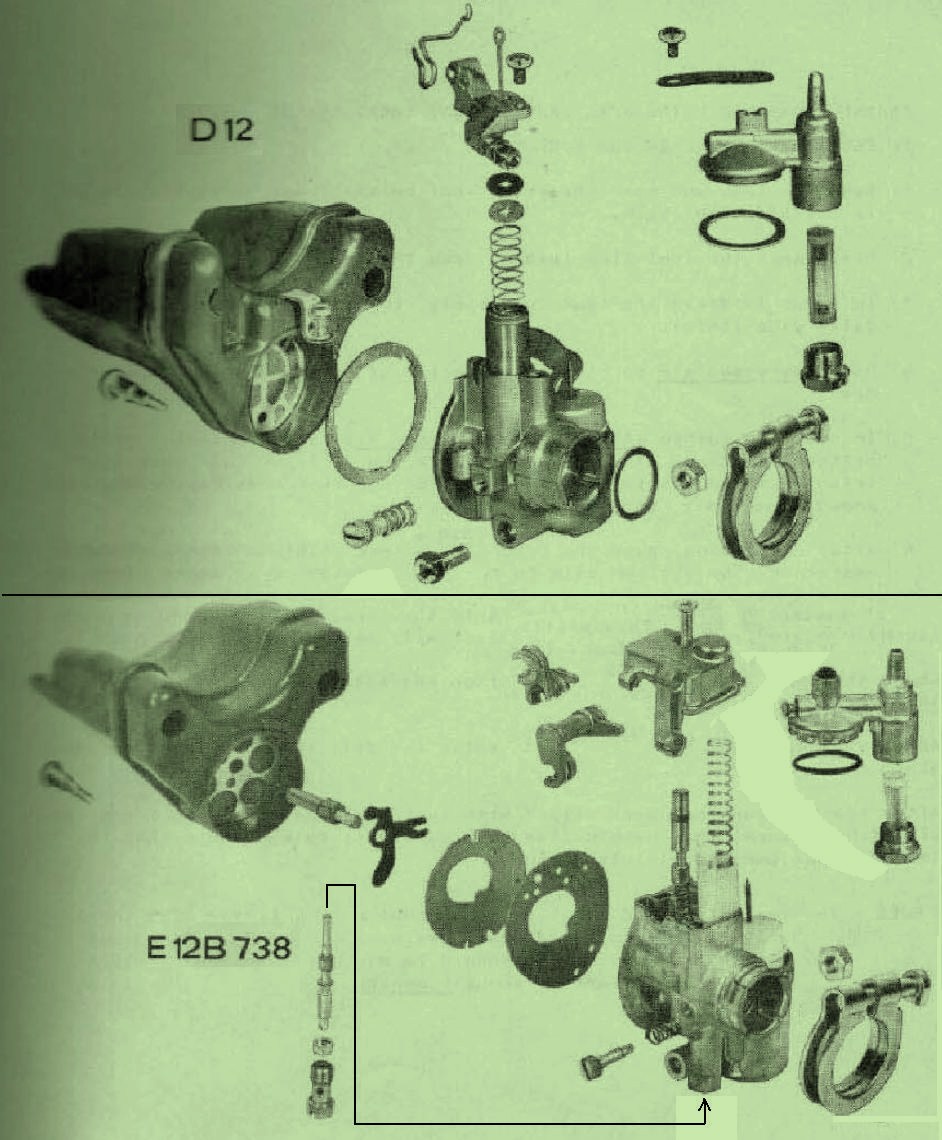
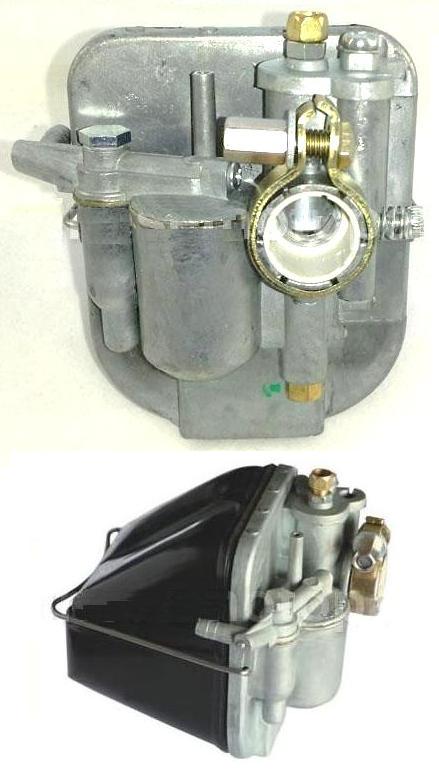
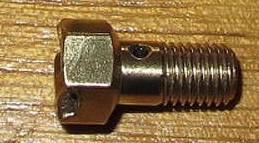
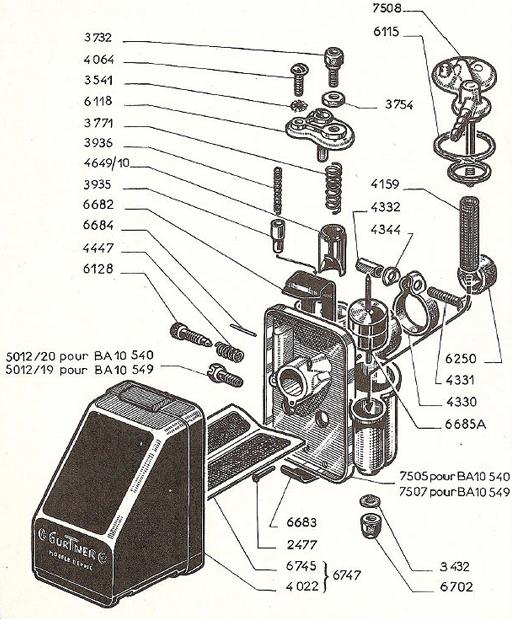
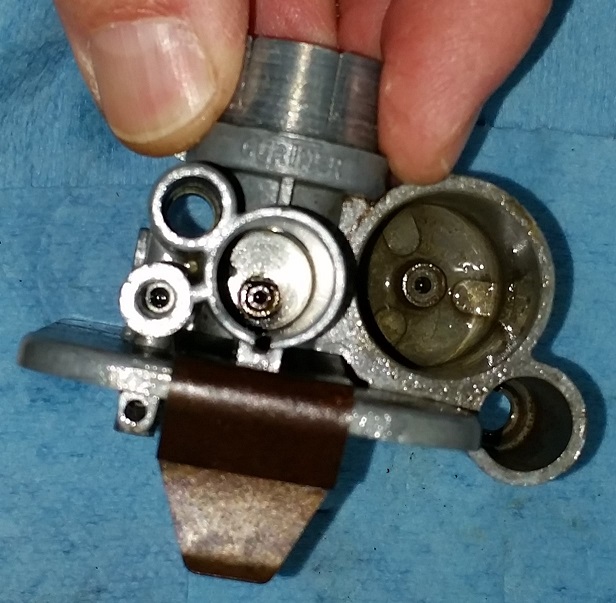
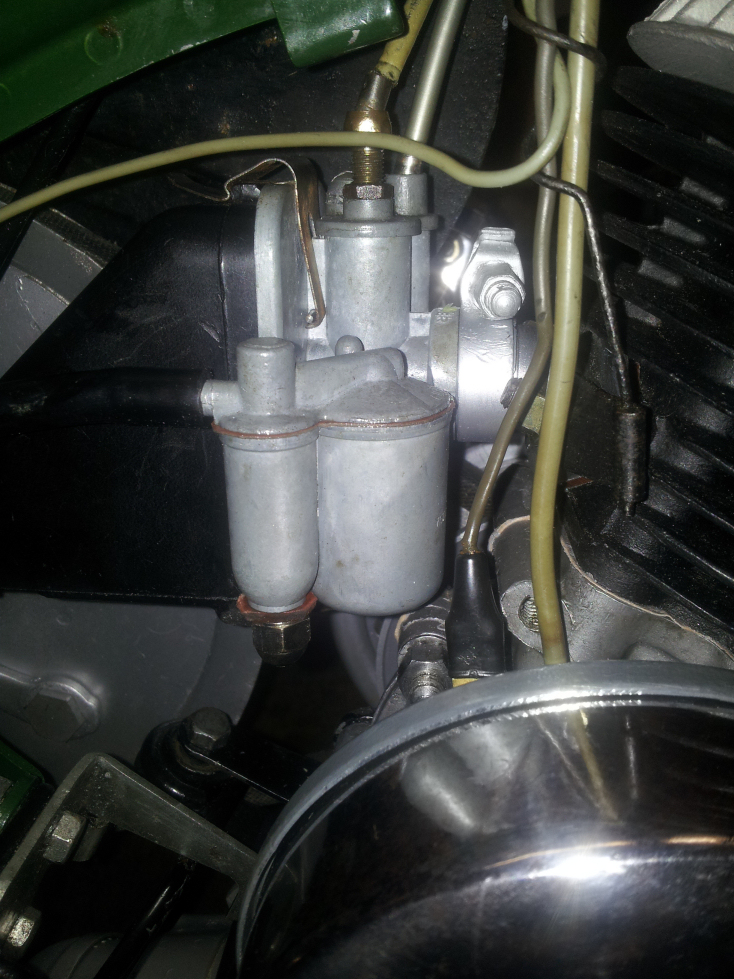
These carburetors are French made, by Gurtner, size 12mm, 10mm, or 8.5mm for different speed versions. They can be quick-serviced without carb removal. The main jet is the brass hexagonal slot head facing the right side, at the bottom. It is also a drain plug for quick flushing. If you are out riding and your main jet gets clogged, causing the engine to not run, you can easily remove the jet with just a key, coin or screwdriver, blow it out with your lips, put it back, restart and continue your ride. That is one of Peugeot’s best features. 

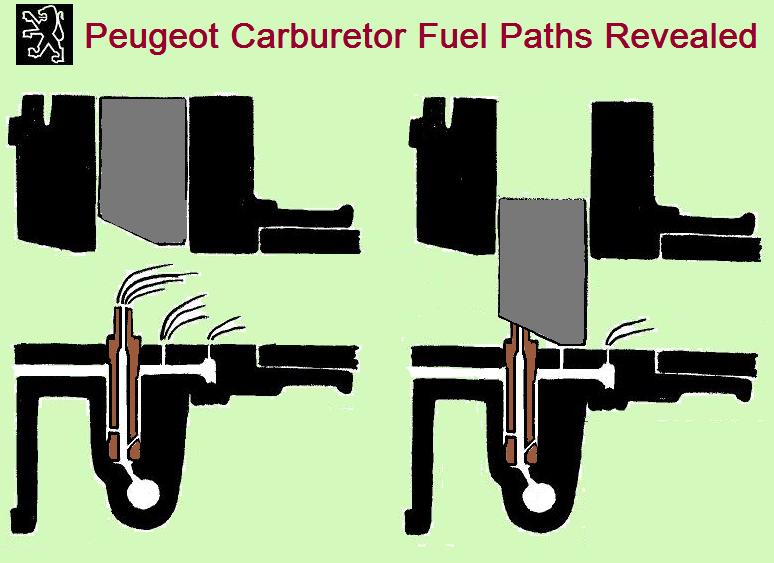
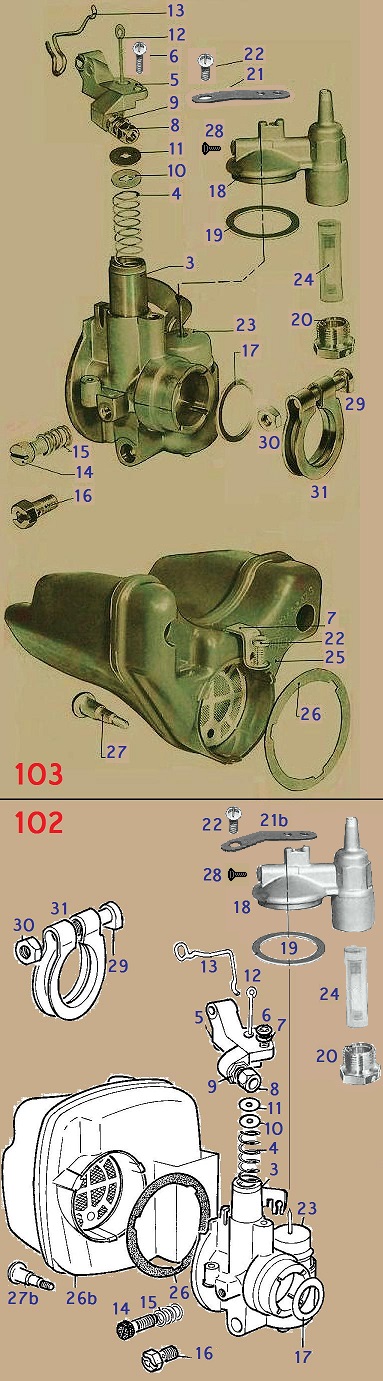
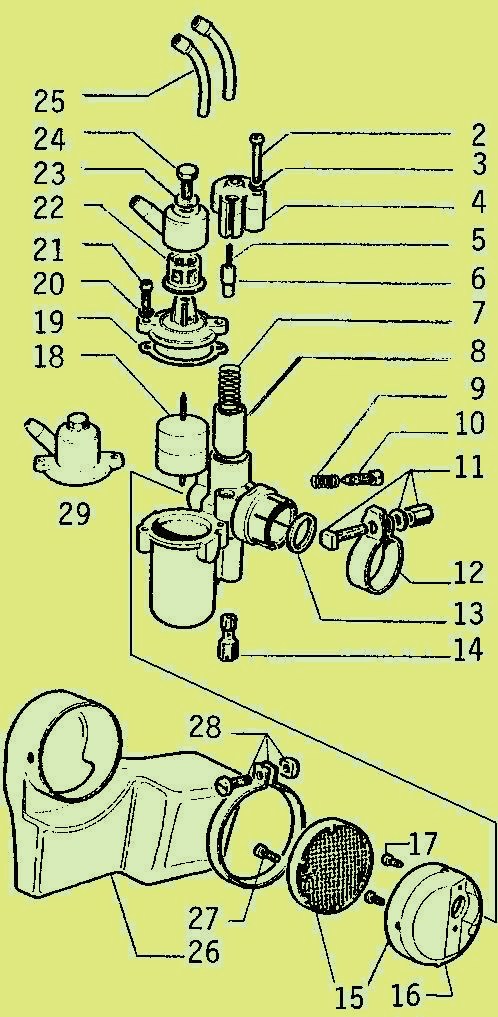
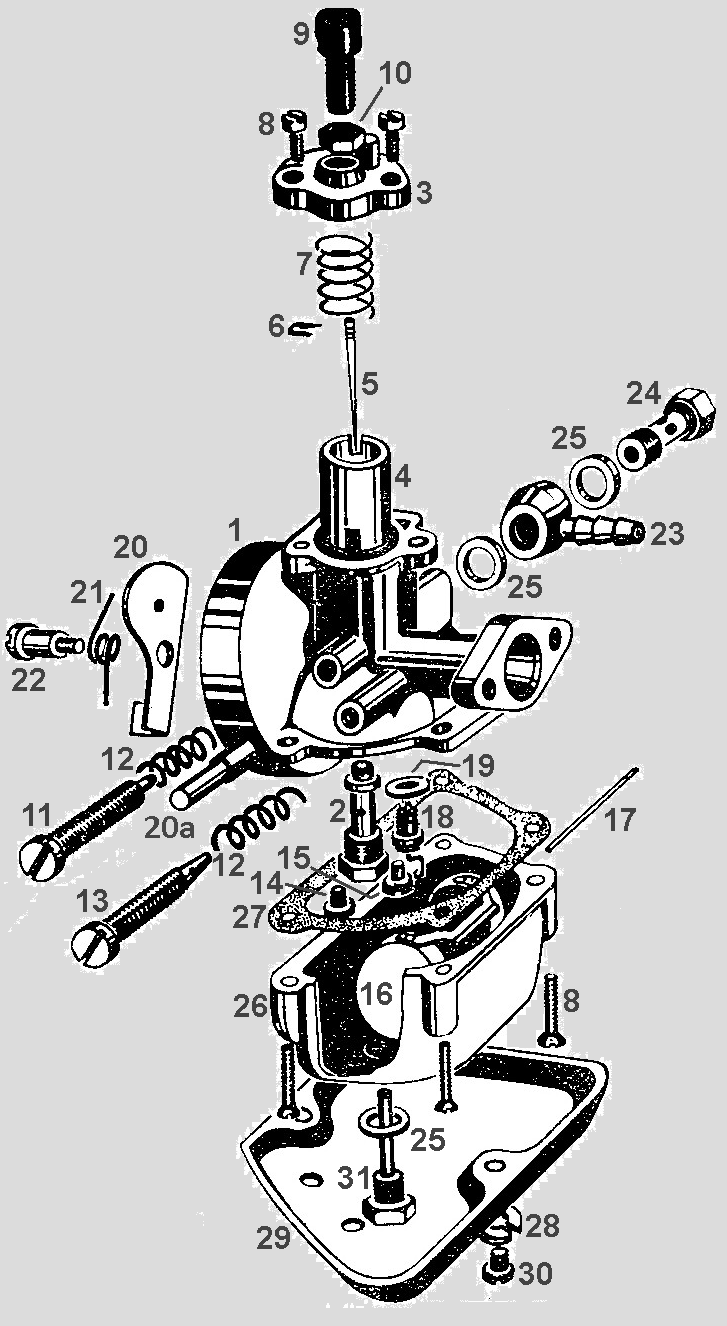
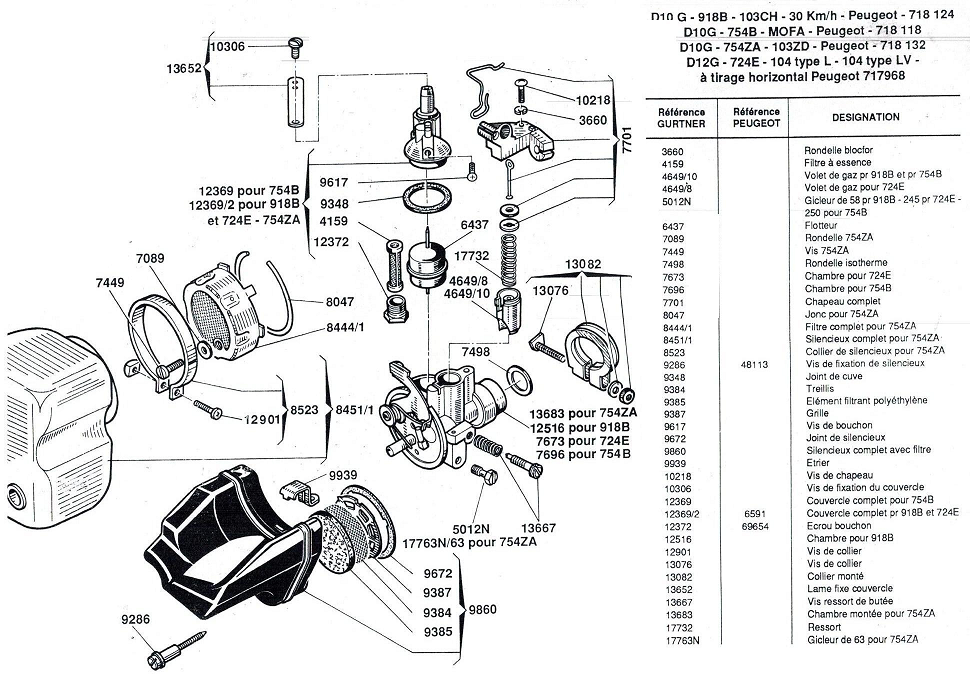
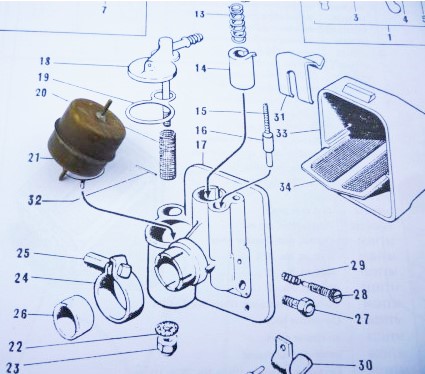
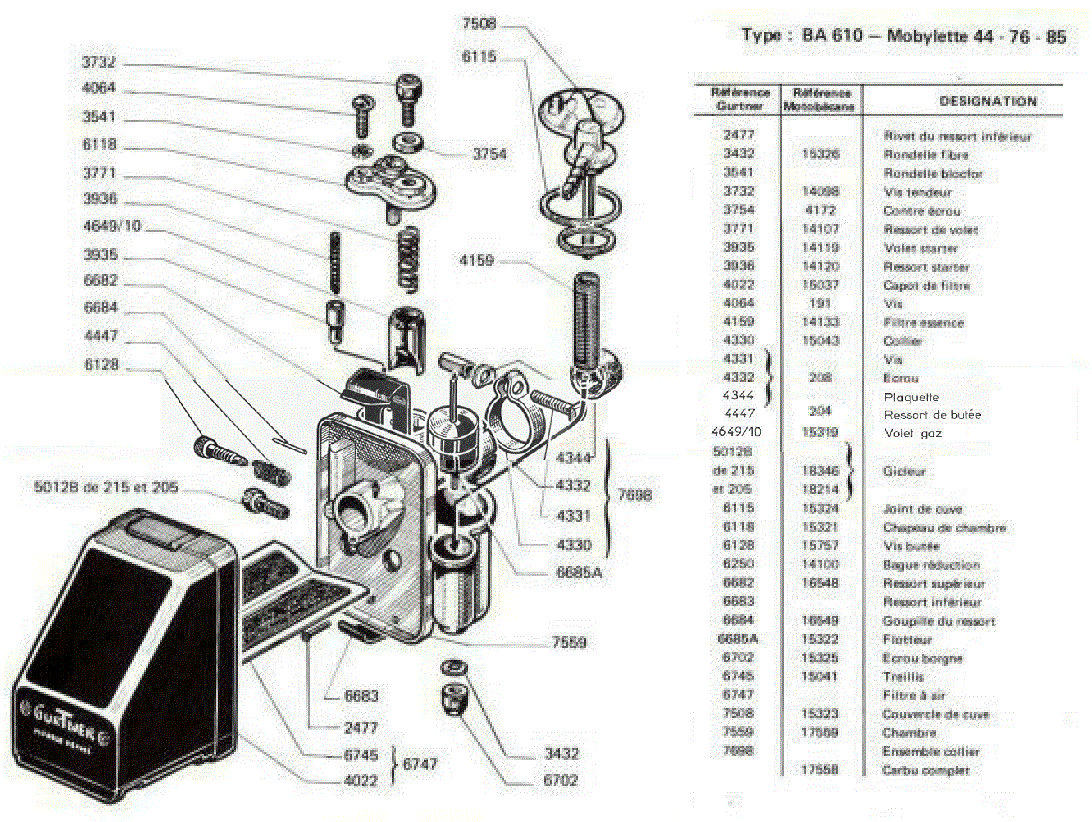
Peugeot Carb Diagram

How it Works

There are three spray holes. When the engine is idling, the throttle slide is down, and the first two spray holes are shielded from the moving air. When the throttle is opened, the slide is up and out of the way. All three spray holes are active. The first (main) spray hole flows about 3 times as much as the second (middle) spray hole, which in turn flows about 3 times as much as the third (idle) spray hole. So the idle uses about one ninth as much gas, roughly. When it gets clogged the net flow at full throttle is about 8/9 or of normal. So it will still run OK with a clogged idle jet.   

An automatic float lets in fuel to the reservoir when needed.

Removing the Carburetor

1. Turn the gas valve (petcock) off. With one finger pressing down hard on the float top, so it does not lift up, twist and pull on the fuel hose to disconnect it from the carburetor. If the top is not held down, pulling on the fuel hose can bend the float needle when the lid lifts. Many Peugeot floats have been damaged in this way.

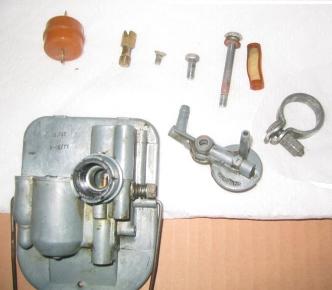
2. Leave both (choke and throttle) cable pinch bolts alone. Disconnect the choke cable, remove the phillips screw on top, and lift out the throttle slide. Notice the round throttle slide has a little prong on top that slides into a slot in the carburetor. You will need to remember that during re-assembly.

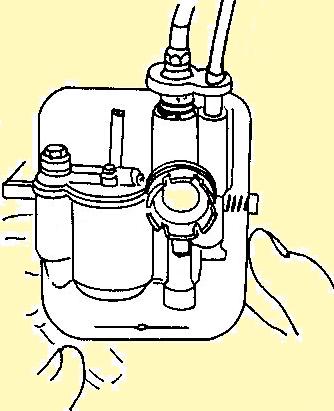
3. Loosen the mount clamp nut (10mm hex), then rotate the carburetor assembly gently back and forth, with both hands holding the carburetor, not the air filter box, while pulling rearward. Then wiggle it free.

Servicing the Carburetor 

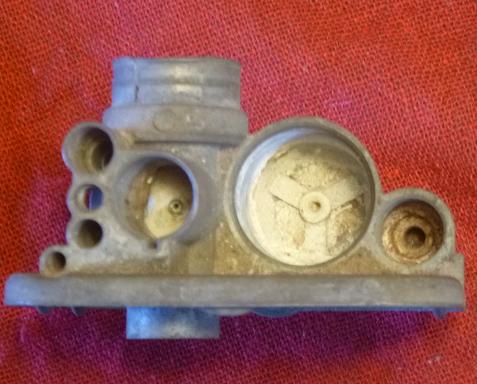
The normal service consists of cleaning out all tar, rust, and corrosion. After disassembly, carb cleaner spray or parts dip is used to clean off tar and varnish. Anything plastic or rubber is not allowed to come in contact with the carb solvent. Scraping with small screwdrivers, knives, and wire brushes and/or wire wheels are usually needed on the float chamber walls and floor. A small drill bit is twisted, by fingers, in the guide hole at the bottom center of the float bowl, to lift out the fine rust powder that builds up there. Compressed air and carb spray are used to clean out and check all passageways. Seeing the spray enter and exit a passageway tells if it is open, even if you cannot visually see through it, like when there is a “bend in the tunnel”.

Testing with Carb Spray

Carefully (wear goggles) shoot carb spray into the froth air inlet in front below the venturi. There should be “three geysers” or jets of spray shooting out of 1) the main spray hole, 2) the large middle spray hole in the floor, and 3) the small idle spray hole in the floor.

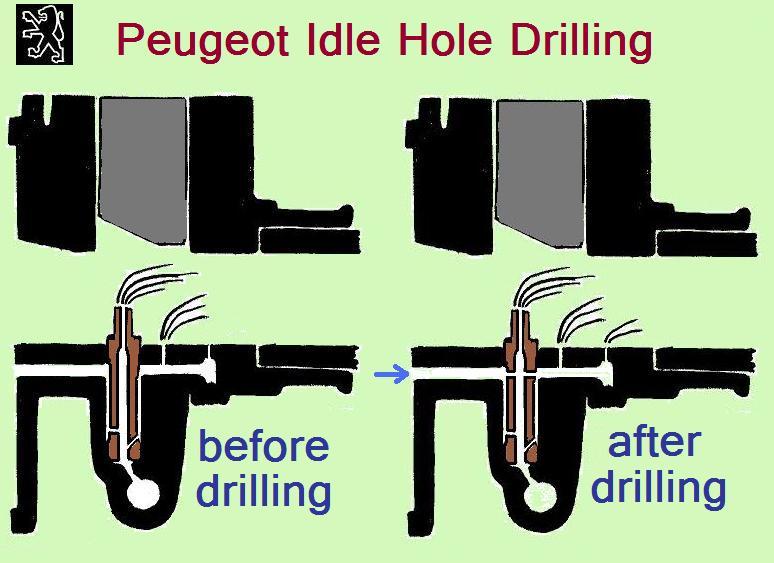
Most of the time, on a bike that has been sitting for years, the idle jet (restriction) is blocked, causing the engine to not idle. When that happens, only the first two spray holes active in the carb spray test, instead of all three. The result is the engine will start and run fine, but won’t idle for over 2 or 3 seconds. Using the choke will compensate a little. Soaking the carburetor does not usually clean out the idle restriction hole, and neither does carb spray. The brass diffuser is pressed tightly into a single-ended hole. The only remedy is to drill a new one.

Drilling a New Idle Hole

Peugeot Carb Before and After DrillingThis is for when the carb spray test shows only the first two spray holes active. The careful and delicate drilling procedure uses a #71 drill bit, chucked in a pin vise, chucked in a hand held drill. The #71 is the thinnest drill that is long enough to reach horizontally from the front face back to the third vertical hole. A #72 is a little thinner and shorter, but still works if it is not inserted too deep in the pin vise chuck. A #70 drill is a little bigger and longer, but still works. Already the idle mixture, and mid-throttle mixture, are being made richer by drilling with a #71. On an old moped that is a good thing, because various small air leaks are compensated for. With a too rich idle mixture, the engine will stumble after waiting for a long red light, when the throttle is first opened. So a bigger drill size makes that bad behavior.

Use a half drop of oil and a sharp drill. Dull drill bits can get hot, melt in place, or veer off to one side, and then break off in the hole. Then there is no fixing that. You are drilling, blindly, into a round thing, so the drill wants to go to either side. Try to keep the drill centered and parallel to the horizontal tunnel front to rear.  It takes about 5-10 seconds to drill through each wall. After the drilling through the first wall of the diffuser, the bit breaks into the open vertical tunnel, and then encounters the second brass wall. Once through that, the horizontal tunnel is open for the rest of the way. Check the idle circuit before and after drilling, to verify that the idle spray hole did in fact get cleaned and is now working. Other things (air leaks) can cause the engine to not idle, like worn out piston rings and cylinder walls, and leaking crank seals or a stuck-open reed valve.

Restoring the Float

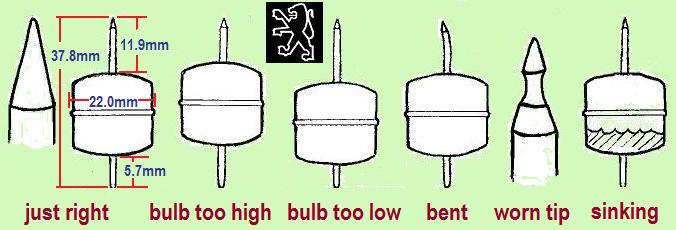
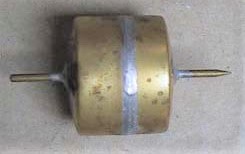
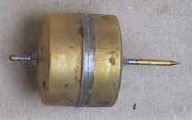
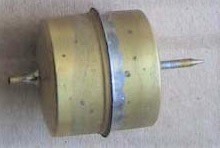
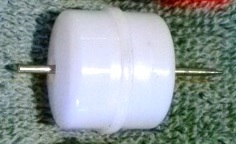
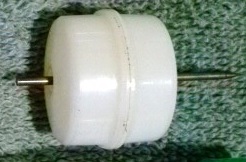
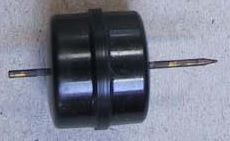
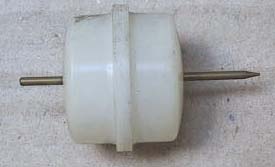
The float is a hollow plastic bulb type, with a 1.5mm thick brass rod pressed through it. The top end of the rod or needle has a precise cone shaped tip. The float needle tip gets worn, or the shaft gets bent. Then the float overflows and fuel drips out of the bottom of the air filter box.

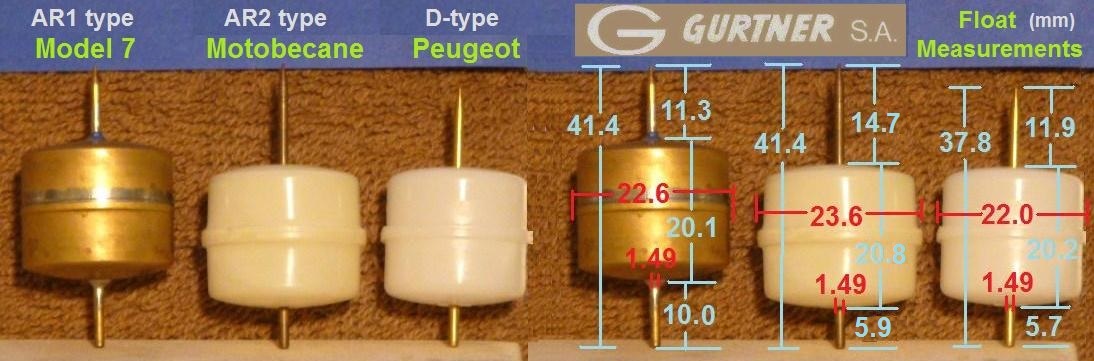
Most of the time, the float will need regrinding of the tip, and maybe also some straightening of the needle shaft. Check to see if the needle is close to 37.8mm in length, the lower part sticks out 5.7mm, and the upper part is 11.9mm. If the bulb needs moving, hold one end of the float needle against the side of a table, while pushing on opposite sides of the bulb with both thumbs. If the needle moves too easy, it might leak fuel into the bulb, so then seal the ends with fuel proof sealant or epoxy, like below.

Shake it to see if it has any fuel inside the bulb. That would make it sink. Evacuate the fuel with compressed air and seal the needle holes with fuel proof sealant (like Kreem tank sealer or epoxy), without adding too much weight.

Chuck the bottom blunt end of the float needle into a hand drill. Spin it to check for trueness. If it is perfectly straight, it will almost appear to be not spinning. If it is bent, then straighten it with a small needle nose pliers. Take small bends and study the result to learn where the pliers need to be for the next bend. 

Once the needle is straight, the tip can be sharpened. Machine or sharpen the perfect cone tip, by chucking the needle rod in a small drill and spinning it, at a constant angle and pressure but moving around, against a flat sheet of fine sandpaper, taped to the edge of a table. Follow that with super fine and then polish. Try to keep the needle as long as possible, by only removing what is necessary, and no more.

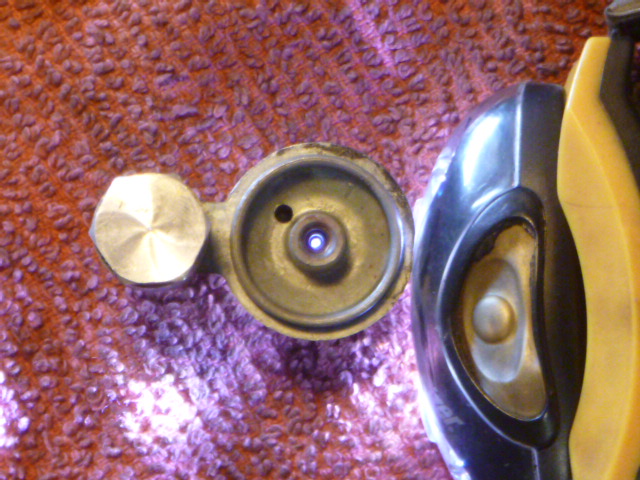
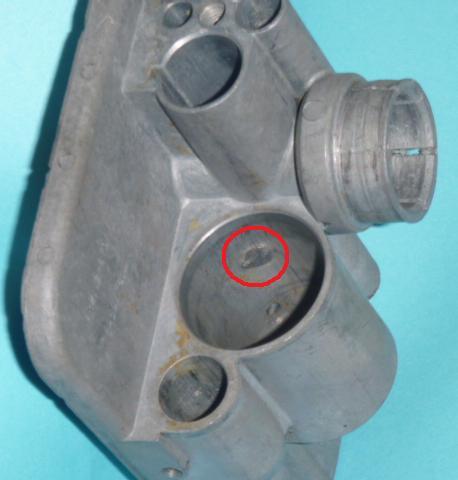
Peugeot Float SeatFinally polish the float valve seat in the float top. Use a spinning toothpick, in a drill, with metal polish (or car wax). Inspect the hole with a magnifier. Illuminate it from the side hole as shown on the right. See if there are any scratches in the tiny hole down in the bottom of the small hole.

Bryan of Myrons discovered in 2007 an extremely useful way to sometimes fix a leaking Peugeot float, in a matter of seconds, without removing the carburetor. Close the petcock and remove the jet from the bottom of the carburetor. Blast compressed air into the jet hole. This spins the float rapidly inside the float chamber. Like lapping engine valves, the circular rubbing tends to make the two things (needle and seat) more circular, and less likely to leak.


2. Motobecane Carburetor Service

Welcome. This is from the big blue Motobecane Dealer Manual, section “Repair Operations Models 40, 50, 7”, pages 32-35. The original words are dark grey, and Myrons Mopeds added words are purple.

MB Carb very dirty and oxidized

Don’t replace, restore!

Most importantly, the cleaning procedures in original manuals are for new machines. They say to use compressed air to blow out tiny holes, which does clean the holes perfectly on a new carburetor. But compressed air alone is not enough to clean most older carburetors. Carburetor spray solvent, scraping, brushing, and poking the holes with certain size wires or tiny drills, are normally needed cleaning techniques. That is because years of decomposed gasoline and oil, called varnish, or tar, have coated the inside of the carburetor and gas tank. In addition, moisture can corrode the metal, coating the zinc alloy white and the brass brown or green. Zinc or aluminum corrosion is best cleaned with scraping and vinegar. Brass things like float needles and seats can be lightly machined and then polished.


Removing the Carburetor:

Fig 1 Carb Removal

Fig 1 Carb Removal

1. Remove the side covers.

2. Close the fuel tap and disconnect the fuel hose from the carburetor.

3. Remove the air box from the carburetor.

4. Loosen the carburetor clamp bolt. (8mm hex)

5. Remove the carburetor from the inlet pipe.

6. (Top pull choke cable type) Loosen the top cover screw. Remove the cables, slides and top assembly.

7. (Top pull choke cable type) Remove the carburetor (fig. 1).

6. (Bottom pull choke cable type) Leave the cables alone. Continue the service with the carburetor next to the bike.

7. (Bottom pull choke cable type) OR loosen the choke cable pinch bolt on the left handlebar control lever. Loosen the top cover screw. Remove the cables slides and top asssembly. Remove the carburetor (fig. 1).


Installing the Carburetor

1. (Center mount carburetor type) Make sure the plastic bushing on the inlet pipe is in good condition, if so equipped.

2. Make sure the nuts securing the intake pipe to the cylinder are tightened to the correct torque (7 ft lbs) using a torque wrench and 10mm socket. If the intake pipe was removed make sure the mating surfaces are clean. Fit a new gasket.

3. Insert the throttle slide (note the position of the guiding pin) and the choke slide.

4. Fit the top cover and tighten the screw securing it.

5. Make certain that the throttle slide operates freely and fully opens when the throttle grip is fully opened. If necessary, screw the adjustment screw on the handlebar throttle control. It needs to be tight enough to lift the throttle slide in the carburetor fully, yet still have a little bit of slack (so the bike does not accelerate when the steering is turned to the side!) 

6. Fit the carburetor to the intake pipe and push fully home. (rotating gently back and forth) 

7. Position the carburetor body vertically.

8. Tighten mount clamp (8mm hex)

9. Connect the fuel hose

10. Final idle adjustment can be made with the engine running by screwing or unscrewing the idle adjustment screw on the left of the carburetor.

11. Fit the side covers.


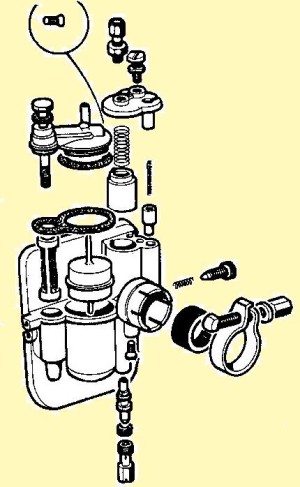
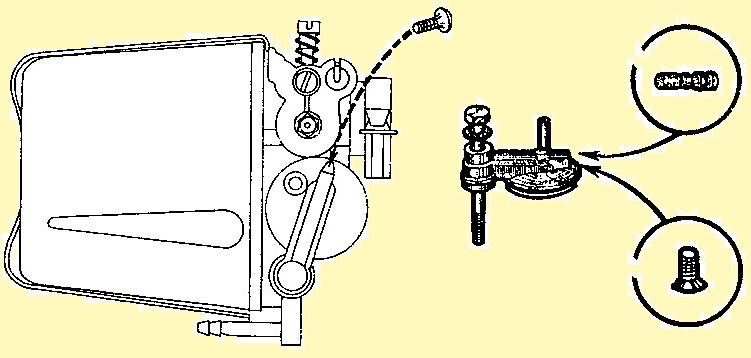
 Disassembling the Carburetor:MB Carb Service Fig 1-2

Fig 1 and 2 Float top cover

Fig 1 and 2 Float top cover

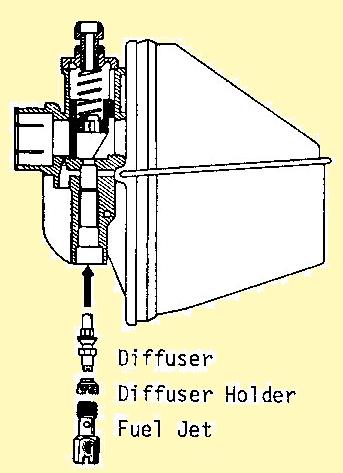
Fig 3 Diffuser and idle tunnel

Fig 3 Diffuser and idle tunnel

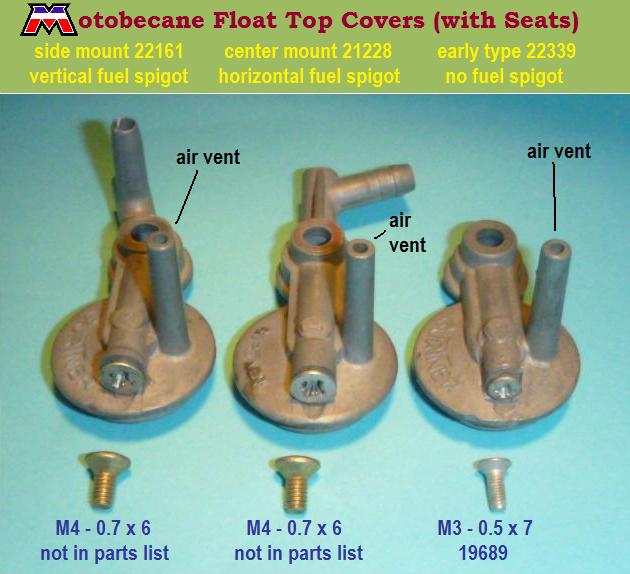
Motobecane Float Top Covers

Fig 4 Float top cleaning screw

Fig 4 Float top cleaning screw and fuel filter

1. Remove the float bowl cover using a 10mm wrench.

2. Check the paper gasket and o-ring.

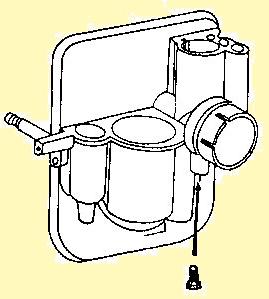
3. Loosen the small “cleaning” screw (using a small phillips head screwdriver) or the plastic cap (fig 1 and 2).

4. Clear this pipe if necessary with an air stream.

5. Fit the screw or plastic cap. Apparently the US DOT did not allow the plastic caps, because none were ever on US models. Instead they had a larger cleaning screw, M4 instead of M3. That M4 screw is not listed in the MB USA parts catalogs. Neither is the plastic cap.

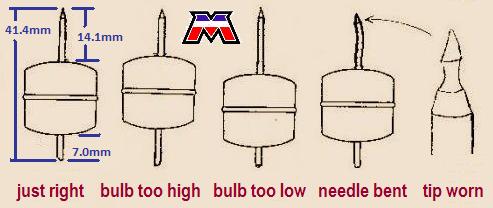
6. Check the float for good condition. Plastic (not brass) float bulbs slide up and down on the needle rod with considerable pressure (like with both thumbs pushing the bulb, with the needle pressed against a solid wall). If the bulb is too high, the float will overflow, causing a rich mixture and/or fuel leakage. If the bulb is too low, the engine will “starve” for fuel, at times of high demand. Check if the needle is nearly 41.4mm long, and position the bottom of the bulb to 7.0mm.  

MB float service

Straighten a bent needle with a small needle-nose pliers. Take small steps, study the result, and adjust the grip point, in order to not make a “dog leg”.

Machine or sharpen the perfect cone tip, by chucking the needle rod in a small drill and spinning it, at a constant angle and pressure but moving around, against a flat sheet of fine sandpaper, taped to the edge of a table. Follow that with super fine and then polish. Try to keep the needle as long as possible, by only removing what is necessary, and no more.

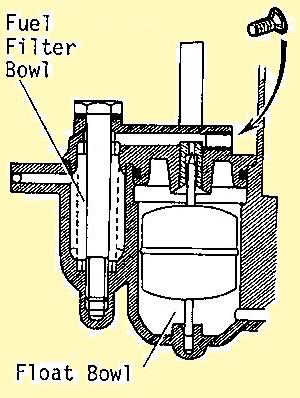
Motobecane Carb with bulge in float bowl wall caused by air filter stud overtightening

Bulge in float bowl wall caused by air filter stud over-tightening

Check that the float moves up and down freely without touching the walls. Check for a bulge in the float chamber wall, where the air filter stud sometimes pokes through. 

7. Remove the fuel jet (8mm wrench or screwdriver) and clear it if necessary with an air stream. (fig 3). There are tiny drills, about drill number 75 and 74, that are the size perfect for cleaning out moped main jets. Any piece of wire thin and stiff enough will work, but only a size just smaller than the hole will clean it out completely, if it is coated with varnish. Even after soaking, it can still need “scraping”. A kinky wire can be a second best tool. A welder’s torch tip file is another way to clean tiny holes. So is a dentist’s root canal file.

8. Look into the hole for the small slot in the center and a large different slot in the outer collar. If you don’t see this then it might be a press-fit diffuser type carburetor, instead of the usual slide-fit type. If this is covered in white (zinc oxide), then use vinegar on it first to remove enough white to see where the screwdriver slot is.

9. (Slide fit diffuser types) Apply a drop of oil to the lowest threads. With a 6mm wide (small but not tiny) screwdriver, unscrew the collar that holds the diffuser. Rattle or tap the carburetor to get it to fall out the bottom.

Fig 5 Idle hole plug

Fig 5 Idle hole plug

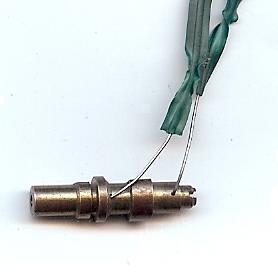
Cleaning MB diffuser idle holes with 0.012 inch thick ordinary twist ties

10. (Slide fit diffuser types) Push the diffuser from the top end downward. It might drop out. If the diffuser cannot be easily removed, lightly tap on the top end with a small hammer and punch. Clear the diffuser with a high pressure air line. Use an ordinary bread wrap twist tie, to “poke out” the two idle holes in the diffuser. Use a bigger wire (paper clip?) to scrape the center hole. Carefully (wear goggles) use carb spray to both check and clean the holes. 

Note: Some carburetors are not equipped with a diffuser holder (collar). These carburetors do not have a removable diffuser. Do not try to remove the diffuser from this type of carburetor. Simply leave it installed and clear it with an air stream. See below “Press Fit Diffuser Type”.

11. Clean the fuel filter, the filter bowl, and the carburetor float bowl (fig 4). Clean the bottom guide hole by twisting a small drill bit with your fingers, to lift out the rust powder at the bottom. If this hole is dirty the float will not go down far enough, and the engine will starve at times. 

12. Unscrew the plug screw (small phillips head screwdriver) and if necessary, clean it with an air stream (fig 5). This screw gives you access to the idle circuit. Here carb spray can again, carefully (wear goggles) be used to both clean and check the idle holes and tunnels. Locate all of the holes entries and exits. Verify that spray can get through everywhere.

This last operation can be done without removing the carburetor. Turn off the gas valve, lay the bike over on it’s side, and access the idle circuit cleaning plug from the bottom. Give it a shot of carb spray, replace the plug, stand the bike up, and start the flooded engine full throttle, carefully with the rear wheel held safely above the ground by a good centerstand. After it runs fast for a minute and it gets un-flooded, hope that it idles after that.

13. Reinstall the plug screw.


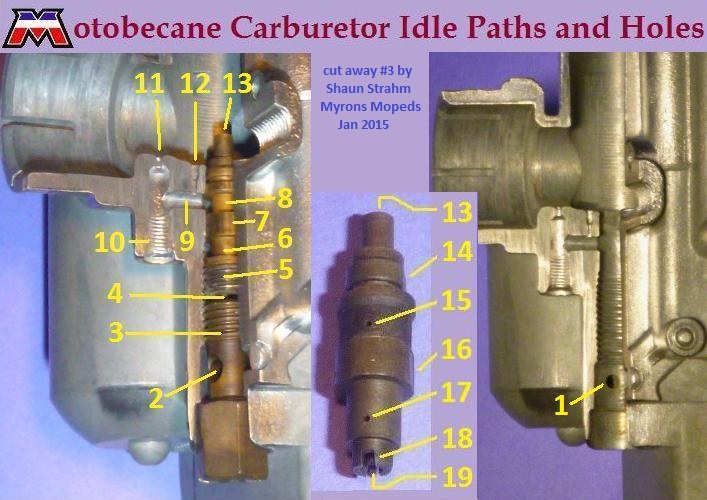
1. horizontal fuel supply tunnel 2. two side supply holes in main jet 3. main jet restriction (not shown) 4. diffuser inlet vertical channel 5. diffuser lower idle hole (not shown) 6. chamber around lower idle hole 7. lower flat side vertical channel 8. diffuser upper idle hole (not shown) 9. horizontal idle tunnel under slide 10. threaded plug hole for cleaning 11. middle spray hole into venturi 12. idle spray hole into venturi

1. horizontal fuel tunnel  2. side holes in main jet 3. main jet restriction
4. diffuser inlet   5. vertical channel  6. chamber around lower idle hole
7. lower flat side is a fuel channel     8. chamber around upper idle hole
9. horizontal idle tunnel under slide 10. threaded plug hole for cleaning
11. idle spray hole to venturi 12. middle spray hole 13. main spray hole
14. upper flat side for aligning or locating diffuser    15. upper idle hole
16. lower flat side lets lower idle merge with upper   17. lower idle hole
18. screwdriver slot for lining up during installation      19. diffuser inlet

Assembling the Carburetor:

1. Fit the diffuser making sure the diffuser flattened side coincides with the flat side in the carburetor hole. The slot in the diffuser lower end is for rotating it gently during installation until the flat sides line up and it snaps up into it’s “home” position, where the shoulder is just below the floor of the venturi.

2. Locate the diffuser fully home.

3. Fit the diffuser holder (6mm slot head screwdriver) and the jet (8mm wrench).

Understanding where all the holes are, where they go, and what they do, and what happens when each one gets blocked or partially blocked, is half the battle. The other half is the actual cleaning and restoring. 

True restoration is more difficult, but more rewarding than “replacement restoration”. It’s like fishing versus buying fish in the market.


Testing for Fuel Flow:

The carburetor is assembled and installed, fuel line connected, but with the jet removed. When the fuel petcock is turned on, in a few seconds fuel should begin dripping rapidly from the bottom jet hole. There should be a small continuous stream of fuel, not just rapid drips. The amount of fuel flow, for any size float-type carburetor, is enough to fill the volume of the float bowl in a few seconds. For a moped carburetor, this is about two or three teaspoons in five seconds, roughly. This tests the entire fuel system for flow. If there is low flow, then further tests are needed to isolate where it is blocked at.

Note that this is not the fuel flow to the engine. This is testing fuel flow to the reservoir or float bowl/chamber. When fuel flow to the engine, through the jet and diffuser, is blocked, the engine will not ever run right. When the jet gets partially blocked, applying the choke or blocking off some air with your hand will help compensate. When fuel flow to the reservoir is blocked, the engine will run perfect, for awhile, until the reservoir gets low. Then it will run dry and die out. Then after waiting for the float chamber to refill, the engine will restart and run fine again, for awhile, again and again.


Additional Information:

Motobecane 20mph carb sliced in half

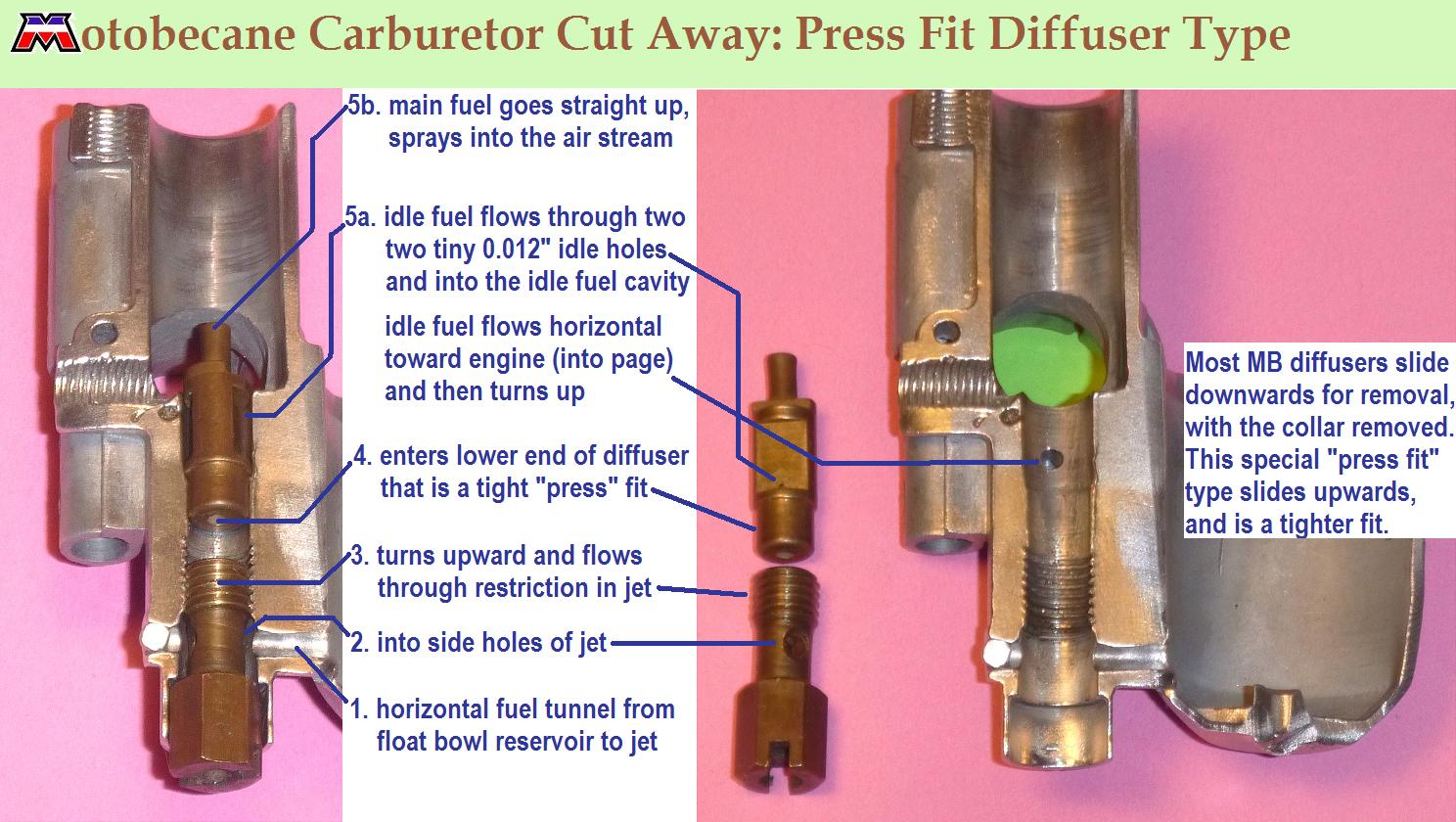
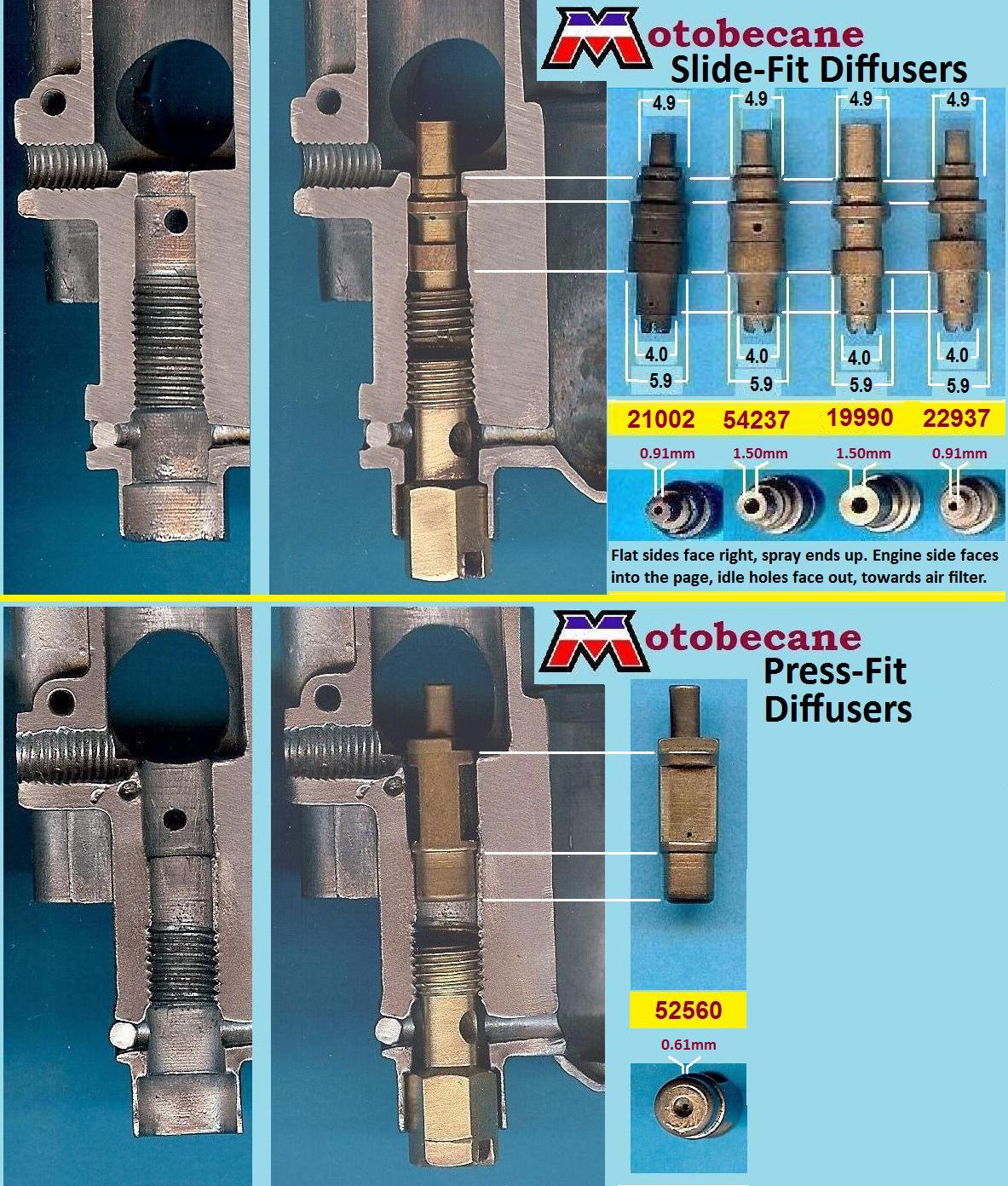
Slide Fit and Press Fit Diffusers: Some Motobecane carburetors have “press fit” diffusers, instead of the usual “slide fit”. This is one of those types (AR2-10-737 or AR2-10-991 or perhaps others) that has been sliced in half to expose it’s secrets.

While “slide fit” diffusers slide in and out from the bottom, this “press fit” diffuser 52560, and carburetor type, slides (presses actually) in or out from the top. Many of these get smashed on top by Motobecane mechanics trying to push the diffuser downwards, the normal way out.

Press-fit-diffuser carburetors cannot be made to accept slide fit diffusers. 

Motobecane Choke Circuit cut away

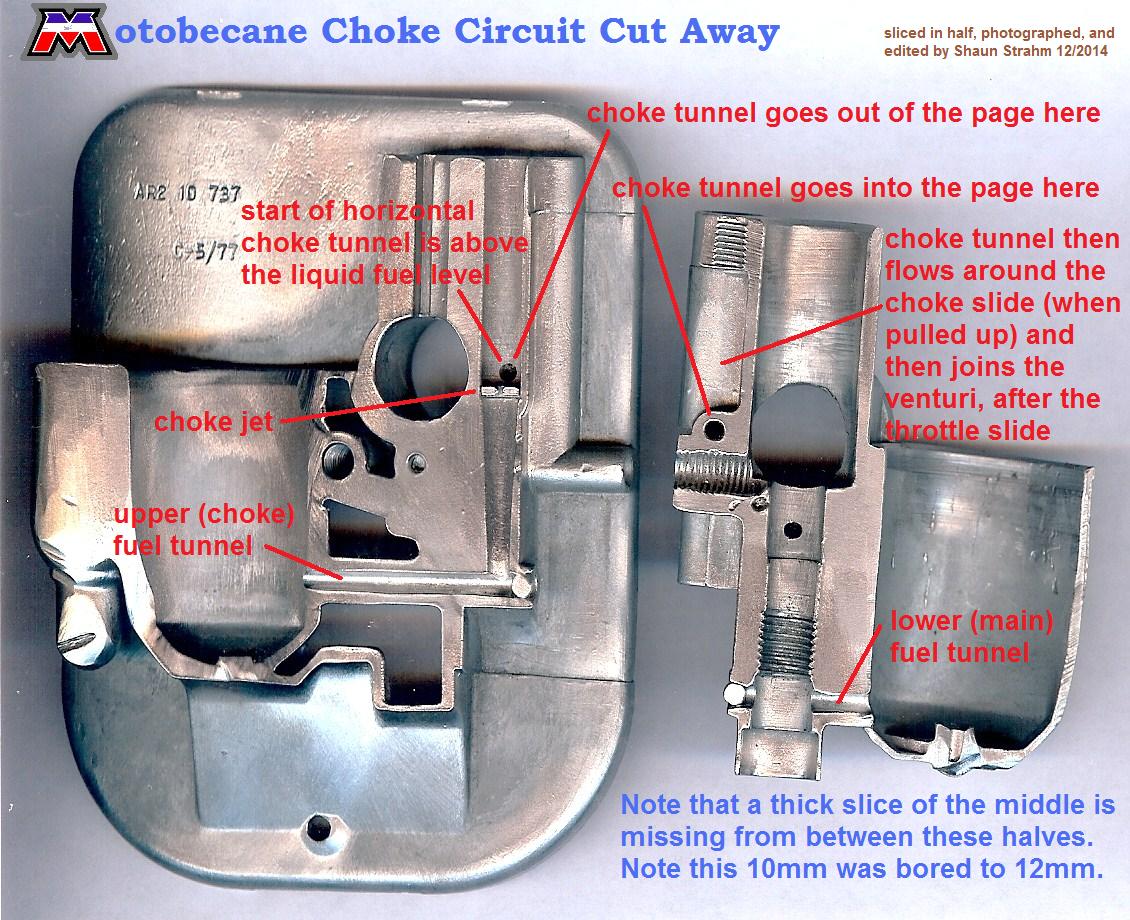
Choke (cold starting) system: Unlike the Peugeot Gurtner and most other moped carburetor chokes, the Motobecane Gurtner AR2 has an additional fuel path or tunnel. It’s “choke” is a fuel enrichment device rather than an air restricting device. The choke circuit is completely independent of the main fuel circuit. It has it’s own fuel tunnel out of the float bowl, that bypasses the throttle slide, diffuser, and jet. 

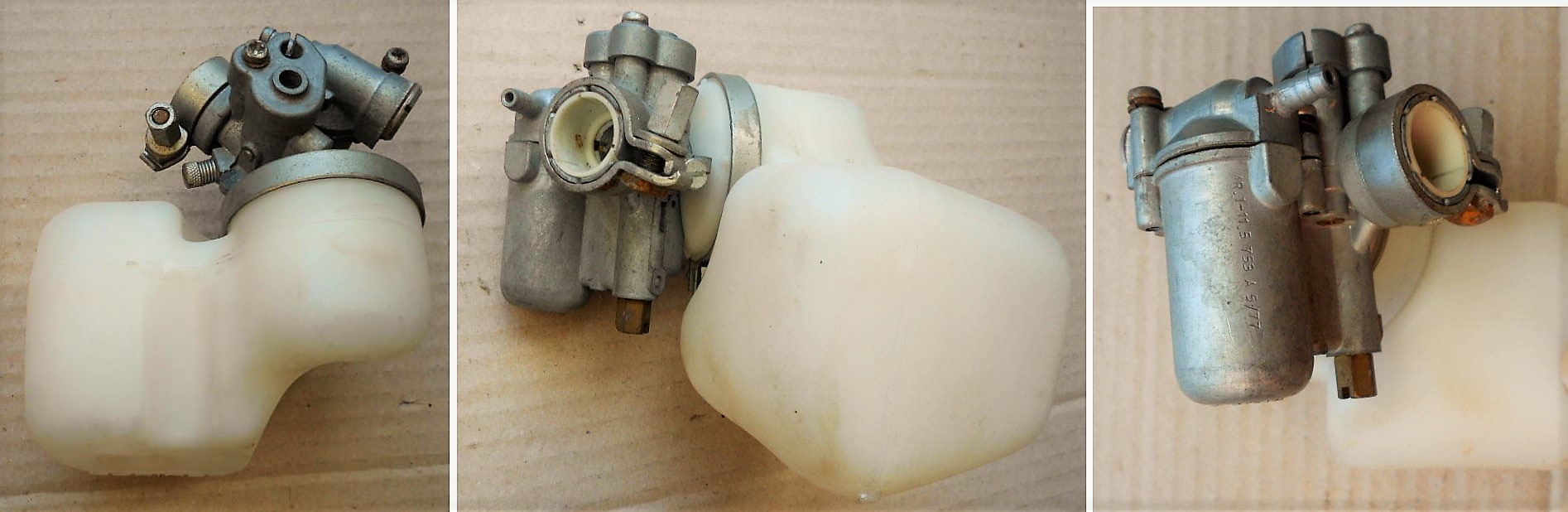
Original Equipment Carbs have Dates: This carburetor clearly shows it’s manufacture date of 5/77, below the model number. It could be from a late 1977 or a 1978 bike. The 39 used Gurtner AR2 carburetors in Myrons Mopeds inventory on Dec 2014 have dates ranging from 03/74 to 04/80. The majority are from 1977 and 1979. See above “Population Study of Gurtner AR1 and AR2 Carburetors in Southern California”.   


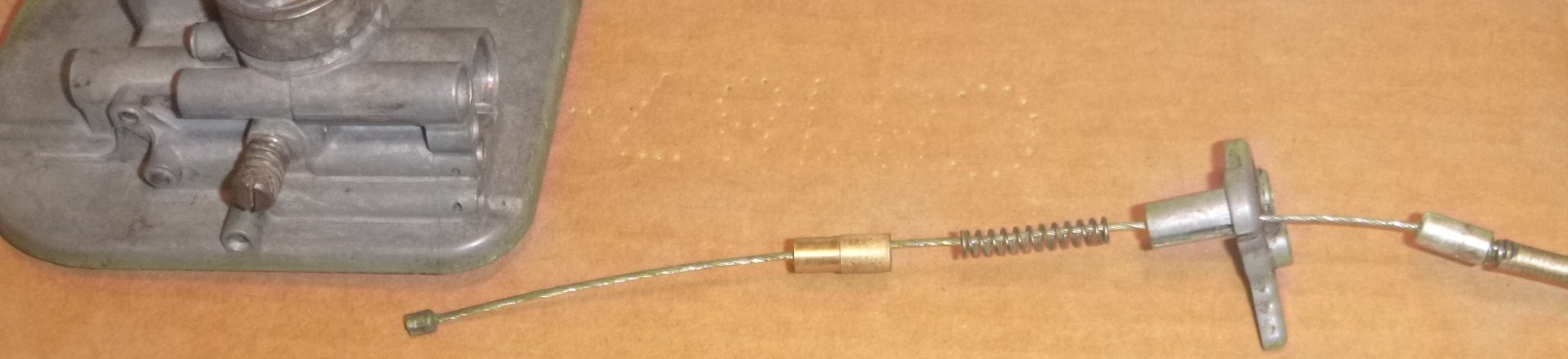
Choke Slide: This is often mysteriously missing, but actually stuck in the lowest (normal) position, either by tar or corrosion. It can be unfroze with solvent and/or by removing the cable wire and pushing it up from the bottom by tapping with a small punch and hammer. When the choke slide is pulled up, the choke is “on” for cold starting, and an extra fuel path is exposed by the step in the choke slide. If the choke slide is actually missing, the choke would be “on” all the time, but some extra air gets in along with the extra fuel. So the net effect of running without a choke slide is minor. 
Gurtner MB bottom pull choke parts exposed

Gurtner AR2 bottom pull choke parts exposed

Gurtner MB Top pull choke cable routing

Gurtner AR2 top pull choke cable routing


Motobecane 30mph variator center-mount carb with short pipe

MB 30mph variator center-mount carb w/short pipe

Top Pull or Bottom Pull Choke Cable:

1. On center mount carburetors, for variator models, the choke cable is “top pull”. The choke and throttle cables detach, allowing the carburetor to be serviced away from the bike.

Motobecane 40TS has side mount Gurtner with top pull choke cable

Motobecane 40TS has side carb top pull choke

Motobecane 20mph no-variator side-mount carb with thin long pipe

Motobecane 20mph no-variator side-mount carb with thin long pipe


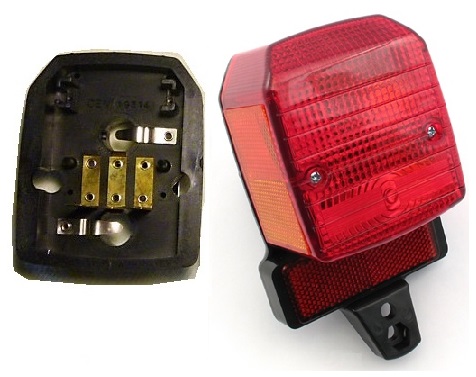
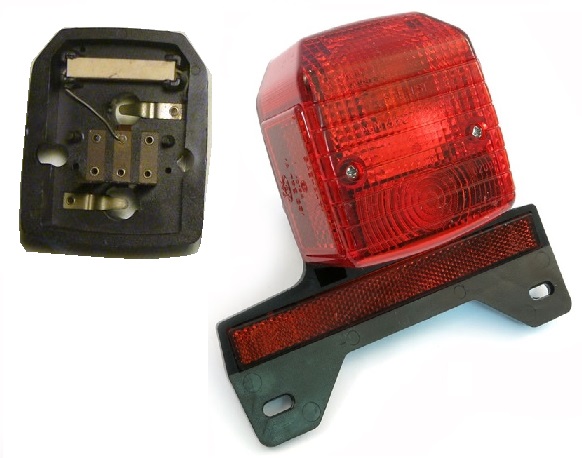
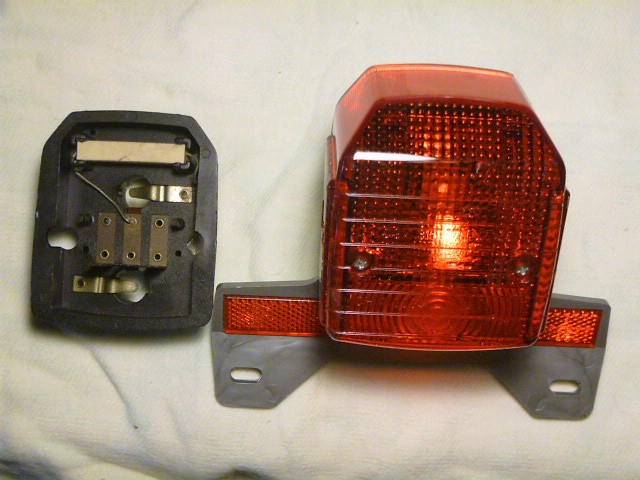
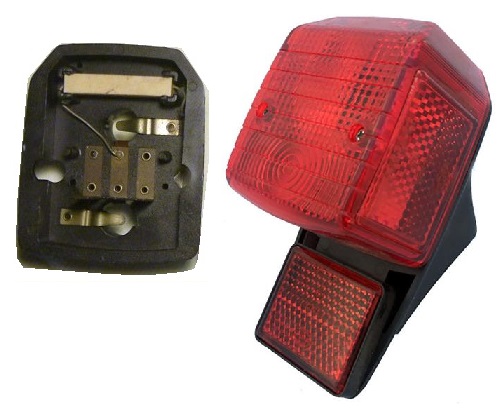
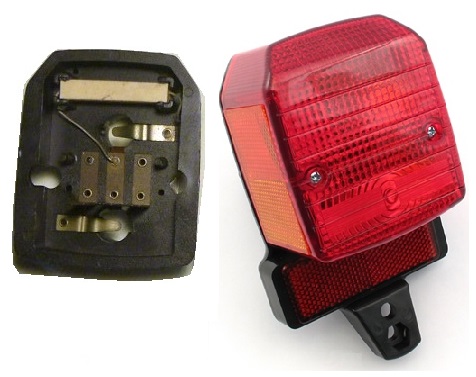
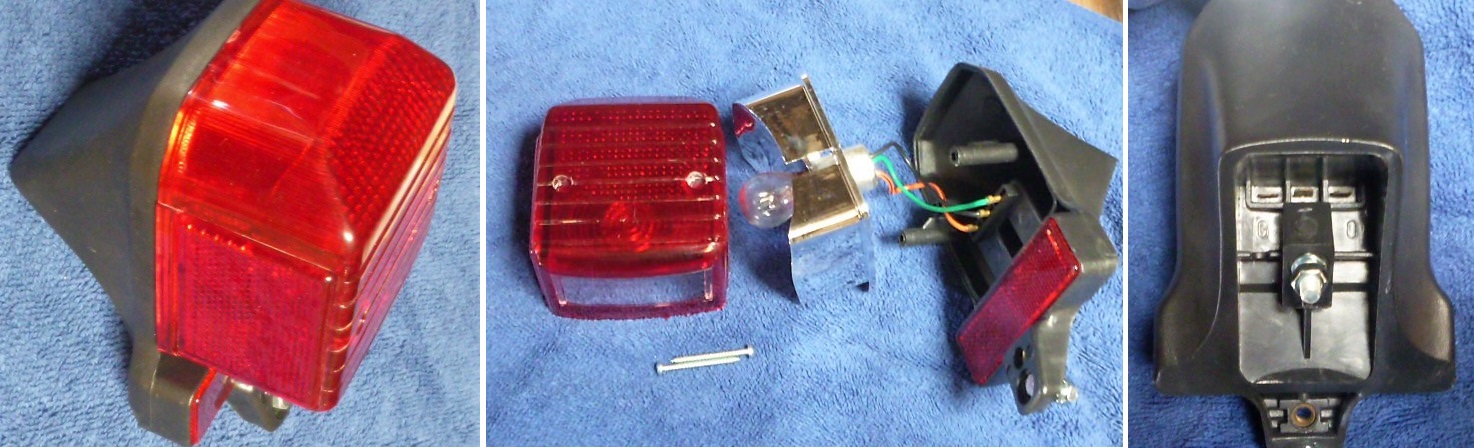
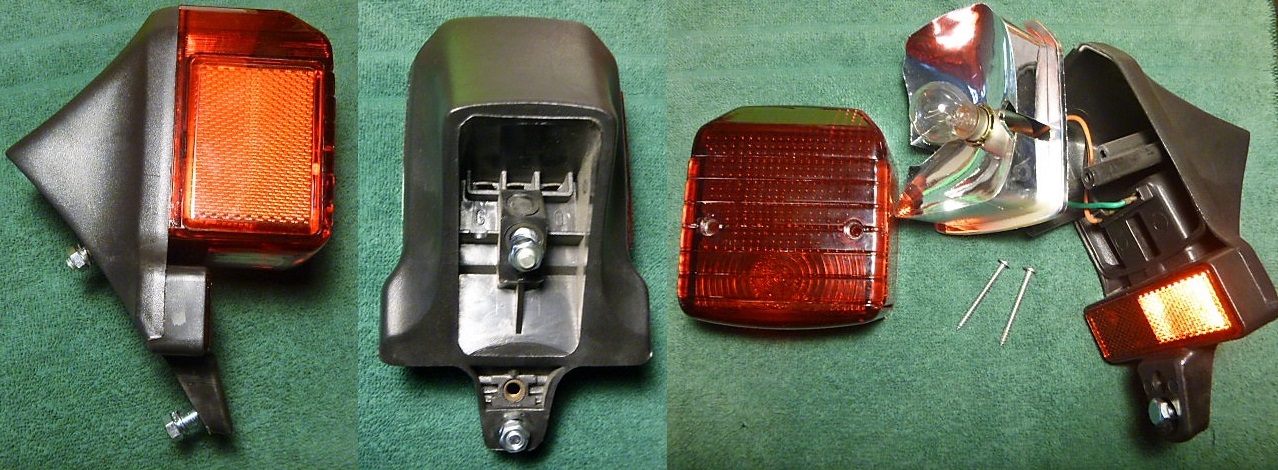
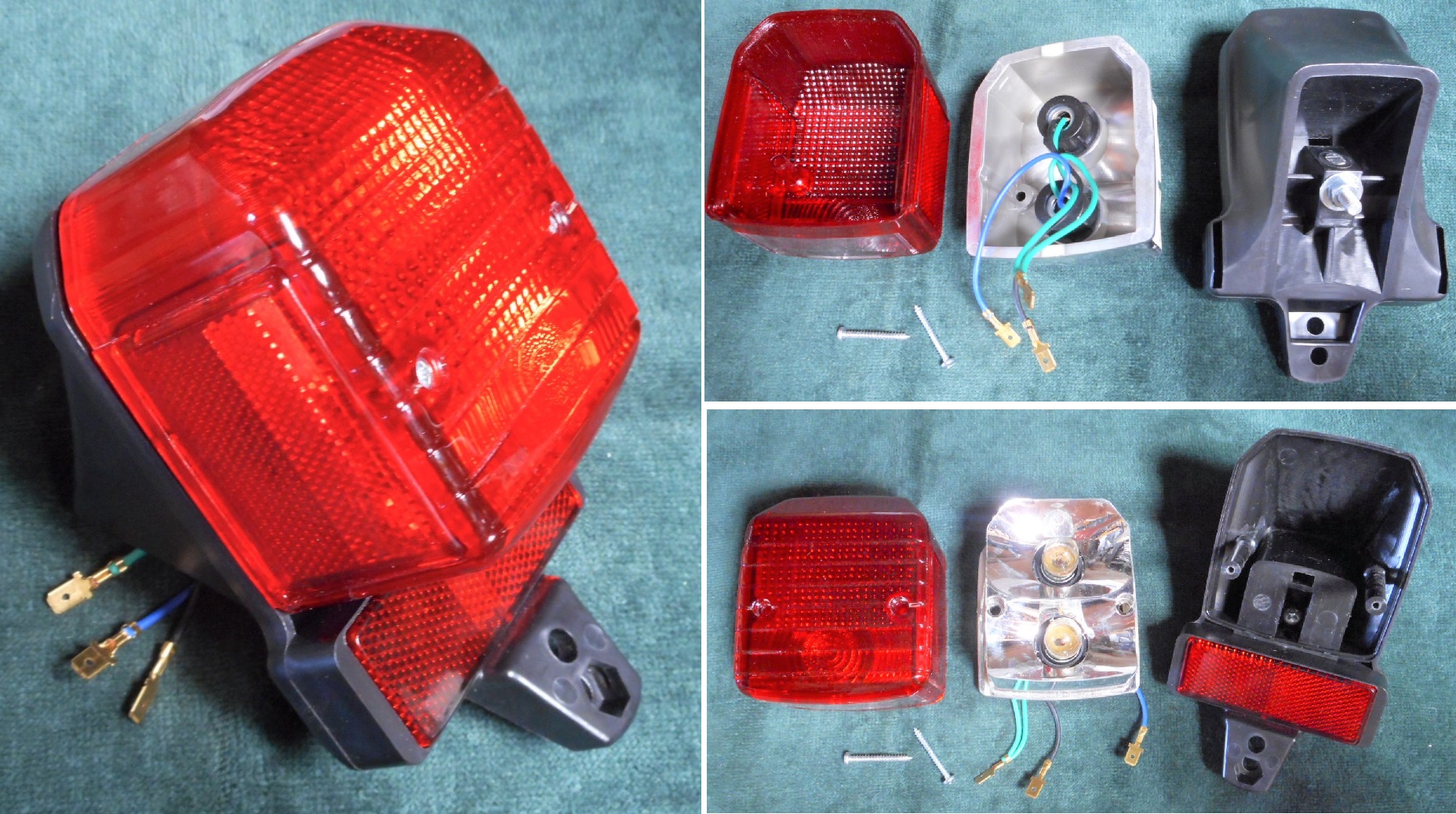
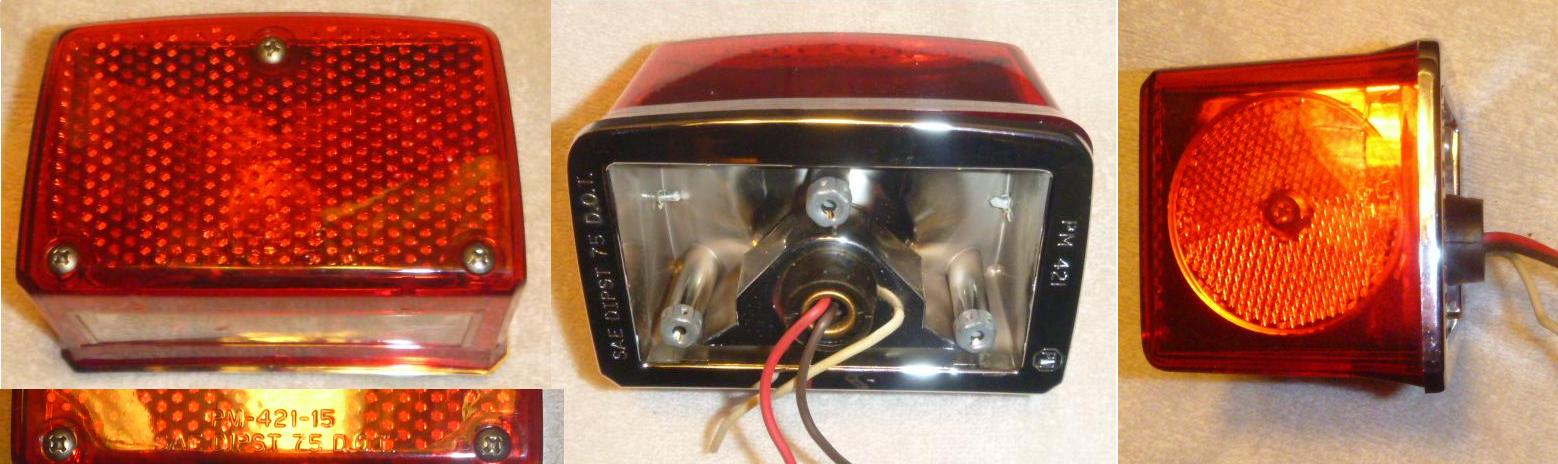
CEV Tail Lights

July 14, 2016

Contents:
1. CEV 9350 Tail Lights
2. CEV 9350 Replicas
3. CEV 9350 Parts
4. CEV 9400-9417 Tail Lights
5. CEV 9400-9417 Replicas
6. CEV 9400-9417 Parts


1. CEV 9350 Tail Lights

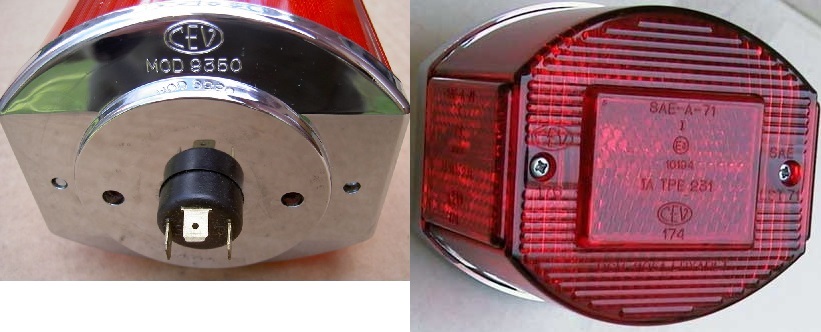
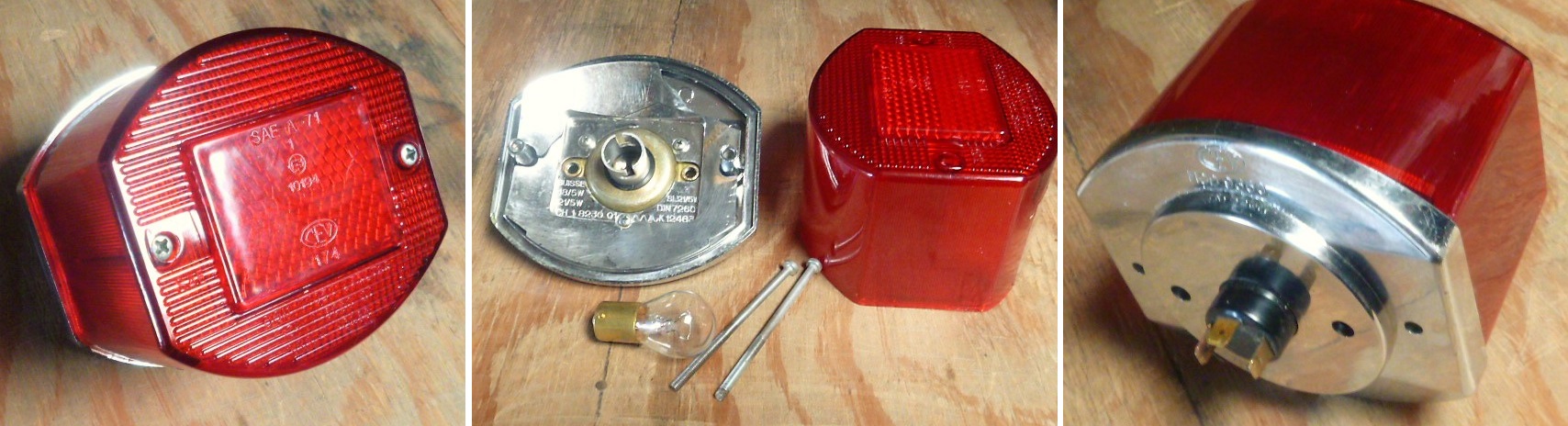
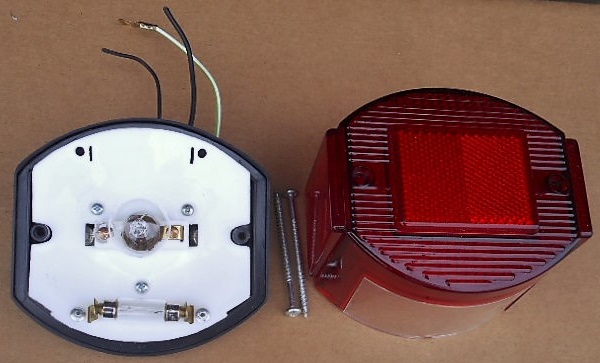
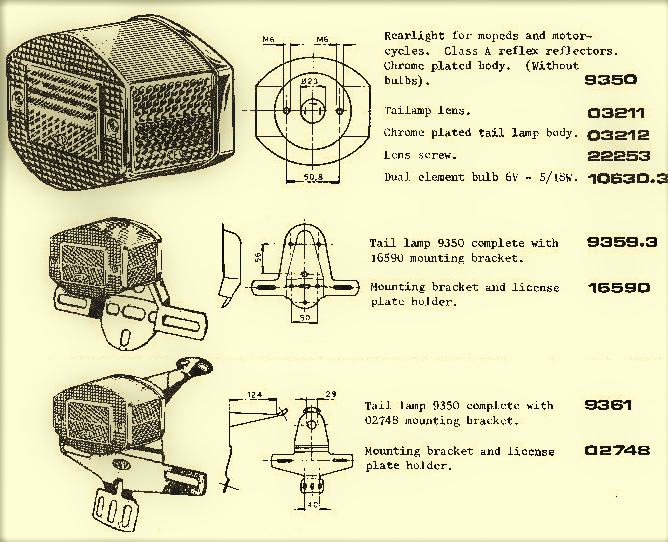
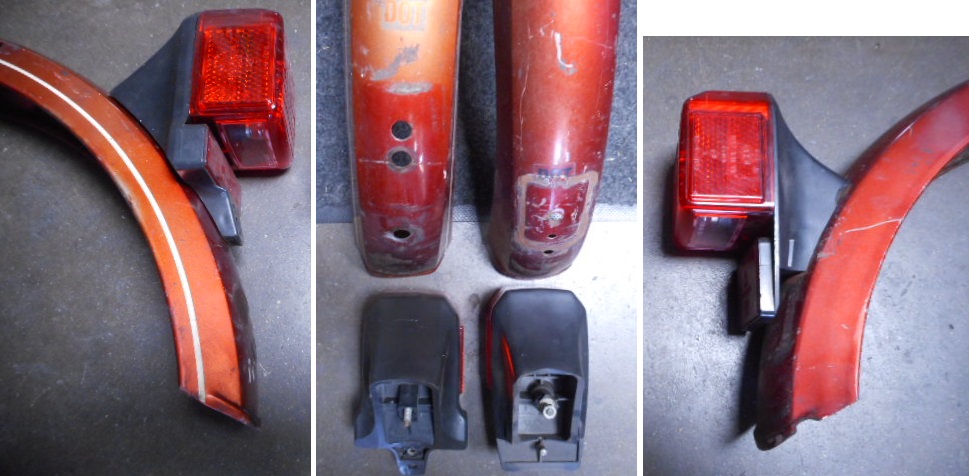
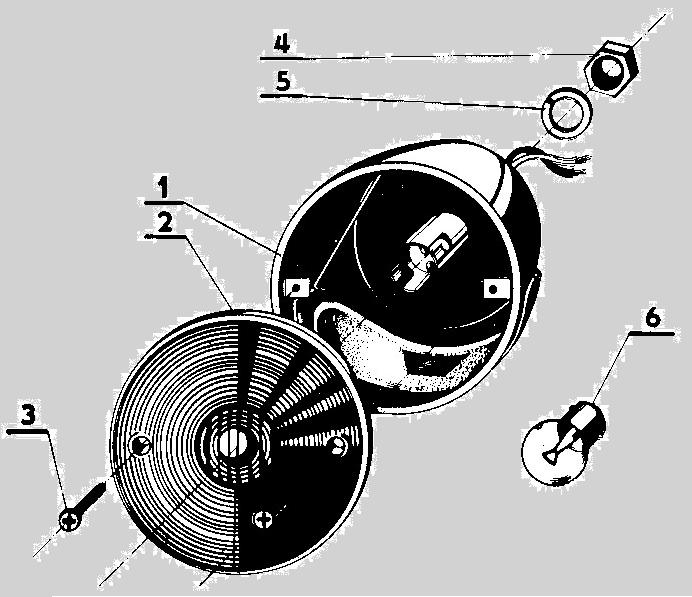
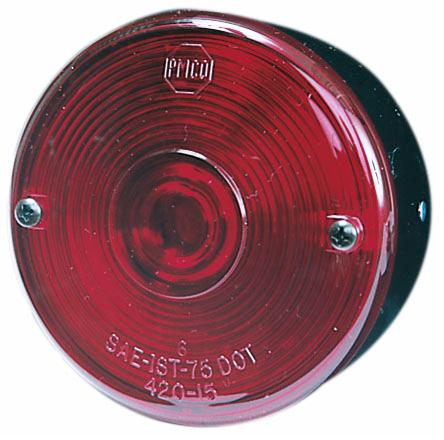
CEV 9350: Many 1972 -1976 US mopeds, and some Italian scooters and motorcycles, had this “oval with flat sides” single bulb lamp. It meets 1972 US DOT requirements of having a brake light and shining to the sides. Original USA 9350 versions also had red lenses with side reflectors. Rear red side reflectors were required, but they did not have to be part of the light. 


#   MMI#    price    9 3 5 0   L A M P S
1.  9350CR none  9350 chrome  new, CEV lens new with side reflectors
2.  9350CR none  9350 chrome used, CEV lens new,  no side reflectors

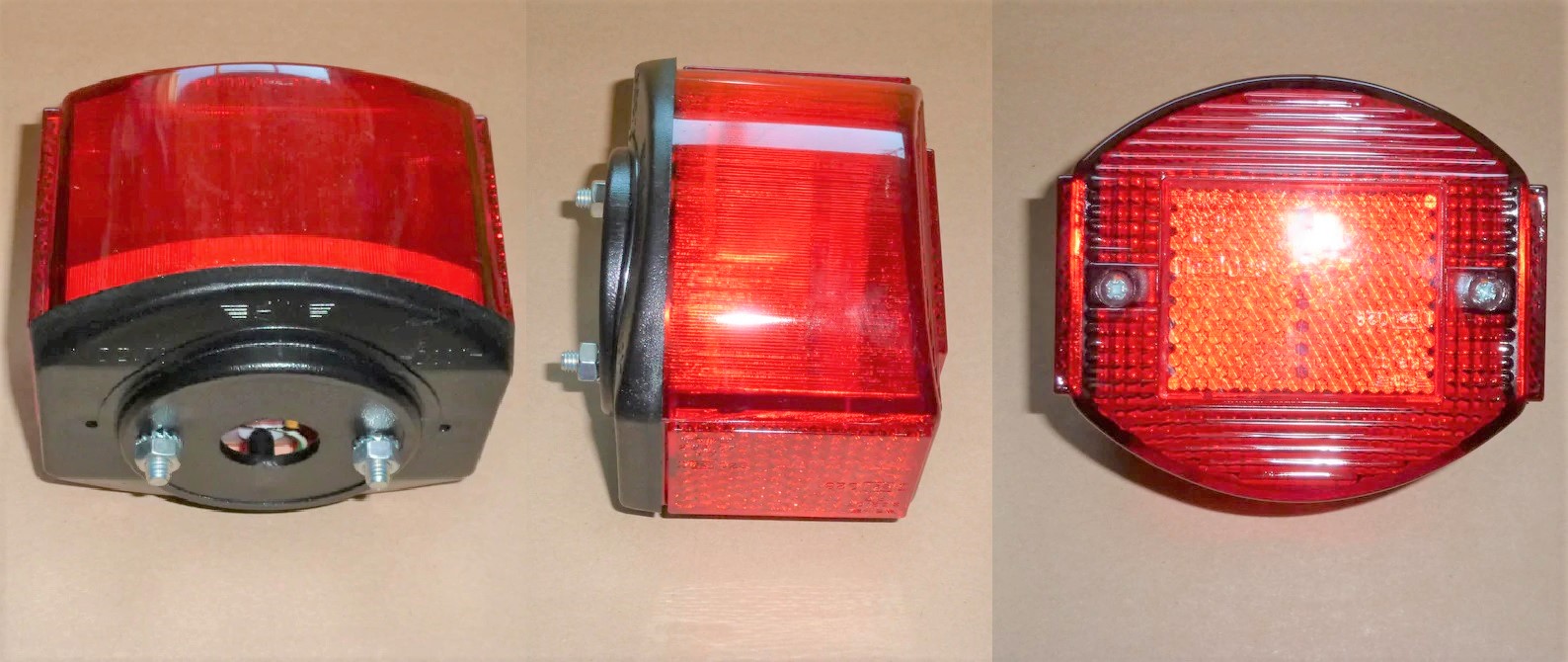
3.  9350B   none  9350 black     new, CEV lens new with side reflectors
3.  9350B   $110  9350 black     new, generic lens, with side reflectors


2. CEV 9350 Replica Tail Lights


#   MMI#    price    9 3 5 0   R E P L I C A   L A M P S
25  SIM 78  $70.0 SIM 78 black new, SIM lens new with side reflectors

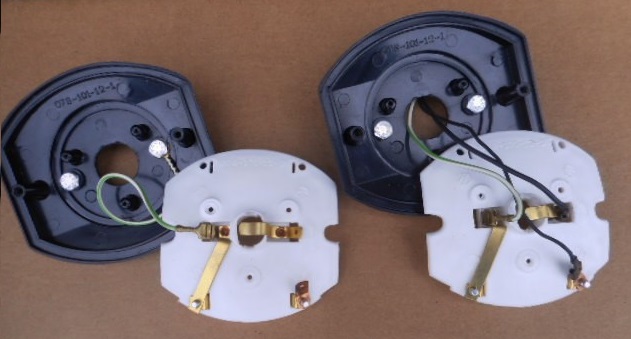
Sim 78 looks good in photos but it has several issues.
1. It does not have the wire connectors.
2. The connectors have to be bent and placed just right, to clear the back wall.
3. The act of adding and bending the connectors loosens the rivets.
4. The center rivet may need a thin tiny washer slid under it, to make it solid.
5. The lower tail light bulb is a special kind, a festoon. There are no 6 volt versions that can fit. There is only a 12V 5w 11 x 39mm. So on a 6 volt moped the running light will be only about half as bright.
6. The upper brake light bulb fits tight, almost to the point of the bulb breaking when removing or installing.
7. The ground wire inside eyelet gets bent when the mount screw is tightened. It is relocated to the outside.


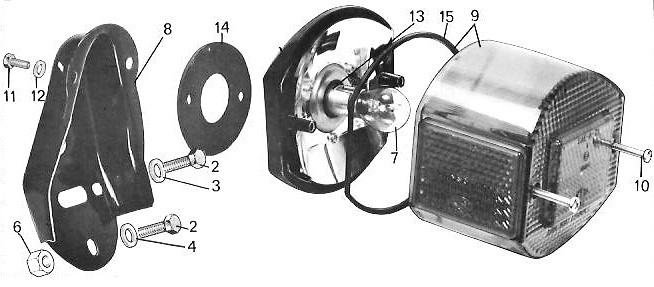
3. CEV 9350 Parts

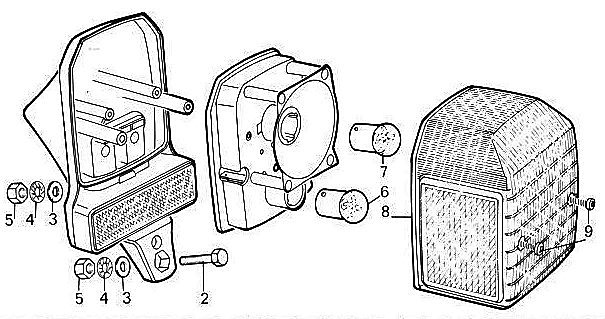
# 0 CEV# 0 price    9 3 5 0   P A R T S
7.0 10630.4 $2.00 bulb 6V 21/5W #1154
7.1 10630.1 $2.50 bulb 6V 15/3w    
7.3 10630.3 none  bulb 6V 18/3w

7.5 10630.5 $1.20 bulb 12V 21/5W #1157
7.6 10630.6 SIM lower bulb 12V 15W 15×44 festoon
7.7 10630.7 $2.00 SIM upper bulb 6V 5W

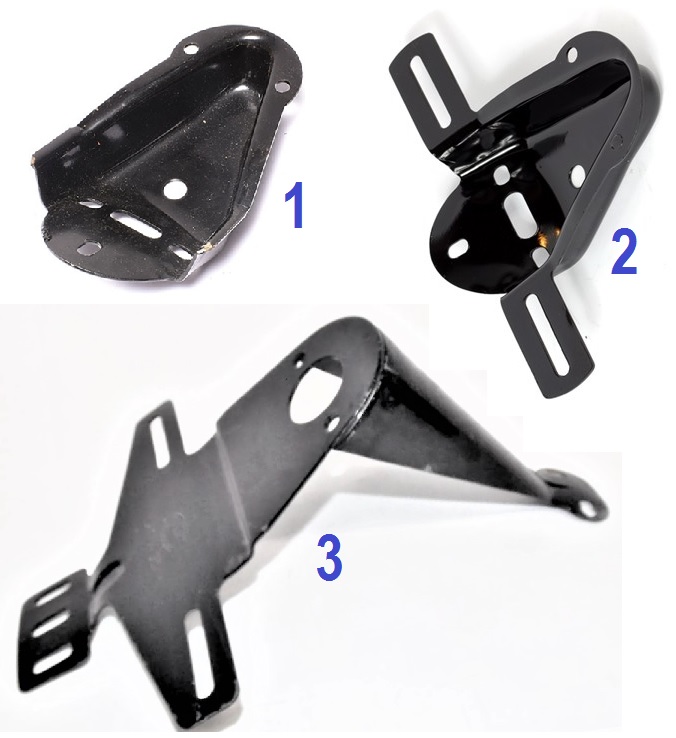
8.1 19955.0 $17.0 1. mount with no license bracket
8.1 19955.0 $10.0 1. mount with no license bracket, used
8.2 16590.0 $34.0 2. mount with license bracket
8.2 16590 .0$20.0 2. mount with license bracket, used
8.3 02748 .0$75.0 3. long high mount with license bracket, used,
8.3 02748 .0$00.0 weakened, needs reinforcement like most

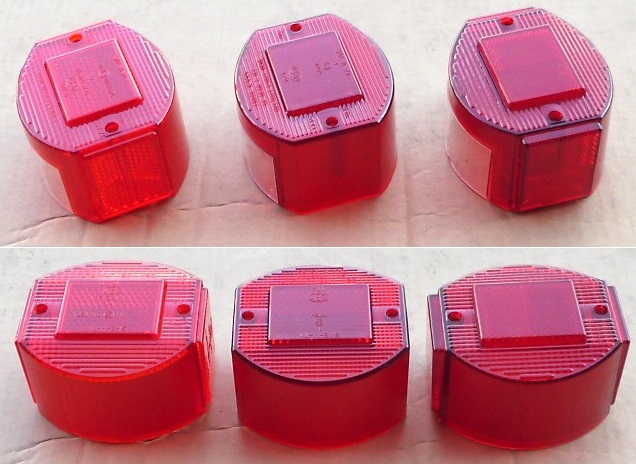
9.0   03211 0 none  left: red lens with reflectors, says CEV 174
9.2   03211.2 $38.0 mid: red lens, no reflectors, says CEV 174
9.3   03211.3 none  right: red lens with side reflectors, generic
9.3 03211.3 $00.0 fits tight on mirror, requires mirror edge filing
10.0 22253.0 $1.90 lens screw M4 x 72 phillips
10.2 22253.2 $2.00 lens screw long bolt-thru with nut
10.2 22253.2 $0.00 for when the housing screw post is broken
11.0 00000.0 $1.00 M6 x 20 hex bolt
12.0 00000.0 $0.25 M6 lock washer

13.0 03212.0 $95.0 CEV 9350 housing chrome
13.2 03212.2 $90.0 left: CEV 9350 housing black
13.2 03212.2 $85.0 left: CEV 9350 housing black, good-used
13.3 03212.3 $15.0 right: SIM 78 housing, no bulbs or wires, see below
13.3 03212.3 $00.0 requires modification and a special bulb
15.1 19606.0 $4.00 rubber gasket


4. CEV 9400-9417 Tail Lights

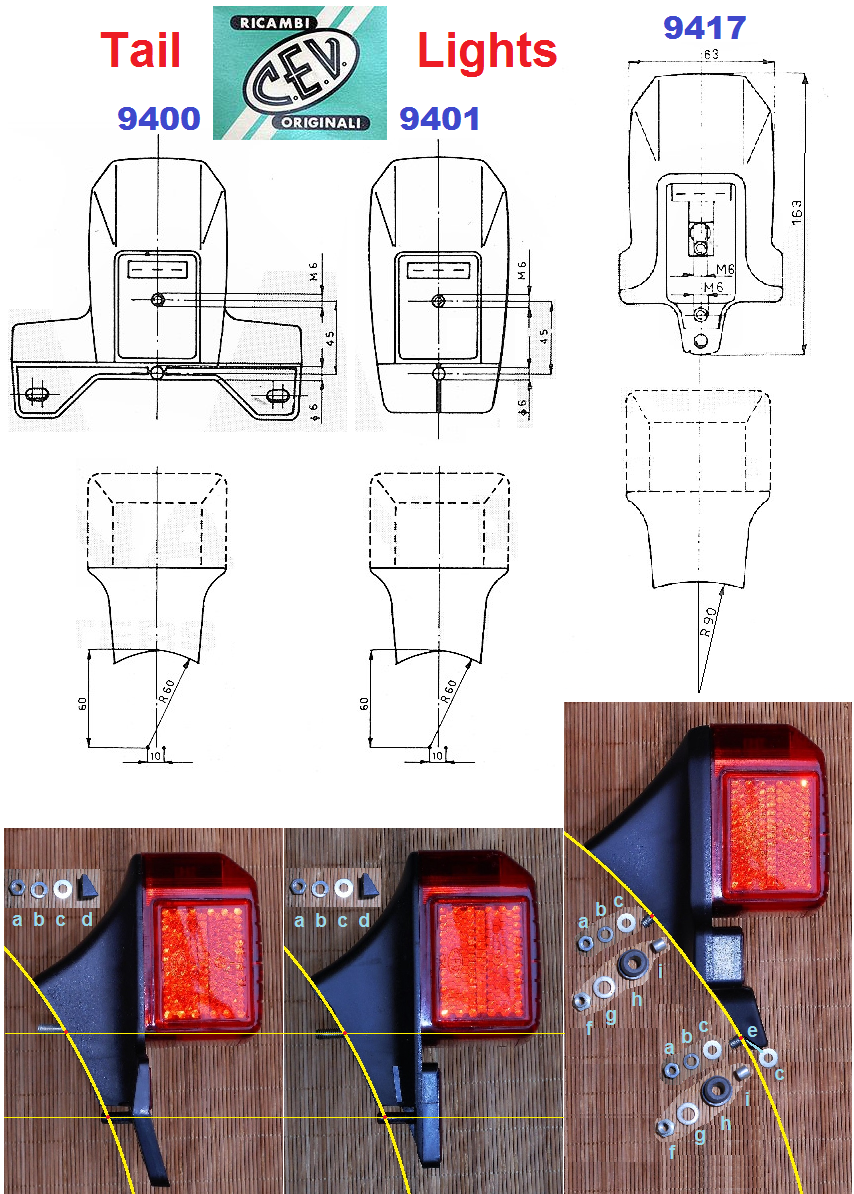
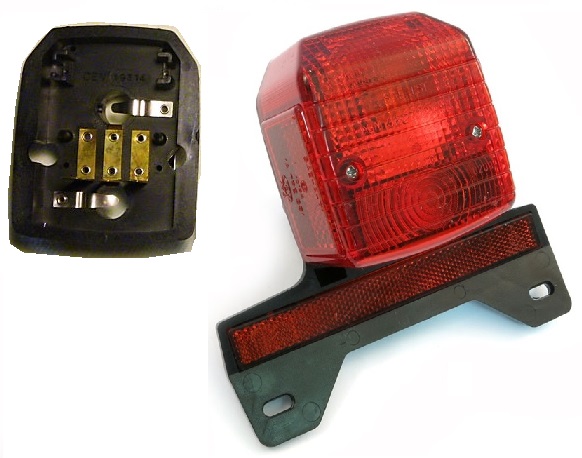
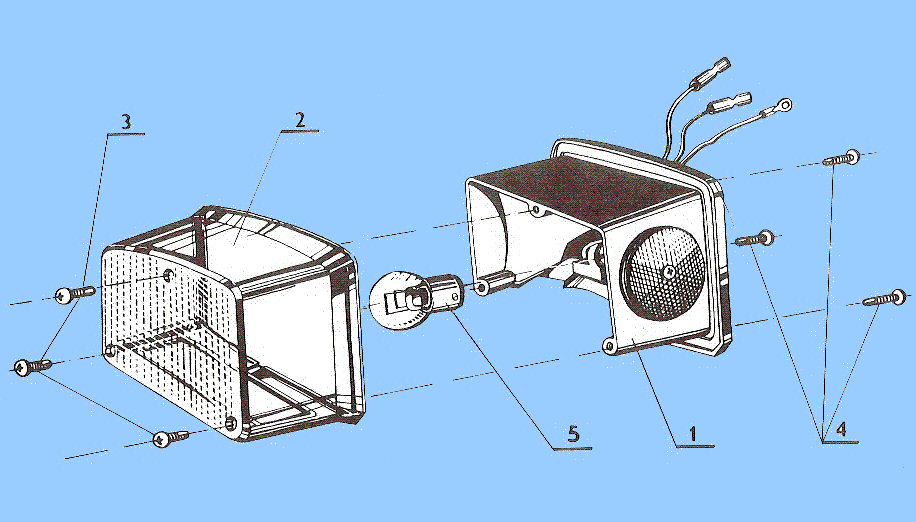
CEV 9400 and 9401 rectangular shaped rear lamps came out in 1977 on Italian mopeds. 9400 has two single filament bulbs. 9401 has one double filament bulb with a larger glass. 9401 had problems and was replaced by 9400 in 1978-79.

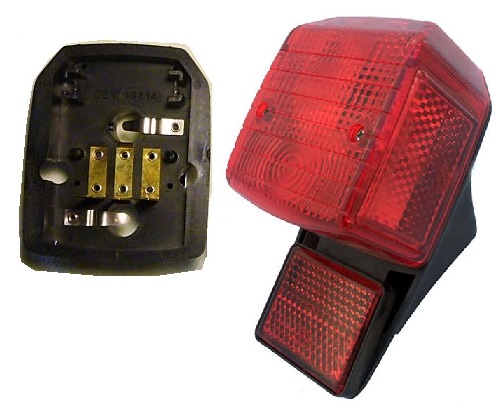
CEV 9417 rectangular shaped rear lamps came out in 1978 on Puch mopeds. They are mounted higher on the fender, so the mount surface is at a different angle. If a 9417 replaces a 9400 or 9401, it angles downward. To correct this new holes can be made higher up on the fender. The old holes can be hidden by the license plate mounted below the light.


1. 9400 and 9401 are solid mount, M6 stud and a plastic post.
1. 9417 is either solid or flexible mount, M6 stud and M6 bolt.
2. Left 9417, and right 9401 on Tomos


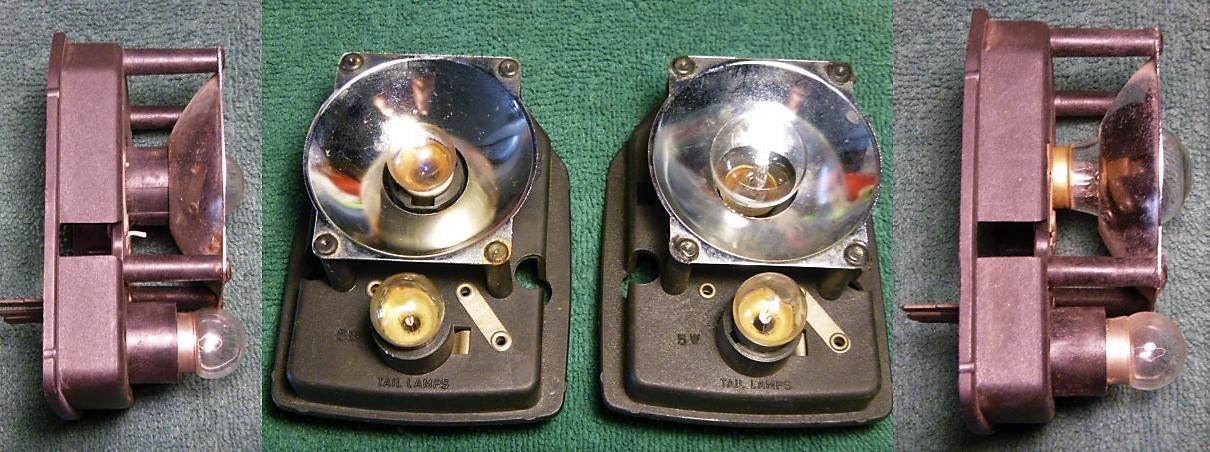
CEV 9400, 9401, 9417: The top brake light bulb is a low wattage type with a small glass 6V 10w. The bottom tail light bulb is 6V 5w. There is no ignition ground resistor.

CEV 9400.1, 9401.1, 9417.1: These are the same except for the bulb holder and upper bulb. The bulb holder is made for a “large glass” brake light bulb. This can be for a brighter brake light on battery powered motorcycles. Or it can be for many US model mopeds with a special “external ignition ground” that powers the brake light. On those the brake light bulb needs to be 6V 21W in order to have good spark with the brakes on. 

 
fig  price   CEV#
1. none  9400    black 6V
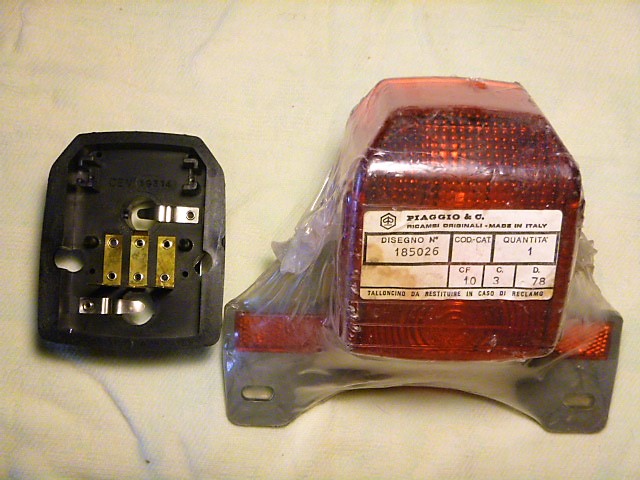
2. $84.0 9400    grey  6V Piaggio 185026
3. none   9401    black 6V use 9400
4. 9565 9417    black 6V on ’78-86 Puch
4. 95659417    black 12V on ’86-10 Tomos

1. none  9400.1 black 6V use 9400.2
3. none   9401.1 black 6V use 9400.2
4. none   9417.1 black 6V use 9417.2

CEV 9400.2, 9401.2, 9417.2: To solve the problem of loosing spark if the brake light burned out, CEV made versions special for USA mopeds, with a power resistor hidden inside. If the brake light burned out, the resistor would allow the engine to stay running. In ’78-79 the 9400.2, 9401.2 and 9417.2 superseded the 9400.1, 9401.1, and 9417.1.

 
fig  price   CEV#  with ignition ground resistor
1. none  9400.2 black 6V on ’80-83 Grande
2. $89.0 9400.2 grey  6V Piaggio 185028
3. none  9401.2 black 6V use 9400.2
on Garelli ’77-78 and some ’79-83, on Tomos ’77 and some ’78
4. 95-65 9417.2 black 6V 
on Tomos ’79-85 and some ’78, on Garelli ’84-86 and some ’79-83


5. CEV 9417 Replica Tail Lights


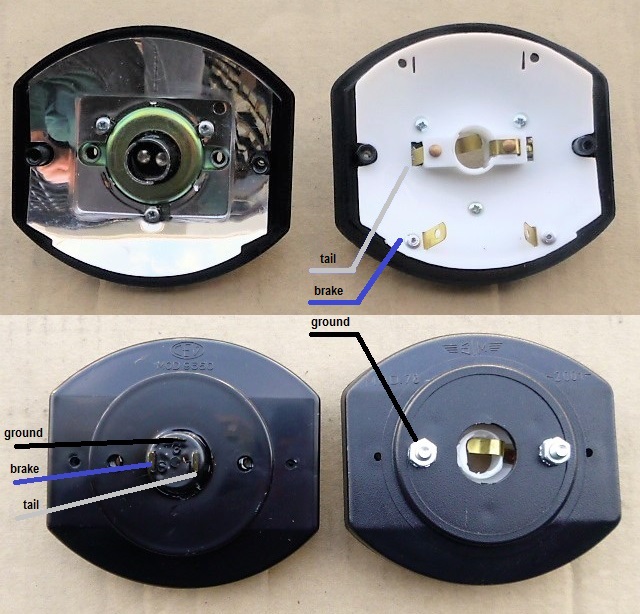
fig  price   part#     wire colors: ground, brake, tail.
1. none  222639-R  red sides, 1-bulb  12V 10/5w
2. none  222639-O orange sides, 1-b. 12V 10/5w

These lamps look exactly like the original CEV 9417 on the outside. But inside the bulb holder-mirror is different. It is a single bulb type that cannot be swapped for an original 2-bulb type. In the USA, in motorcycle parts stores, the single dual filament bulb has limited choices in volts and watts. There is just 12V 21/5W #1157 or 6V 21/5W #1154. 

Because of the bulb availability, this lamp with a 6V 21/5W #1154 bulb is a good substitute for 9417.1 or 9417.2, without any resistor. But it is not a good substitute for 9417 because 6V 10/5W or 12V 10/5W dual filament bulbs are unavailable in USA auto parts stores. 

The three male blade connecters have a tiny barb on top. The barb can be depressed with a tiny screwdriver. That allows the connectors to be removed. Then the original lens and/or bulb holder can be transferred onto it. But modification is required. More to follow…


fig  price   part#     wire colors: ground, brake, tail.
1. $00.0 222639-2  red sides, 2-bulbs  12V 10w 12V 5w

This lamp also looks exactly like the original CEV 9417. Inside it has a 2 bulb holder-mirror. The bulbs can be 6 or 12 volt, and 5 or 10 watt. A 1970’s bike needs 6V, but a 1990’s or later needs 12 volt bulbs. 

This entire lamp is a good substitute for CEV 9417.

Many 1970’s US-model bikes had a “secret” ignition ground resistor hidden inside this light. It allowed the bike to run even when the brake light was missing or burned out. This new light cannot hold a resistor, but one can be added to the ignition ground wire above the engine. The resistor is listed below.


6. CEV 9400-9417 Parts


# 0 CEV# 0 price    9 4 0 0 – 9 4 1 7    P A R T S 
1   Cwedge  $7.00 wedge with hole
2   025253  $1.00 hex bolt M6x20
3   031925  $0.20 plain washer M6
4   031845  $0.20 lock washer M6 substitute
5   031075  $0.50 hex nut M6
6   10628.2 $2.00 bulb 6V 5W small glass
7   10628.3 $2.00 bulb 6V 10W small glass
7   10629.2 $2.00 bulb 6V 15W large glass 9401
8   04816    $28.0 red lens with clear bottom, original
8    04818   $0.00 says CEV 210, with side reflectors
8   213452  $22.0 red lens with red sides, replica
8   213452  $15.0 red lens with orange sides, replica
9   18596    $1.00 9400 lens screw ST#6 x 1.5″ 38mm
9   18596    $0.00 original for when the post is normal

9   18596.1 $1.00 9400 long screw ST#6 x 1.7″ 44mm

9   18596.2 $1.00 9400 long screw ST#6 x 2.0″ 51mm
9   18596.2 $0.00 for when part of the post breaks off
9   18596.3 $2.00 9400 long screw #6-32 x 2.36″ 60mm
9   18596.3 $0.00 for when all of the post breaks off


10    04818    $8.00 housing 19314 left, small brake bulb
10.1 04818.1 $15.0 housing 19477 right, large brake bulb
10.2 04818.2 $22.0 housing 19314, small bb. with resistor
11    04814    $70.0 tail lamp body for 9400, says 19317
11    04815    $70.0 tail lamp body for 9401, says 19318
11    04927    $65.0 tail lamp body for 9417, says 19845


12    19609   $8.00 fender mount rubber for 9400, 9401
12    19609  $0.00  for less-curved more-flat fenders


14    19626 x0$6 resistor 3.9 Ω 10W, original is 4Ω
14    19626.1  $4 resistor 6.2 Ω 10W, for brighter BL
15    00000    N/A mount bolt for 9401 M6x40 all-thread

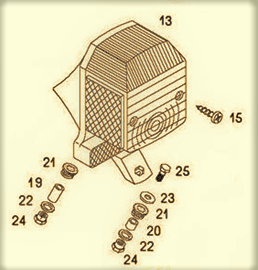
Flexible Mount Parts, like on ’78-11 Tomos
19  219866 $6.00 distance tube 6 x 9 x 5.5
20  219866 $6.00 lower tube 6 x 9 x 5.5
21  219946 $5.00 vibration rubber 8 x 12
22  031926 $0.30 plain washer M8
23  031925 $0.30 plain washer M6
24  219869 $7.00 shoulder nut M6 11 hex


Gurtner Carburetors

July 14, 2016

Gurtner

Contents (carburetor families):
1.  AD  on ’81-83 Motobecane  
 

2. D, E on ’75-83 Peugeot 102, 103
3. AR2 on ’70-80 Motobecane 40, 50
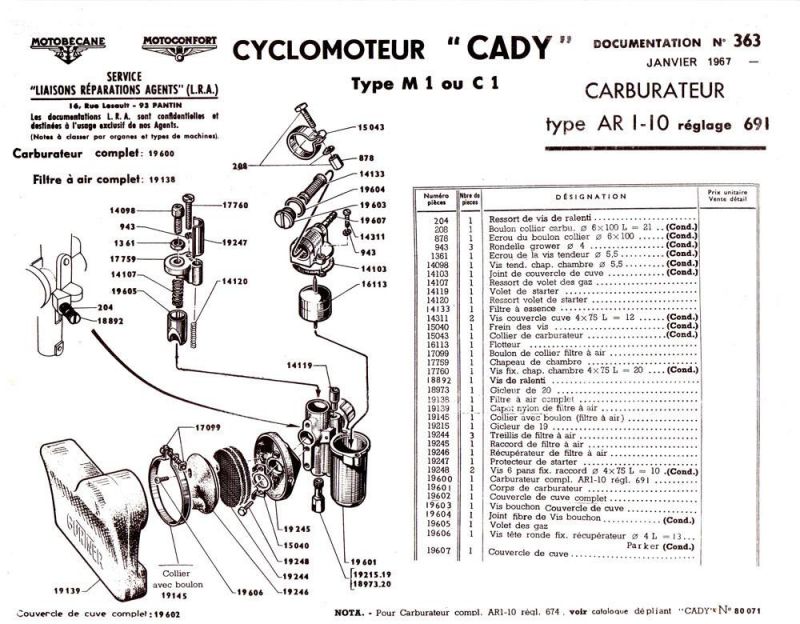
4. AR1 on ’66-78 Motobecane 7, Cady
5.  BA  on ’60-69 Motobecane, Raleigh
6.  AR  on ’55-65 Motobecane, Riverside

7. Floats
8. Jets
9. More  


Jules Gurtner started making carburetors in 1907, for some of the earliest automobiles and motorcycles.

Gurtner carburetors are made in France, and original on French mopeds Peugeot and Motobecane. See also mopedarmy.com

Gurtner early M18D M20D M22D M23.5D M25D

1940’s M series

Gurtner early M series article from 1945

1945 M series


Gurtner Master Catalogs: Here are the 1961 Gurtner Catalog and the 1980 Gurtner Catalog from motobec.fr. 

Gurtner Moped Carburetors: Here are the 1961 Carb List and the 1980 Carb List. From those you can see that about one third of all Gurtner carbs are for mopeds (mobylettes). Before 1960, most Mobylettes had 10mm carburetors (or 8.7). So the speed and power were limited to be under about 25mph. After 1959, some had 10mm carbs and went 25mph, and some had 13mm carbs and went 30-35mph.

Much of this information and photos are from the Motobecane Club of France.


1. M Gurtner AD


Jet type 9831, float 13105, slide 13138 (∅15?) or 13416 (∅15?)

AD was the last Gurtner carburetor on Motobecane/MBK mopeds, before the change to Dellorto SHA.


1A. AD Carb List

AR2float 0 slide 0000 jet  000 diffuser       air box
float 000 slide 00000  jet  000 diffuser   assm.   bare

∅13 AD13-858-A  7/82  parts list
’80-82? Motobecane 99Z, 94Z
13105  13138 ∅15? 9831/78   13345 0  13104  13185

∅13 AD13-915   parts list
’80-82? Motobecane/MBK 51V
13105  13416 ∅15? 9831/78   11316 0  13534  11301

∅13 AD13-945   parts list
’80-82? Motobecane/MBK 51S
13105  13416 ∅15? 9831/76   14097 0  13534  11301


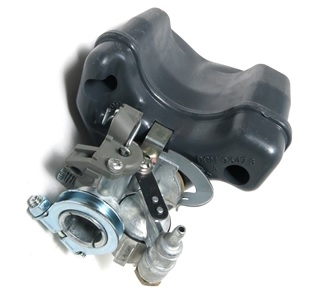
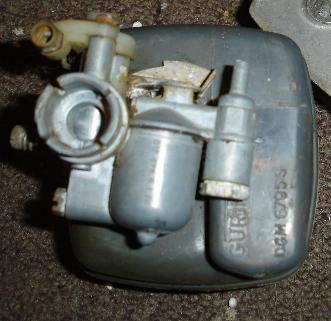
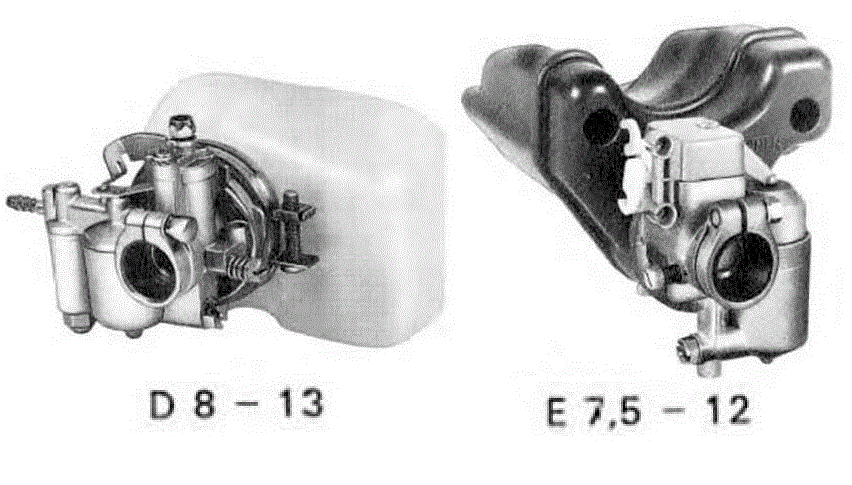
2. Peugeot 1980 tiny D and E


Jet 5012, float 6437, slide 4649/10 (∅11?) or 4649/8 (∅13)

102 has a fixed engine and piston port intake, to cylinder.
103 engine swings and has a reed valve intake, to case.
USA versions: U1 (20 mph), U2 (25 mph), U3 (30 mph)

Left, 102 has a fixed engine and piston port intake, to cylinder. R, 103 engine swings on the swing arm pivot, case reed intake.

Gurtner Peugeot remake

generic D12G remake

D12G-724F for 103

1980 102 SP U3 D12.698.G.1.80

D12G-698 for 102


2A. D Parts List

102 and 103 combined. Part numbers with “b” are 102-only.
New items prices are green. Used prices are dark green.

1970's 103 types had Gurtner D12 carburetors. '81-on 103/104 had Gurtner E12B carburetors. 
Original Carburetors with air cover   
fig price  Peug#  Gurtner# 
 jet slide  US/EU models
1a none 00000 D10G-754B 250 11 70’s 103 00  25kph
1a none 00000 D10G-918B 230 11 70’s 103 CH 30kph

1a none 48929 D12G-724C 245 13 76-80 103 0 25-30
1a none 00000 D12G-724E 245 13 70’s 104 L, LV 

1a
$83.000000 D12G-724F 255 13 replacement 25-30
1a none 58036 D8.5G-826  240 11 76-80 103 0 20mph
1b none 46479 D12G-698   245 13 79-80 102 0 30mph
1b none 64203 D10G-975   220 13 79-80 102 0 25mph
1c  none 00000 E12B-738    000 00 81-83 103 0 25-30

fig  price   Peug# Gurtner# MB#  Carburetor Parts
2    $45.0 48929 carb 48929 bare   good used, tested
3    $15.0 69299 4649/8 15319 throttle slide Ø13 
3    none  69445 4649/10 throttle slide Ø?? for D8.5G-826
4    $5.00 53386 17732 14107 spring Ø9.5 x 30
5    10-$7 12156 carb top bare
5    $12.0 12156 7701 top assy 5,6,8,9,10,12,13  no slide
6    $1.00 07016 10218 14311 screw M4 x 12 
7    $4.00 09939 9939 air filter bracket
7b  $0.208560993660 01088 lock washer   
8    $5.00 01510 1510 00189 adjuster M6-0.75 
9    $2.50 01511 1511 04172 adjuster nut      
10  $3.00 08947 8947 drawing rod washer 
11  $8-$5 09394 9394 drawing rod gasket 
12  18-12 09393 9393 drawing rod 
1
$8.00 09391 9391 throttle pull clip  a wire “crankshaft”
14  $2.00 06546 6546 18892 idle screw M5-0.8
15  $2.00 05072 5072 00204 idle screw spring
15  none  06546 13667 idle screw and spring
16  $5.00 69463 5012/66 jet 260=66 0.64  (0.025″)
16  none  69462 5012/64 jet 255=64  
16  none  69461 5012/63 jet 250=63 0.63 mm
16  $19.0 69460 5012/62 jet 245=62 0.62 mm
16  $11.0 69459 5012/60 jet 240=60 0.60 mm
16  $14.0 69458 5012/59 jet 235=59 0.59 mm
16  $14.0 69457 5012/58 jet 230=58 0.58 mm
16  none  69456 5012/56 jet 220=56 0.56 mm
17  $2.00 69300 fiber washer 19 x 12.5 x 0.4   optional
18  55-35 69755 float cover w/seat     
19  $5.00 09348 9348 rubber ring 22 x 27 x 1  
20  $5.00 69754 12372 plug M12-1.0 taper seal, no gasket
21  $2.00 08048 8048 float cover strap  for 103
21b $12.009365 9365 float cover strap  for 102
22  $0.60 10306 10306 13392 screw M5 x 10       
23  $24.0 06437 6437 float with needle Gurtner         
23  $14.0 06437 5440 float w/needle aftermarket
24  $8.00 04159 4159 14133 fuel filter screen
25  none  09860 9860 air box with filter   for 103
26  $8.00 09672 9672 air filter gasket          
26b 45-25 09388 9388 air box with filter   for 102
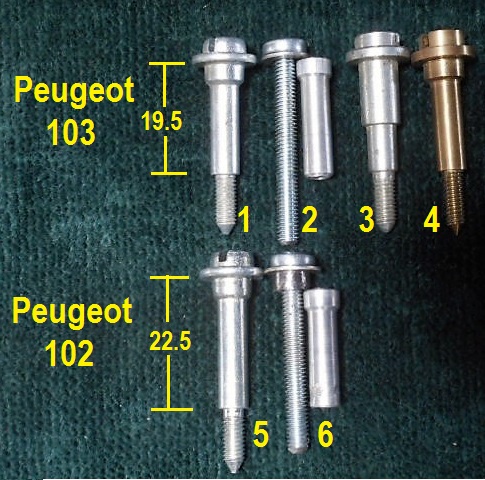
27  $15-9 09286 air box screw for 103 #1 original
27  $16.0 09286 air box screw for 103 #2 replacement
27  $10.0 09286 air box screw for 103 #3 or 4 original
27b $22.0 09395 air box screw for 102 #5 original
27b $16.0 09395 air box screw for 102 #6 replacement
28  $1.00 68239 9617 19689 screw M3-0.5 x 6
29  $5-$3 68239 clamp bolt M6 special  
30  $0.3083208700010 clamp bolt nut
31  $10.0 68202 23134 mount clamp w/bolt  


Air box screw for Peugeot 102 and 103


3. M Gurtner AR2 


Jet type 581, float 4901, slide 4649/10 (∅13) or ????? (∅14)

Gurtner AR212/R705 remake

AR2-12-705 remake

Gurtner AR210-R991

Gurtner AR2-10-991


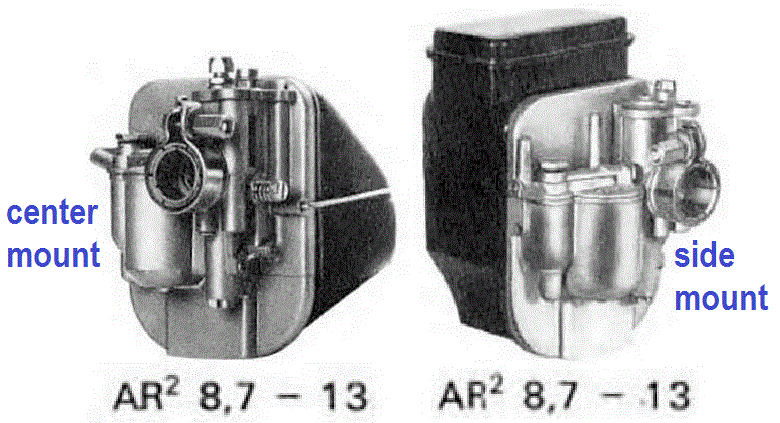
Gurtner AR2 series moped carburetors have a large flange, like a wall. It is for an “air box”, a noise silencing, fuel mist recovering, and air filtering chamber. There are two (venturi) sizes, 10 or 12 mm, and two styles, side or center mount. Center and side mount carbs look the same, but don’t interchange completely.


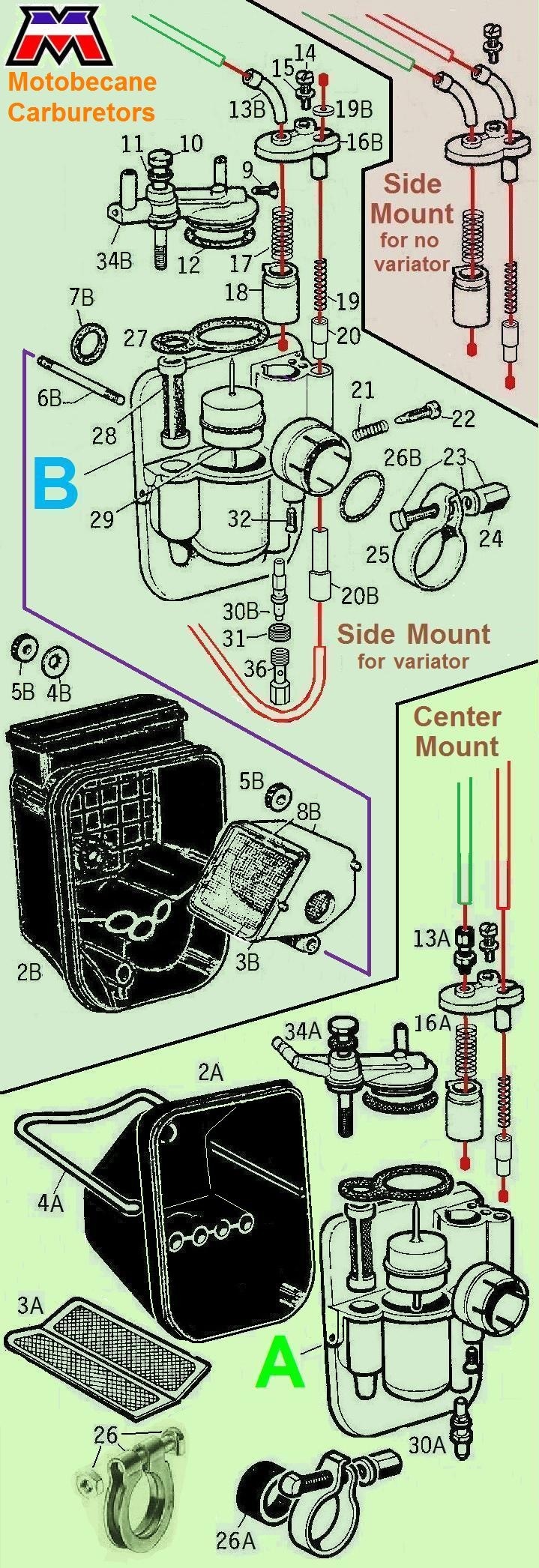
3A.  AR2 Parts List

Key: A= center mount carb only   B = side mount only
New prices are green. Used prices are dark green.


Original Carburetors without air cover   S is air box stud
fig price  MB#   Gurtner# 0 jet diffuser S US/EU models   mph
B none 00000 AR2-13-712 00   00000 0 70’s SP94 00 00   ?

A $110 20026 AR2-12-705 54   19990 0 74-76 50V 00 00 30 
B none 54973 AR2-12-873 56   22937 5 76-79 50V 00 00 30
B $180 54973 Ø12 07776   56   22937 5 orig replacement 30
B none 54973 AR2-12-978 56   22937 6 79-80 50V 00 00 30
B none 54973 Ø12 13512   56   21002 6 orig replacement 30
B $120 22160 AR2-12-729 56   21002 5 74-77 50 40   25-30 
B none 22160 AR2-12-729 56   21002 6 78-80 50 40   25-30 
A none 52175 AR2-10-759 52   54237 0 75-77 50V 00 00 25 
A none 52175 AR2-10-737 K80 52560 0 77-79 50V 00 00 25 
A none 52175 AR2-10-991 K80 52560 0 78-80 50V 00 00 25
B
none 54115 AR2-10-910 52   20573 5 76-77 50V 50 40 20
B
none 54115 AR2-10-910 52   20573 6 78-78 50V 50 40 20
B
none 54115 Ø10 13510   52   20573 6 orig replacement 20

  fig  price    MB#  Carburetor Parts 
  1A
$65.0 53657 carb body bare AR2-12-705
  1A none  52430 carb body bare AR2-10-991 & 737
  1B $50.0 54466 carb body bare AR2-12-873 & 729
  1B none  54235 carb body bare AR2-10-910
  2A $19.0 18355 air filter cover   for center mount
  2B none  20949 air filter cover   for side mount
  3A $12.0 15041 air filter screen  for center mount
  3B $6.00 20999 air filter screen  for side mount
  4A $12.0 18356 spring clip         for center mount
  4B $4.00 m6cup cupped washer upgrade, see above
  5B $1.00 m5lock M5 nylock nut   for M5 stud
  5B $1.00 m6lock M6 nylock nut   for M6 stud
  5B $2-$1 13339 M5 knurled nut  for M5 stud
  6B $5.00 21000 stud 5mm         side mount pre-79
  6B $8.00 23562 stud 6mm         side mount 78-on
  6B $5.00 special M6-M5 step stud for stripped M5 hole
  7B $3.00 20997 air filter gasket  18 x 21 x 1.5mm
  8B $8.00 20996 air filter 5mm     side mount pre-79
  8B $20.0 23561 air filter 6mm     can drill a 5 to 6
  9   $1.00 19689 taper screw M4-0.7 x 6/8 on USA models
10   $1.00 19767 bolt M5-0.8 x 44    M5 w/flange 10 hex
11   $2.00 15326 fiber washer 5mm 5 x 10mm
12   $6.00 20475 o-ring 21×24 x 1.5  this is optional
12   $0.00 somehow, removing this often makes it leak less
13A $5.00 00189 adjuster M6-0.75   A13
13B $16.0 21940 cable guide, used   for side mount
13B $14.0 substitute 2cr + 3a Dellorto cable pipe
14   $0.50 18893 screw M5-0.8 x 12  
15   $0.20 01271 washer M5           
16A $12.0 21229 slide cap M6-0.75   threaded for adjuster
16B $5.00 21696 slide cap                recessed for elbow
17   $5.00 14107 spring Ø9.5 x 30    same as Peugeot
18   $15.0 15319 throttle slide Ø13   for AR2-10 & Peugeot
18   $15.0 19278 throttle slide Ø14   for AR2-12 carbs
19   $7.00 14120 choke spring       
19B $2.00 22935 choke cable ring    cable end adapter
20   $9.00 14119 choke slide brass   stepped 6.3 x 5.7 x 15
20B $8.00 22936 choke push rod      original white plastic
20B $3.00 22936 substitute (adjuster A2)
21   $2.00 00204 idle spring 7.5 x 11 
22   $2.00 18892 screw M5-0.8 x 16  same as Peugeot
23   $5.00 00208 bolt assy M6-1.0 
24   $3.00 00878 tall nut M6-1.0   12mm tall 8mm hex
25   $2.00 15043 clamp for ∅21.7 (to 3/78)
26   $10.0 23134 clamp for ∅23.5 (4/78-on) 
26A none  14100 sleeve 19×16 black   for AR2-10-991
26A $21.0 16630 sleeve 19×17 white  for AR2-12-705
26B $2.50 22689 rubber washer 15 x 19 x 2
27   $6.00 18880 float gasket   
28   $8.00 14133 fuel filter/screen     same as Peugeot
29   42-25 14101 float Gurtner 4901 41.4 x 23.6, 3.0 gram 
29   $12.0 14101 float aftermarket   40.3-40.9 x 22.7, 2.5 g
30B $38.0 22937 slide fit diffuser Ø0.91  AR2-12-873 & 978
30A $7.00 19990 9346/1 diffuser Ø1.50  AR2-12-705
30A none  20573 9529/3 diffuser Ø0.00  AR2-10-910 pre-78
30A none  54237 slide fit diffuser Ø1.50  AR2-10-910 ’78-on
30B $35.0 21002 slide fit diffuser Ø0.91  AR2-12-729
31   $3.00 20000 collar M7-1.0           holds slide-fit diffuser
32   $1.00 19689 screw M3-0.5 x 7     M3 taper seal
33   none  52560 press diffuser Ø0.61 AR2-10-991 & 737
34A none  21228 float top horiz inlet   for center mount
34B none  22161 float top vert inlet    for side mount
35   none  22339 float top no inlet      for carb w/inlet
36   $17.0 23545 581/52 jet 0.52 mm 210cc  for AR2-10-910
36   none  21841 581/52 jet 0.52 mm   #52  
36   $10.0 23546 581/54 jet 0.54 mm 220cc  for AR2-12-705
36   $14.0 21843 581/54 jet 0.54 mm   #54  for 
36   $19.0 23547 581/56 jet 0.56 mm 230cc  AR2-12-873 & 978
36   $19.0 21949 581/56 jet 0.56 mm   #56  for AR2-12-729
36   $15.0 00000 581/57 jet 0.575mm   #00 drilled w/#74 drill
36   $19.0 23548 581/58 jet 0.58 mm 240cc  for AR1-10
36   $19.0 22938 581/58 jet 0.58 mm   #58  
36   $19.0 23549 581/60 jet 0.60 mm   #60  for AR1-10
36   $15.0 00000 581/61 jet 0.615mm   #00 drilled w/#73 drill

36   $15.0 00000 581/64 jet 0.64 mm    #00 drilled w/#72 drill
36   $19.0 51052 000/00 jet 0.80 mm   K80  AR2-10-991 & 737
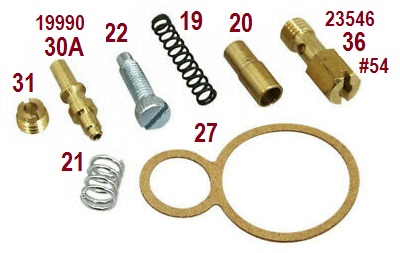
40   $17.0 aftermarket AR2 Carb Kit correct only for AR2-12-705


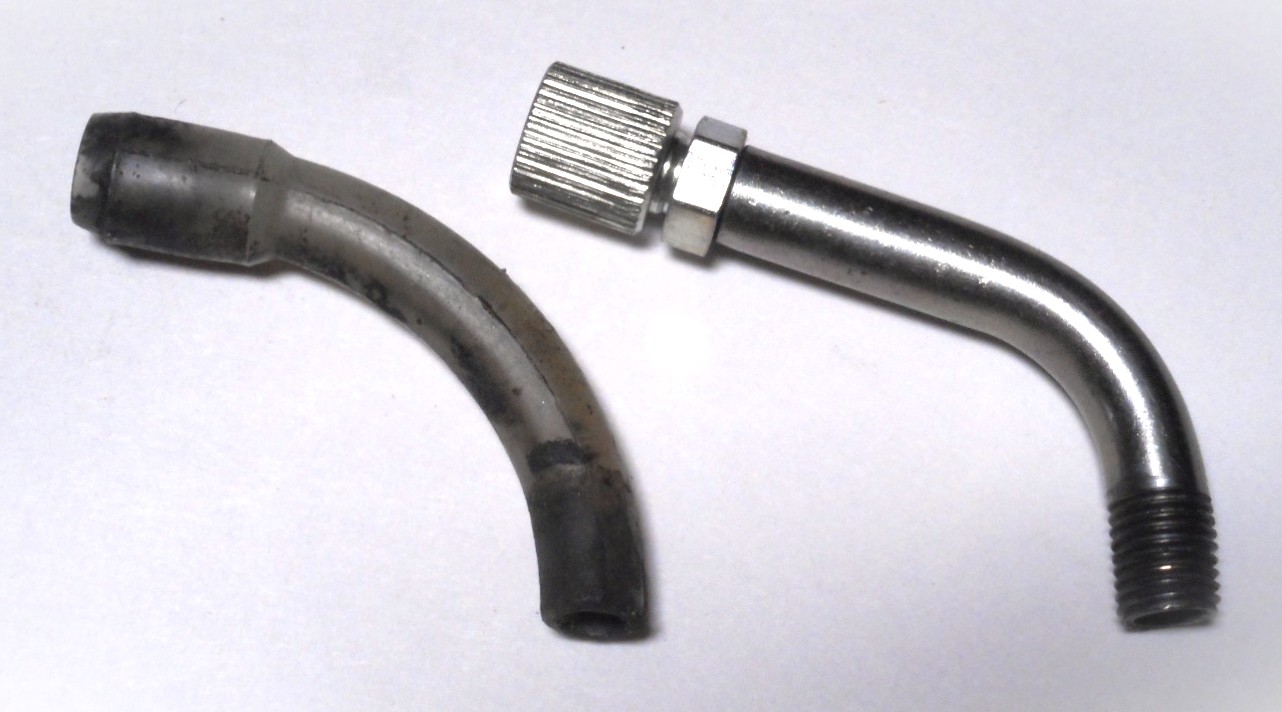
1. carb kit for AR2-12-705. 2. cable pipes original and replacement


3B.  AR2 Information

Side mount carburetors have threads for an air filter stud, side holes for a center mount air box clip, and clamp to a 19mm intake pipe. The side mount float top cover has a vertical fuel hose spigot. A stripped bare side mount body, as is, will exactly replace a bare center mount body.

Motobecane 30mph variator side-mount carb with long pipe

side mounted AR2 carburetors

Motobecane 20mph no-variator side-mount carb with thin long pipe

side mount thin pipe

40TS side mount with top-pull choke


Center mount carburetors have no threads in the stud hole, side holes for a center mount air box clip, and have removable sleeves, black 16 x 19 (for AR210), and white 17 x 19mm (for AR212). The sleeves reduce the precision clamp size from 19mm to 16 or 17. The purpose is to be tamper resistant. The sleeves fit tight and are difficult to remove without damaging them. The center mount float top cover has a horizontal fuel hose spigot. A stripped bare center mount body, after threads are cut in the air box post hole, will replace a bare side mount body.

Motobecane 30mph variator center-mount carb with short pipe

center mounted AR2 carburetors


Center mount early  Some pre-USA years 1960’s or early 1970’s had no fuel hose inlet in the float top cover. Instead it was in the carburetor body just below the float top. This type is in many Motobecane USA parts illustrations, but it was not used on any, or hardly any US models. In the illustration below it was edited out. Out of 47 original carbs, taken off once-living Motobecanes from around Southern California, none were this “center mount early” type with the fuel hose spigot in the carb body.


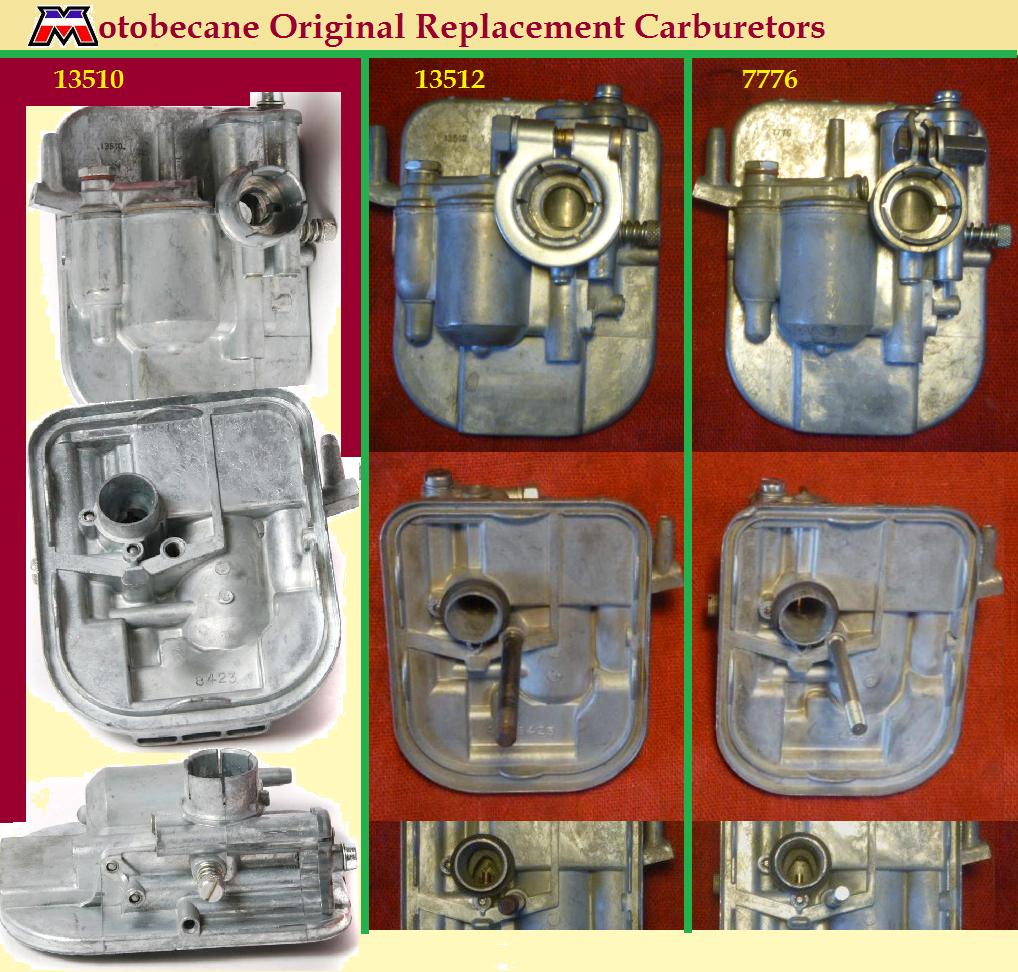
OEM Replacements Motobecane USA 1976-80  
7776
is pre-1978 12mm, 5mm stud, thin mount.

13512 is 1978-on 12mm, 6mm stud, thick mount.
13510 is 1978-on 10mm, 6mm stud, thick mount.

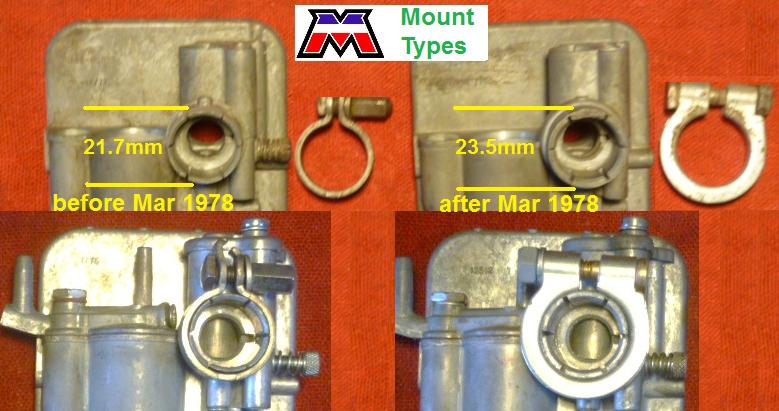
In 1977 the air box stud 5 mm threads would sometimes get stripped, or the clamp mounts would sometimes break. So during 1978, on some they made the air box stud 6 mm and the casting thicker at the mount. From 1979-on all were 6 mm.

MB carb mounts early (thin) and late (thick).

MB carb mounts
early (thin)
and late (thick).


Mount Type: All Motobecane carbs clamp to 19.0mm inlet pipes. But many of the pre-March 1978 carburetors were cracking at the edge of the clamp, or the base of the petals. So Gurtner beefed up the carb body with a reinforcing ring, made the clamp petals about 1mm thicker each, and changed the clamp to the bigger Peugeot double-wall type.

Air Filter Stud: When the mount was made stronger in 1978, the air filter post was also beefed up from 5mm to 6mm. This made the threads in the body more resistant to stripping. Another issue that was improved is when the air filter stud is over tightened, a bulge can form in the float chamber wall behind it. That bulge makes the float stick. See below.

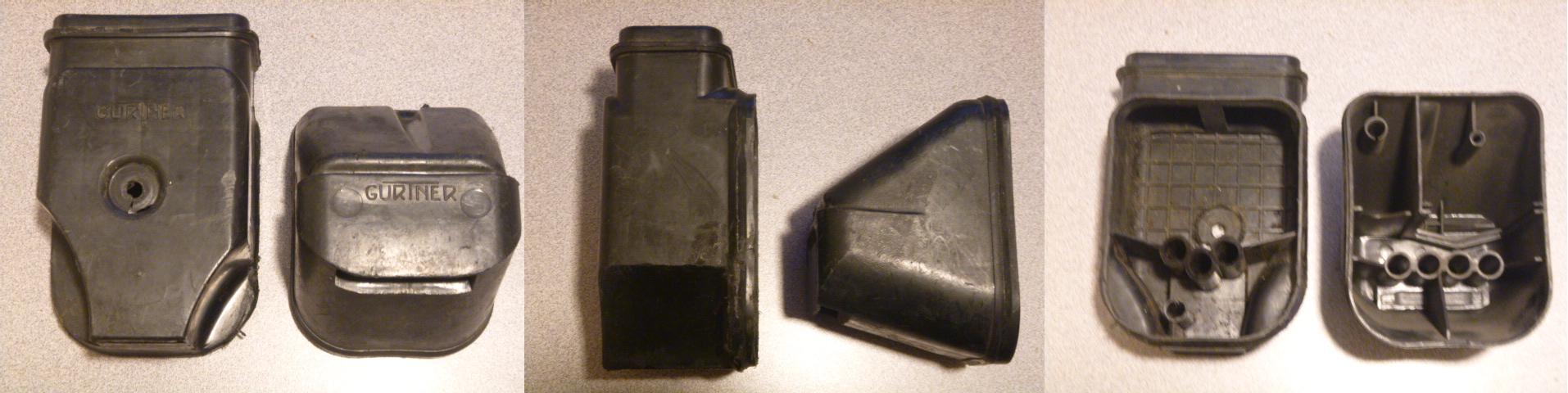
Center Mount Air Cover: The center mount type (short and deep) air box is too deep and sticks out too much as a side mount. The right side engine cover panel must be removed, and some kind of high-offset right pedal crank arm installed. Then maybe pedal threads are different.

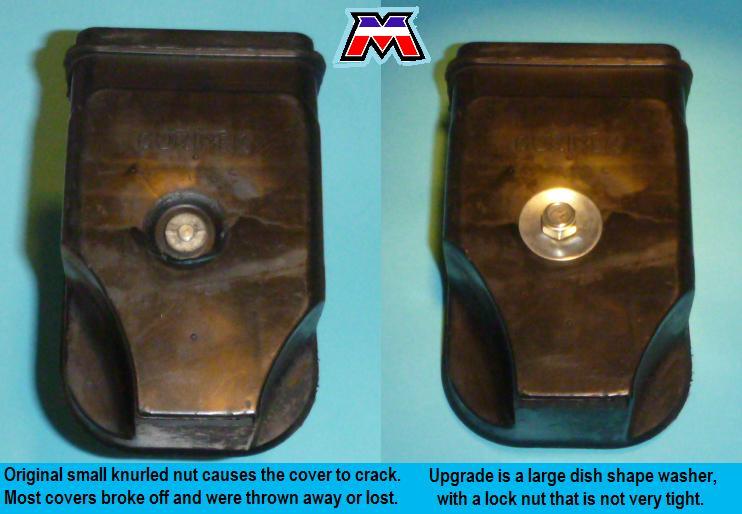
Side Mount Air Cover: The side mount type (tall and flat) air box is too tall and hits the frame as a center mount. More importantly, they break, fall off, and get thrown away, in addition to getting lost. Because of that, they have become scarce and pricey. From 2000-2015 maybe 200 people have asked for this item, but only two were available and sold at MM.

Gurtner Motobecane air box covers

Three views of the side (L) and center (R) types of MB air box covers


Motobecane side mount air box nut and cupped washer upgrade

Side mount air cover breaks without cupped washer/nut.

The Motobecane piston-port two-stroke engine needs the air cover because the gasoline mist flows in and out in both directions. So there is a little cloud of fuel and oil mist out in front of the carburetor. Without the air cover, this fuel cloud gets wasted and blown away (or ends up on the riders right leg or shoe). Besides that, the air cover provides the correct amount of flow restriction, which is a good thing, up to a point. See below about running without an air cover (how it can damage the engine by over-heating from not enough fuel and oil).


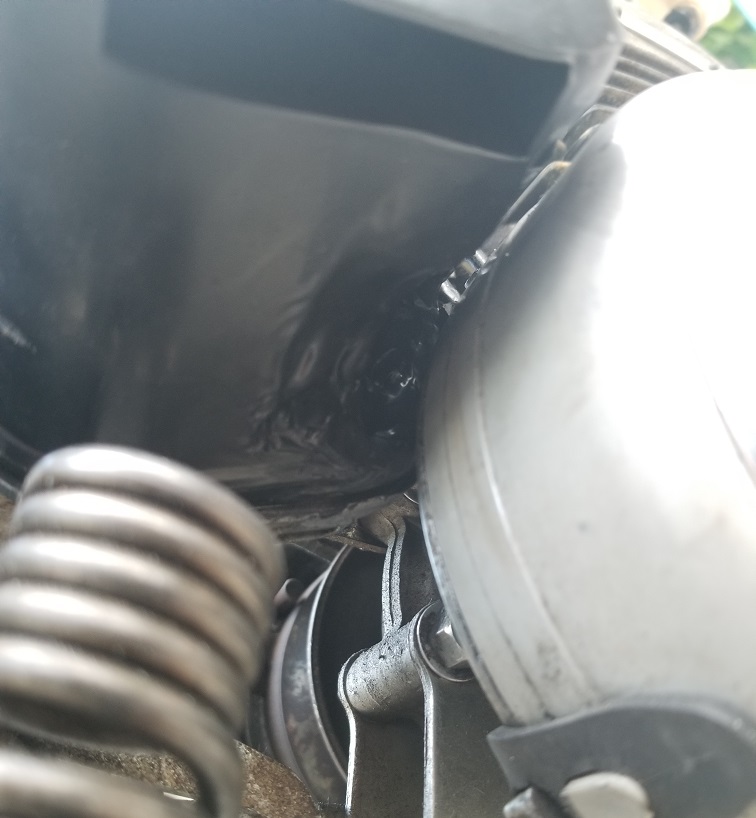
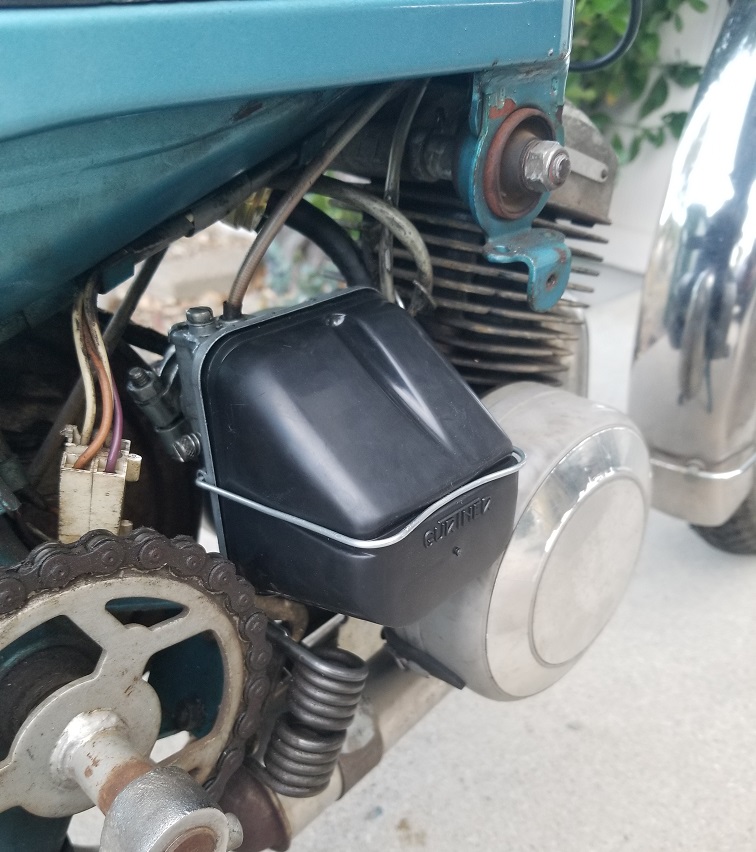
Air cover substitution: Here is a center-mount air cover installed on a side-mount carburetor. Holes have to be drilled for the mounting wire clip, and the lower right corner has to be warmed up and molded inward where it touches the round magneto base plate. More importantly, the side cover must be removed, and it almost touches the pedal. So it’s easy to kick it when pedalling.

Choke Slide: This is often mysteriously missing, but actually stuck in the lowest (normal) position, either by tar or corrosion. It can be unfroze with solvent and/or by removing the cable wire and pushing it up from the bottom by tapping with a small punch and hammer. When the choke slide is pulled up, the choke is “on” for cold starting, and an extra fuel path is exposed by the step in the choke slide. If the choke slide is actually missing, the choke would be “on” all the time, but some extra air gets in along with the extra fuel. So the net effect of running without a choke slide is minor. 

Top Pull or Bottom Pull Choke Cable:

1. On center mount carburetors, for variator models, the choke cable is “top pull”. The choke and throttle cables detach, allowing the carburetor to be serviced away from the bike.

Gurtner MB Top pull choke cable routing

Gurtner AR2 top pull choke cable routing

2. On side mount carbs for non-variator (Dimoby) models, the choke cable is “top pull”, but has a elbow (curved tube), like the throttle cable. The choke and throttle cables detach, allowing the carburetor to be serviced away from the bike.

Gurtner MB bottom pull choke parts exposed

AR2 bottom pull choke parts exposed

3. On side mount carbs for ’78-later 30mph variator models, the choke cable is “bottom pull”, where the choke wire runs through the carb body, trapping it on or near the bike. On those most service operations are done with cables attached, about one foot away from the bike. To remove the carb you have to pull the choke wire all the way out. Then it won’t usually go back because the braided end gets frayed. Then the choke wire has to be replaced. 


 Le Diffuseur: When you look down the “throat” or venturi of a Gurtner carburetor, with the throttle wide open (throttle slide up and out of the way of the air), the little brass tube that sticks up from the floor of the venturi is the diffuser. It sprays the gasoline mist sucked up by the moving air.

Left, top are the way more common type, the “slide fit” type diffusers. Can you see, besides the main large hole down the middle, that each diffuser has two small holes facing out of the page? Those are the idle holes. When they are blocked, the engine will run OK, but will not run slow or “idle”. On a 21002 diffuser the idle holes are 0.016″. That size hole is cleaned with a #78 drill, also 0.016″.

Left, bottom are the less common type, the “press fit” type diffusers. You can only see one idle hole on this kind, but there is another on the opposite side. These diffusers have a very small center hole, that serves has the limiting jet. They are installed by pressing in from above, instead of sliding in from below like the other kind. The purpose of this type is to be tamper resistant. There is no particular direction that they have to be aimed at, and no flat side in the carb body for that purpose.


Motobecane 20mph carb sliced in half

Slide Fit and Press Fit Diffusers: Some Motobecane carburetors have “press fit” diffusers, instead of the usual “slide fit”. This is one of those types (AR2-10-737 or AR2-10-991 or perhaps others) that has been sliced in half to expose it’s secrets.

While “slide fit” diffusers slide in and out from the bottom, this “press fit” diffuser 52560, and carburetor type, slides (presses actually) in or out from the top. Many of these get smashed on top by Motobecane mechanics trying to push the diffuser downwards, the normal way out.

Press-fit-diffuser carburetors cannot be made to accept slide fit diffusers. 


Motobecane Choke Circuit cut away

Choke (cold starting) system: Unlike the Peugeot Gurtner and most other moped carburetor chokes, the Motobecane Gurtner AR2 has an additional fuel path or tunnel. It’s “choke” is a fuel enrichment device rather than an air restricting device. The choke circuit is completely independent of the main fuel circuit. It has it’s own fuel tunnel out of the float bowl, that bypasses the throttle slide, diffuser, and jet. 

Original Equipment Carbs have Dates: This carburetor clearly shows it’s manufacture date of 5/77, below the model number. It could be from a late 1977 or a 1978 bike. The 39 used Gurtner AR2 carburetors in Myrons Mopeds inventory on Dec 2014 have dates ranging from 03/74 to 04/80. The majority are from 1977 and 1979. See above “Population Study of Gurtner AR1 and AR2 Carburetors in Southern California”.   


4. M Gurtner AR¹


AR¹ has Gurtner jet type 581, float 5186 or 6758
AR1 has Gurtner jet type 581, float 5186
5


Parts for five Gurtner AR1 carburetors are listed here, combined into one list using quantity colums a,b,c,d,e. 


a. Gurtner AR¹-10-674 ’66-68 Motobecane Cady M1


b. Gurtner AR¹-10-691 ’66-78 Cady M1P, PR, PRT, PRTS

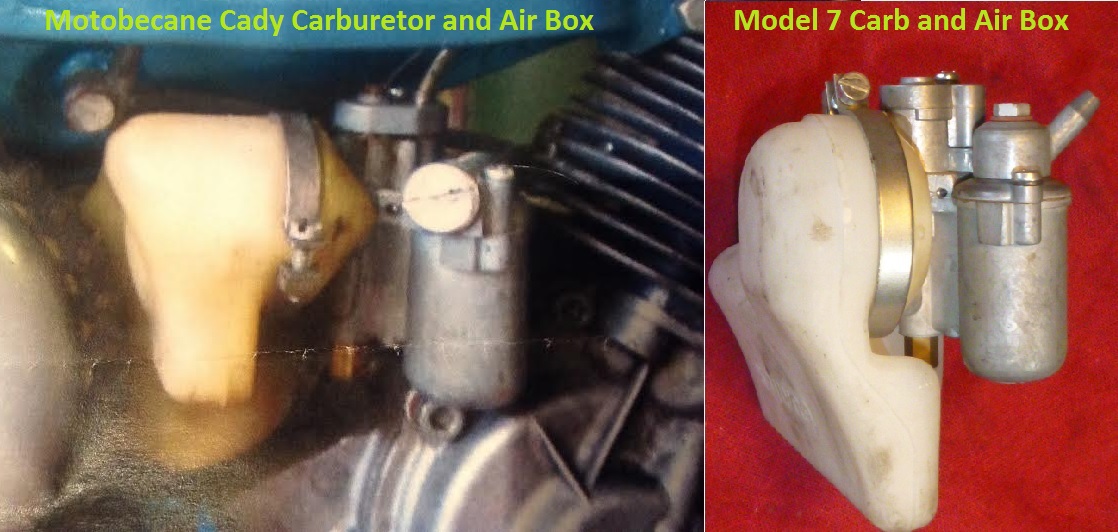
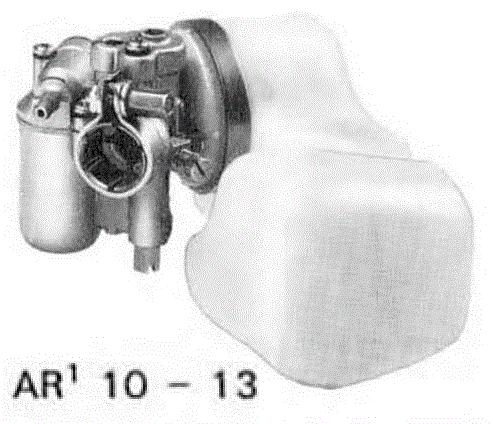
 MB Cady and MB 7 air boxes
This has a superscript 1 “¹” in the ID #, but not on the carb.
This has a 19 x 17 intake sleeve, for a 17mm OD intake.


c. Gurtner AR1-11.5-753 ’74-77 Cady M3PR, PRT, PRTS

 
This has an actual “1” on the carb.


d. Gurtner AR1-10-919 ’78 Motobecane 7 (US 20, 25)
e. Gurtner AR1-12-884
’78 Motobecane 7 (US 30mph)

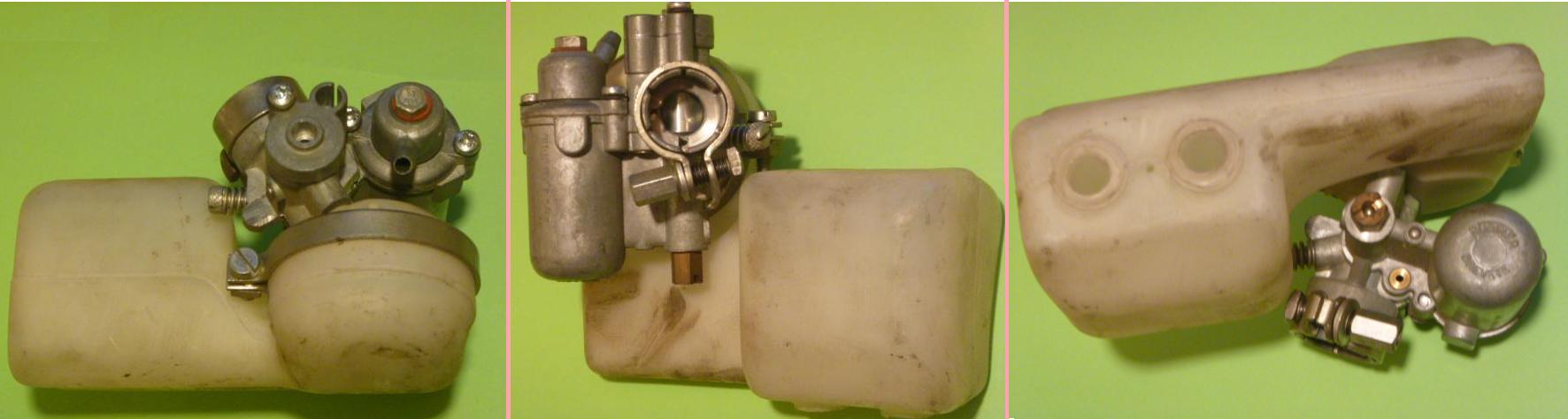
1978-79 Motobecane 7 Gurtner AR1-12 carburetor complete 3 views

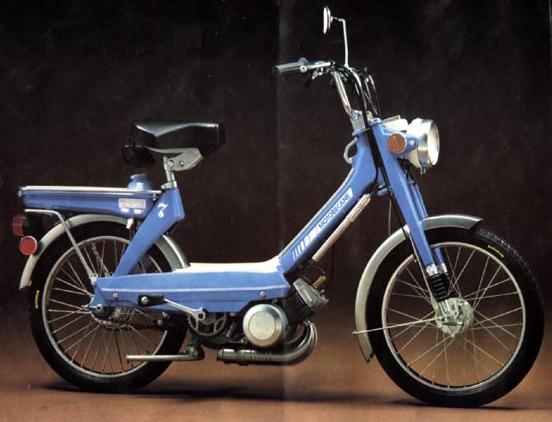
In US mopeds, AR1 carburetors were only on one model for one year. That lone French pony was the 1978 Motobecane Model 7. Only about 2 or 4% of the Motobecanes sold in the US were Model 7.


AR¹ and AR1 Carb List

AR1float 0 slide 0000 jet  000 diffuser       air box
float 000 slide 00000  jet  000 diffuser   assm.   bare

∅10 AR¹-10-691  parts list
1966-78 Cady M1P, PR, PRT, PRTS
5186  8686 ∅00 00 581/B53    fixed 00  7679  4909

∅10 AR¹-10-A691  parts list
1974-77 Cady M3PR, PRT, PRTS export
6758  8686 ∅00 00 581/B52    fixed 00  7682  11021

∅11.5 AR1-11.5-753  parts list
1974-77 Cady M3PR, PRT, PRTS
6758  4685/12 ∅00  581/B55   fixed 00  7681  11021

∅10 AR1-10-+919   parts list
1978 Motobecane 7 (20)
5186  8686 ∅00 00 581/B60   8669/1    7783  13289

∅10 AR1-10-919  3/78 parts list
1978 Motobecane 7 (25), 70’s M7
5186  8686 ∅00 00 581/B58   8669/2    7783  13289

∅12 AR1-12-884  11/77 parts list
1978 Motobecane 7 (30), 70’s M7
5186  4685/1 ∅14  581/B54   4687/3    7783  13289


Gurtner MB7

pic abcde price   MB#   Gurt#   description    remarks 

00 10000 none  00000 carburetor Ø10 AR1-10-674
00 01000 none  19600 carburetor Ø10 AR1-10-691
00 00100 none  00000 carbur.    Ø11.5 AR1-11.5-753
00 00010 none  54458 carburetor Ø10 AR1-10-919
00
 00001 none  23021 carburetor Ø12 AR1-12-884
01 00001 none  54454 7782 carb body bare Ø12
01 11010 none  54225 carb body bare Ø10
02 00111 $2.00 23194 9754 top screw M4-0.75 x 22
02 11000 $2.00 17760 top screw M4-0.75 x 20
03 00111 $0.20 01088 3650 washer M4 lock
03 11000 none  00943 washer M4 lock
04 11111 none  17759 8002 carb top
05 11111 $7.00 14120 3936 choke spring    
06 11111 $9.00 14119 3935 choke slide  
07 11111 $5.00 14107 3771 throttle spring 9.7 x 29
08 11010 none  19605 8086 throttle slide Ø12  
08 00101 $35.0 16629 4685/1 throttle slide Ø14
09 11111 $2.00 00204 5072 idle screw spring
10 11111 $2.00 18892 6546 idle screw
11 11111 $5.00 00208 bolt assy
12 11111 $2.00 15043 4330 clamp
13 00111 $2.50 22689 7088/1 seal ring 15 x 19 x 2
14 
01000 none  19215 581/B48 jet 19 = 195cc = 48
14 01000 none  18973 581/B52 jet 20 = 210cc = 52
14 0000$10.0 23546 581/B54 jet 22 = 220cc = 54
14 00010 $19.0 23548 581/B58 jet 00 = 240cc = 58
14 00010 $19.0 23549 581/B60 jet 24 = 245cc = 60
15 00011 none  23196 7783 air filter assy
16 00011 none  23195 13288 air filter mount
17 00022 none  23139 13432 screw M5x10 allen
17 00022 $0.60 subst. screw M5x10 phillips
17 22200 none  19248 screw M4x10
18 00011 none  14123 5186 float
18 11100 none  16113 6758 float
19 11111 none  14103 3764 float gasket
20 00022 $0.20 01088 3680 lock washer M4
22 22200 $0.20 00943 subst. lock washer M4
21 00022 $1.00 14106 10218 float screw M4x12 phillips
22 00011 none  19143 3752 fuel filter
23 00011 $2.00 15326 14025 fiber washer 5×10
24 00011 $0.60 13245 8176 bolt M5x10 hex
25 00122 $16.0 21940 cable guide 
26 00011 none  23197 13289 air box
27 22222 none  19606 10271 wood-type screw 4 x 13
28 11111 none  19145 8523 air box clamp assy
29 00011 $50.0 23199 12931 float chamber cap


5. M Gurtner BA


BA has Gurtner type 5012 jet, 6685 float


1962 Riverside 14030

BA Carb List

BAfloat 0 slide 00000 jet  000 diffuser       air box
float 000 slide 00000  jet  000 diffuser   assm.   bare

∅10 BA10-549-D (BA-549-D)  7/60  parts list
1960 Mobylette
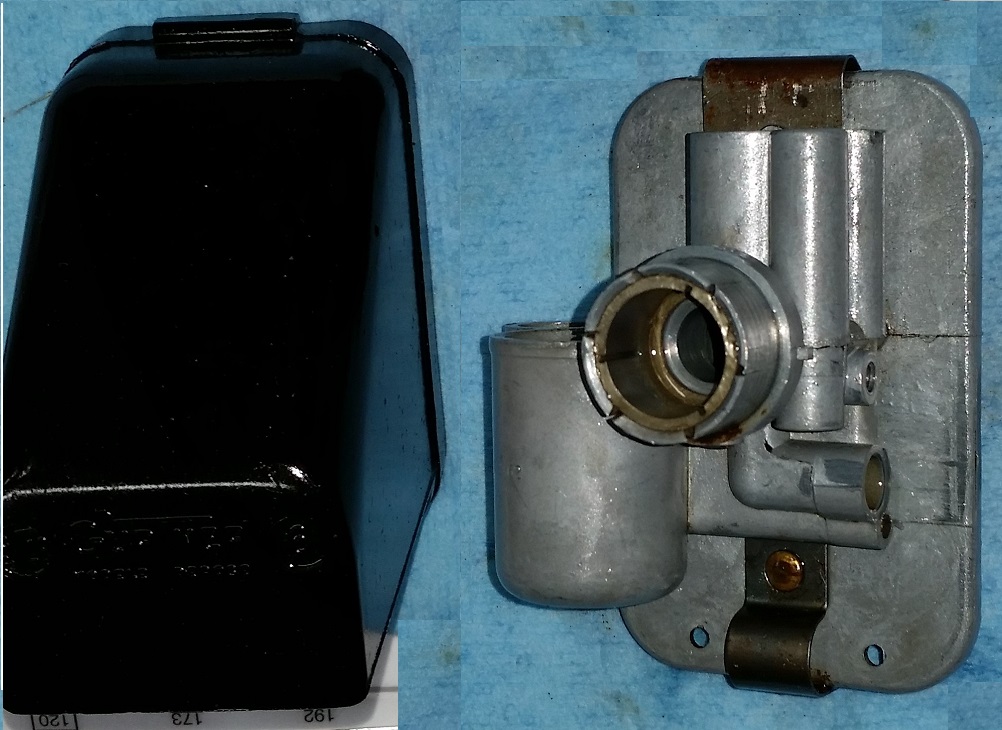
6685  4649/10 ∅13  5012/19    fixed 00  6747  4022

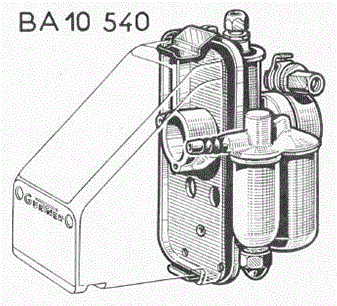
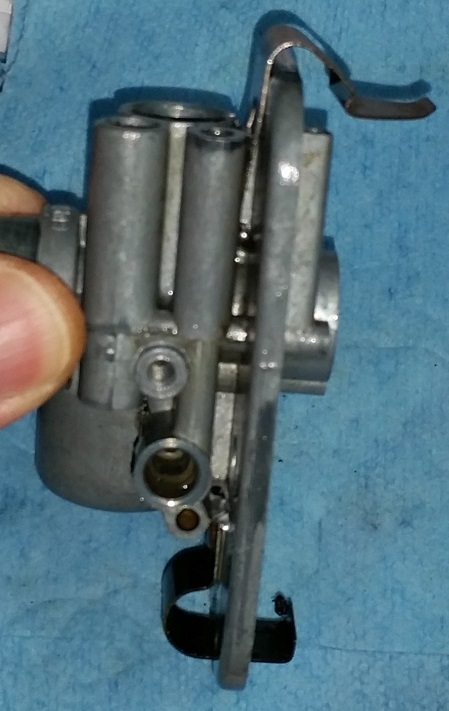
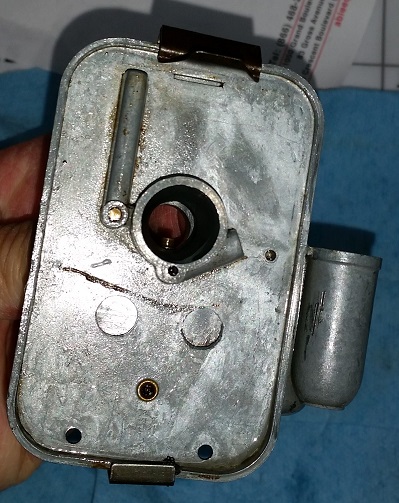
∅10 BA10-540-F (BA-540-F) 2/62 parts list  photos 1 2 3 4
1962 Riverside 14030
6685  4649/10 ∅13  5012/20    fixed 00  6747  4022

∅10 BA10-610-B (BA-610-B)  5/63  photos 1
1963 Raleigh RM6 Runabout
6685  4649/10 ∅13  5012/20?  fixed 00  6747  4022

∅10 BA10-610 (BA-610)  parts list  photos 1
1962 Motoconfort AU65, 60’s AV44, 76, 85
6685  4649/10 ∅13  5012/21, 20 fixed   6747  4022

∅10 BA10-610-C (BA-610-C)  10/63  photos 1 2 3 4
1962 Motobecane AV48
6685  4649/10 ∅13  5012/19   fixed 00  6747  4022


6. M Gurtner AR


AR has Gurtner type 3983 jet, 5186 float


1960 Riverside 14011

AR Carb List

ARfloat 0 slide 00000 jet  000 diffuser       air box
float 000 slide 00000  jet  000 diffuser   assm.   bare

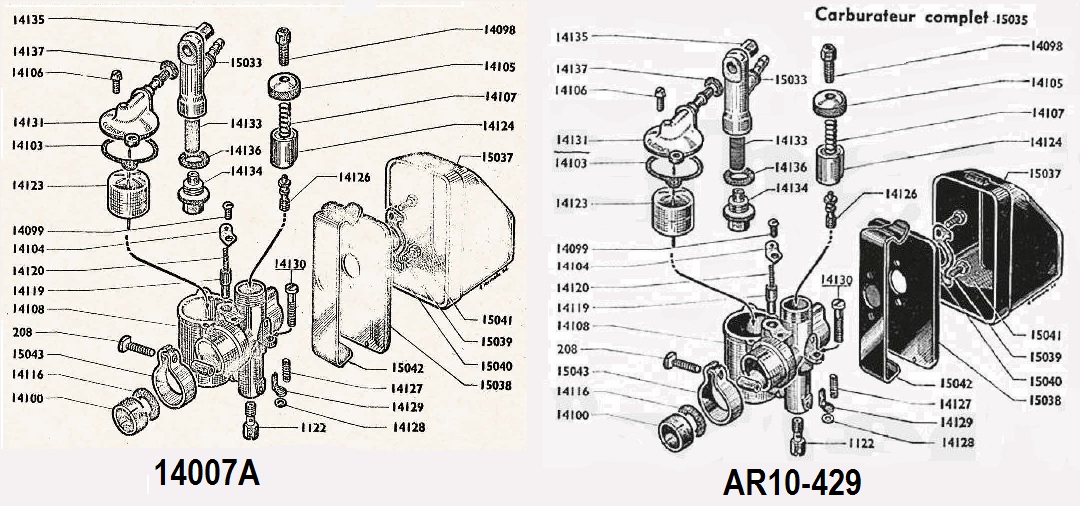
∅10 AR10-429  parts image
1957-60 Riverside 14007A, 14010A, 14010B
5186  14124 ∅13 00  01122 0014126  00 000  15037

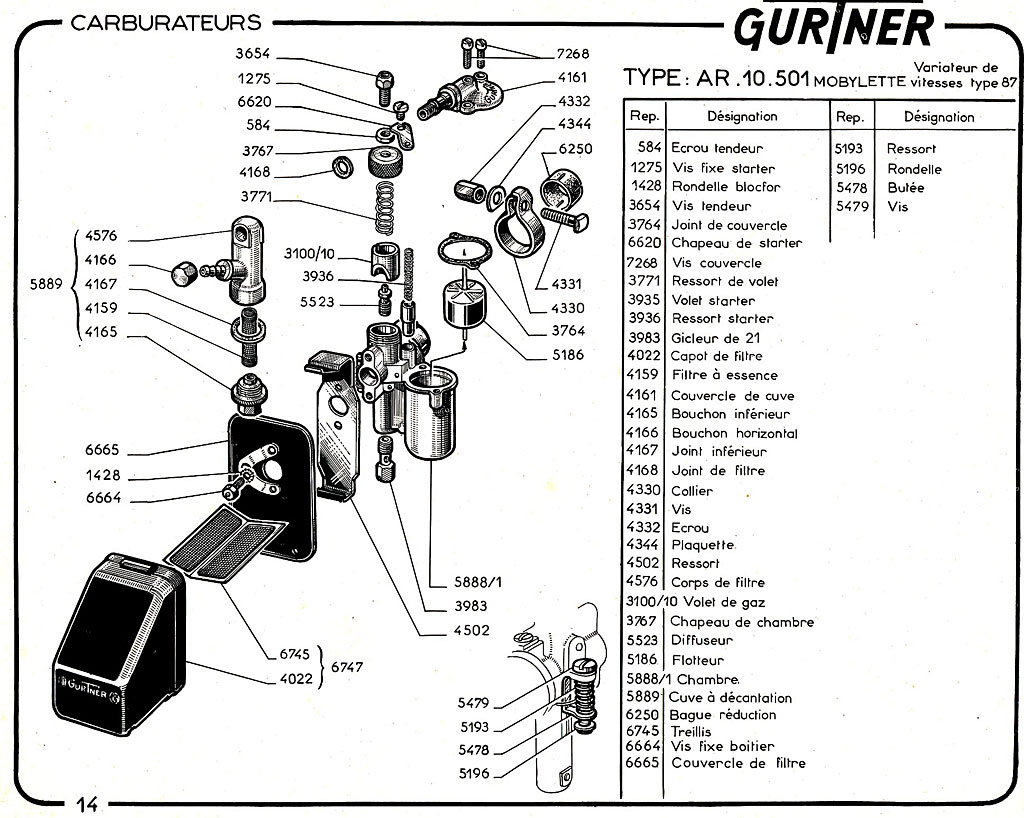
∅10 AR10-501  7/57  parts list
1957 Motobecane AV78 (variator)
5186  3100/10 ∅13  3983/21  5523 00  6747   4022

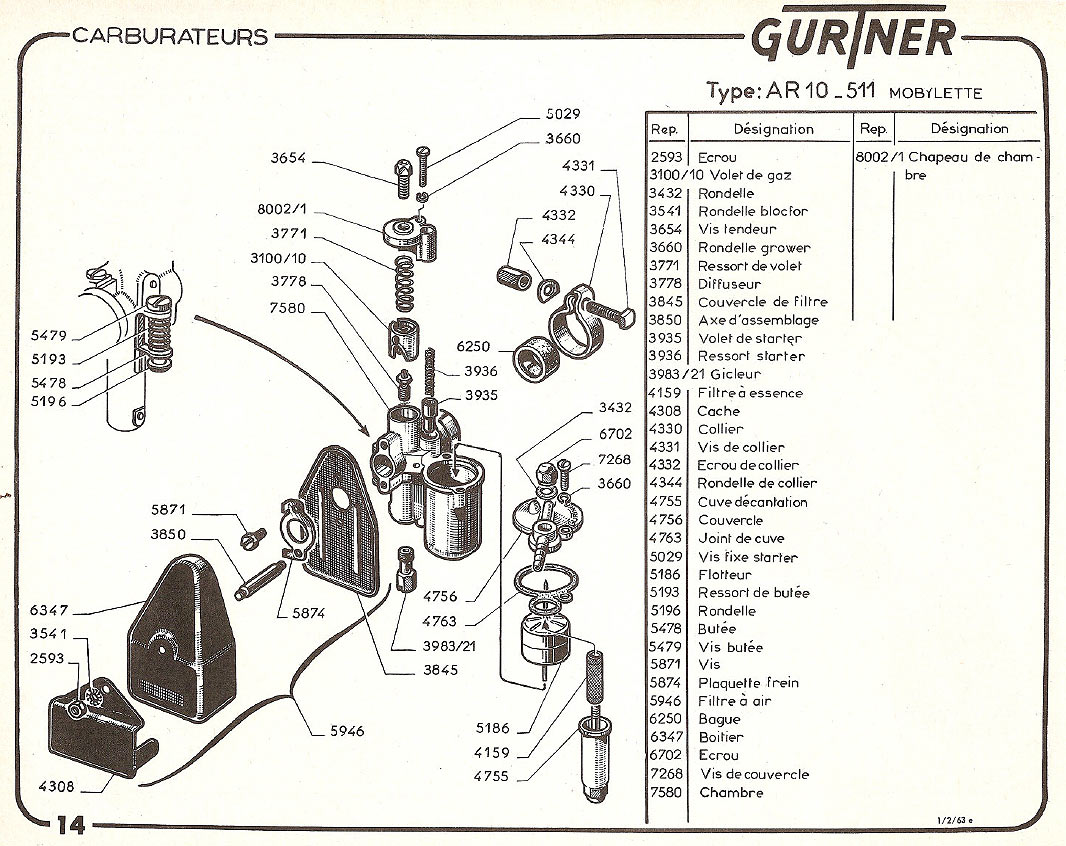
∅10 AR10-511  parts list
1950’s Motobecane, Dimoby (no variator)
5186  3763/8 ∅13 0 3983/20  5370 0    5946   5782

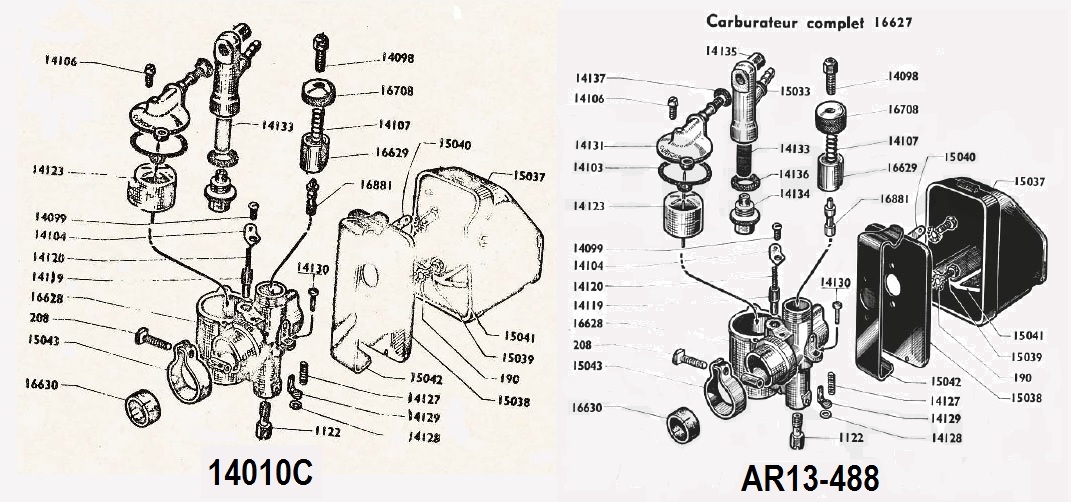
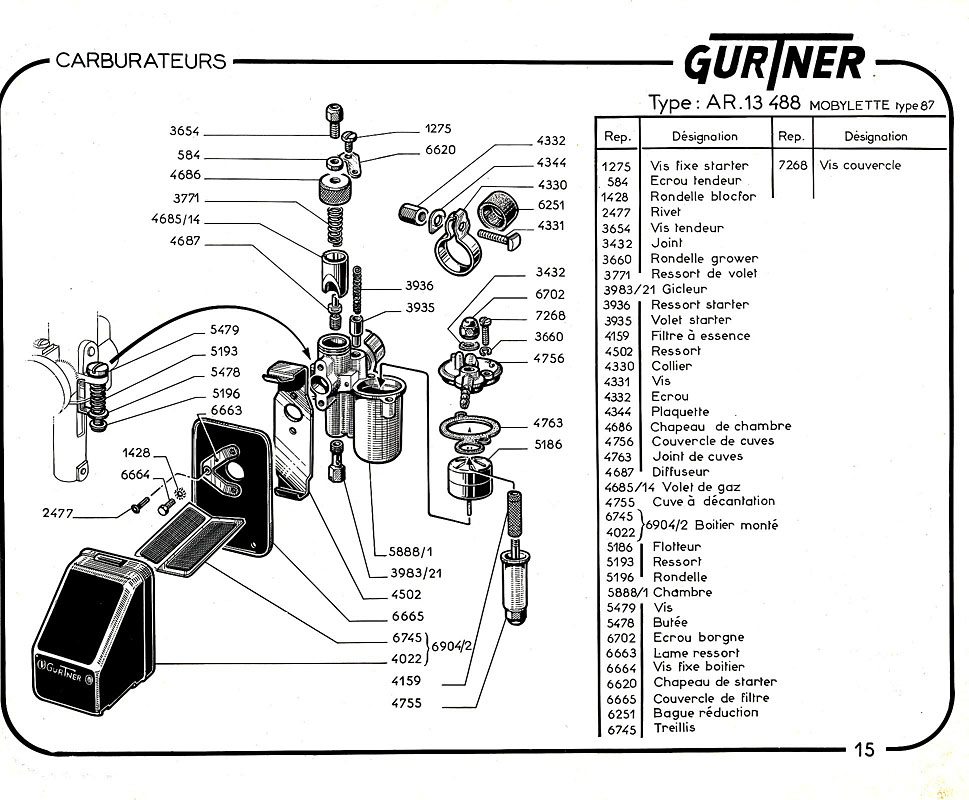
∅13 AR13-488-K  6/60  parts image
1960-62 Riverside 14010, 14010C, 14011, 14011A
5186  4685/14 ∅14  3983/21  4687 0 6904/2  4022

∅13 AR13-488  parts list
1961 Motobecane AV87 
5186  4685/14 ∅14  3983/21  4687 0 6904/2  4022


7. Gurtner Floats


Gurtner Floats

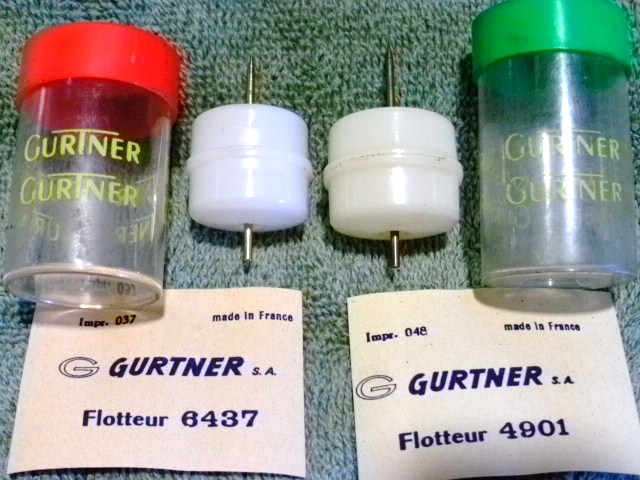
Gurtner 6437 and 4901

On 1970’s US mopeds there are 3 Gurtner floats:
5186 (Motobecane 14123) for AR1 carbs on Model 7

4901 (Motobecane 14101) for AR2 carbs on 40, 50
6437 (Peugeot 06437) for D-type carbs on 102, 103

Gurtner used to color code their new float containers green for Motobecane and red for Peugeot. Otherwise they are almost indistinguishable, unless together side by side. 

5186, 4901, 6437 specs

6685 specs

Float Service: On plastic types the needle is a press fit into the top and bottom holes in the bulb. The needle can simply need moving up or down. Or it could also need the tip straightened and/or sharpened/machined. Or the needle could need to be replaced, if it has become too short or too bent. Any piece of 1.5mm brass rod, cut to these lengths, and machined to a cone tip, would restore the float. In addition, a gasoline-proof sealant should be used to seal the press-fit holes, as a precaution, or if gasoline enters the bulb. 

Float List

Most data are from lesolex.com in France.
Most of these floats can be purchased there.
US models in blue.

13160 brass  for
needle ∅1.5 x 37.8, bulb ∅22.2
for chamber ∅23.4

1950’s Peugeot
superseded by 6437

13155 brass  for
needle ∅1.5 x 41.5, bulb ∅24.0
for chamber ∅25.2
1950’s Motobecane
superseded by 4901

6758 brass  for AR and AR¹ carbs
needle ∅1.5 x 41.7, bulb ∅22.7
for chamber ∅
for 66-78 Motobecane Cady
Motobecane #16113

5186 brass  for A, AR, AR1 carbs
needle ∅1.5 x 41.5, bulb ∅22.5 x 20.3
for chamber ∅23.6-23.9

’57-64 Ward (except 14030), 78 MB7
high bulb, Motobecane #14123

3739 brass  for C carbs: C10D
needle ∅1.5 x 41.7, bulb ∅22.5 x 20.3
for chamber ∅

for Peugeot Bima
low bulb, Peugeot #03739

6685A brass  for B, BA, BR carbs
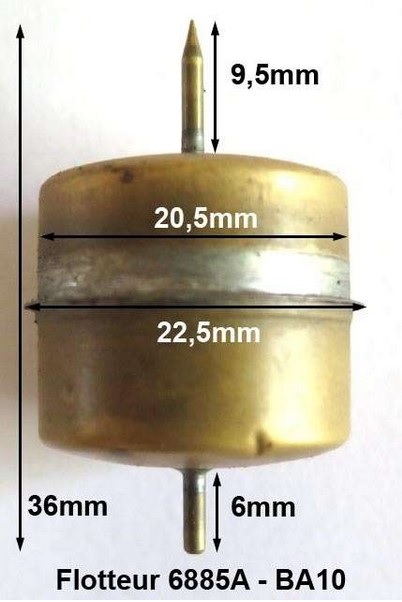
needle ∅1.5 x 35.7, bulb ∅22.2 x 20.5
for chamber ∅23

60’s MB, Raleigh, ’61-63 Ward 14030
Motobecane #

6437 plastic for D carbs: D8.5 D10 D12
needle ∅1.5 x 37.8, bulb ∅22.0 x 20.1
for chamber ∅23.4

76-83 Peugeot 102, 103, 70’s BB
Peugeot #06437

4901 plastic for AR2 carbs
needle ∅1.5 x 41.5, bulb ∅24.0 x 20.3
for chamber ∅25.2

74-80 Motobecane 40, 50, others
wide bulb, Motobecane #14101

4901/2 plastic for E carbs: E12
needle ∅1.5 x 41.5, bulb ∅24.0 x 20.3
for chamber ∅

81-83 Peugeot 103, 80’s 104, GT10
wide bulb, Peugeot #

13105 plastic for AD carbs: AD13
needle ∅1.5 x 41.5, bulb ∅25.2 x 20.6
for chamber ∅

1980’s MBK 51, M16, 99Z 92GT
wider bulb, MBK #23135


8. Jets


There are three types of Gurtner jets (gicleurs), 581, 5012, and 9831. 

5012

M5.5-0.75 thread


581

M7-1.0 thread


9831

M7-1.0 thread


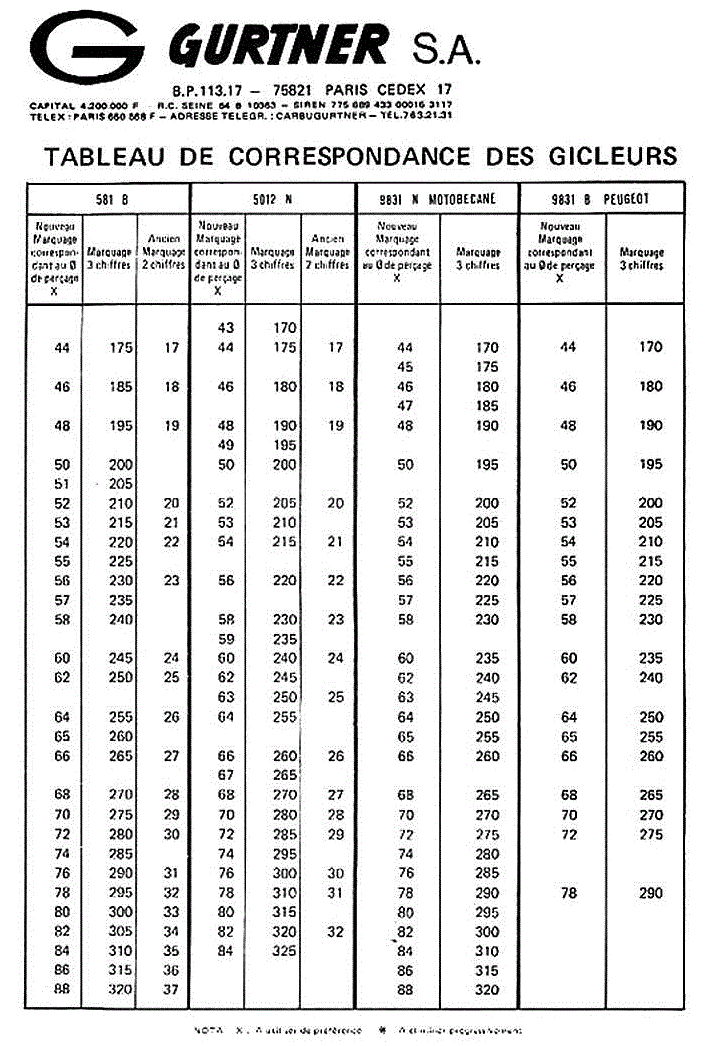
There are three size label types, here called 60’s, 70’s and 80’s.
A  581  jet, 60’s size 21, equals 70’s size 215, equals 80’s size 53.
A 5012 jet, 60’s size 21, equals 70’s size 215, equals 80’s size 54.
A 9831 jet, 60’s size 00, equals 70’s size 215, equals 80’s size 55.

Use this table to cross reference Gurtner sizes.


9. More


Population Study of Gurtner AR1 and AR2 Carburetors in Southern California

These 47 Motobecane carburetors all came from whole bikes that were stripped out for parts. The Motobecane population in the greater Los Angeles area is roughly represented by this large subset. Out of 47 carbs there were only two AR1 types, from Model 7. All of the 45 others were from Models 40 and 50. 

Year  Qty  Carb Type   Mount   Dates


1974   1  AR2-12-774   center  03/74


1975   7  AR2-12-705   center  07/75 07/75 07/75

1975   6   AR2-12-729   center  11/75 12/75 12/75 12/75


1976   8  AR2-12-705   center  01/76 01/76 01/76 01/76 01/76 03/76 10/76

1976   5   AR2-10-759   center  06/76


1977  13  AR2-12-705   center  01/77

1977   10  AR2-12-873     side   03/77 04/77 05/77 06/77 11/77 12/77 12/77

1977   10  AR2-12-729   center  02/77 04/77

1977   10  AR2-10-737     side   05/77

 1977   10 AR1-12-884    —–    11/77  11/77


1978   6  AR2-12-873     side   01/78 05/78 05/78 11/78 11/78

1978   1  AR1-10-919     side 03/78


1979   9  AR2-12-729   center  01/79

1979   9   AR2-12-873     side   03/79 05/79 05/79 05/79 06/79 07/79 07/79 11/79


1980   4  AR2-12-978     side   04/80 04/80 04/80 04/80


total  47

These are the surviving Motobecane carburetors that lasted longer than the rest of the bike. If there were times when the metal was weak, those months or batches would be missing from this collection, pretty much, because the ones that tended to break already broke and were thrown away. It seems like 1978 is missing some survivors, mysteriously. Perhaps they were used as upgrades/replacements for 1976-77 thin-mount ones that broke. You can see from this sub-population that early carburetors were center mount, and late ones were side mount, and in between was both.


Engine Hardware

July 13, 2016

updated 2023-07

Contents:
1. Top End Hardware
2. Woodruff Keys
 
3. Engine Nuts
4. Shim Washers
5. Circlips (Snap Rings)
6. Variator Weights


1   T O P   E N D   H A R D W A R E


P I S T O N   P I N S
∅10  (9.98) x 32.0  $10.0  Tomos A3 #201627
∅12(11.98) x 30.0  $10.0  Derbi #00.00.000, Solex
∅12(11.98) x 30.5  $10.0  Sachs 504,505 1A,1B
∅12(11.98) x 31.3  $9.50  Minarelli V1   #4480
∅12(11.98) x 31.5 
$10.0  Puch E50,ZA50 #331.110.0111
∅12(11.98) x 31.5  $0.00  Morini #26-8001, Demm, Vespa #132233
∅12(11.98) x 31.8  $12.0  Sachs 504,505 1C,1D
∅12(11.98) x 32.0  $10.0  Tomos A35,A55 #227501
∅12(11.98) x 32.4  $10.0  Garelli H1,H2,G2,V2
∅12(11.99) x 32.9  $10.0  Laura M48,M56 #480501
∅12(11.98) x 32.9  $10.0  Peugeot 102,103 #27194
∅12(11.98) x 34.5  $0.00  Minarelli V1L #4481
∅13(12.98) x 30.0  $10.0  Motobecane #F15094
∅14(13.97) x 32.0  $10.0  Jawa #28-1221


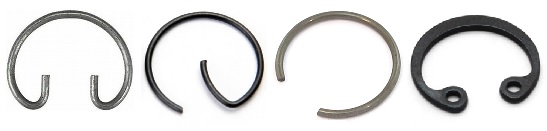
Piston pin clips: 2-tail, 1-tail, no tail, circlip

P I S T O N   P I N   C L I P S
clip ∅10 x 0.9 no tail   $3.00  Honda 13115-147-000

clip ∅10 x 1.2,  1 tail   $1.00  generic 132038
clip ∅10 x 1.2,  2 tail  $1.00 Tomos 032038

clip ∅12 x 1.2,  2 tail   $1.00  Tomos 032039
clip ∅12 x 1.2,  1 tail   $1.50  Minarelli 4490, Morini 10.4001
clip ∅12 x 1.2 no tail   $1.90  generic for Honda 13115.156.000
circlip ∅12 x 1.0 tail    $1.00  Peugeot 22309, Piaggio S.6612
clip ∅13 x 1.2,  1 tail   $1.50  Motobecane 00658, generic 132039
clip ∅14 x 1.2,  1 tail   $1.50  generic 633848

Choices: 1 or 2 tails is easier to install or remove. No tail is better for high RPM, where the tail rubs and can break off. No tail clips require a notch in the piston for removal. Circlip type (aka snap ring or retaining ring) is more secure and takes less skill, but requires special pliers and weighs more.

Important: So the clip doesn’t come out and destroy the engine, it must make a “snap” or “click” sound when it snaps into the groove. Mild pulling on the clip tail with a needle-nose pliers should not dislodge it from the clip groove. If it doesn’t click, then it has lost it’s spring tension, or maybe the piston pin is over part of the clip groove. Wire clips can be bent back, to restore tension.


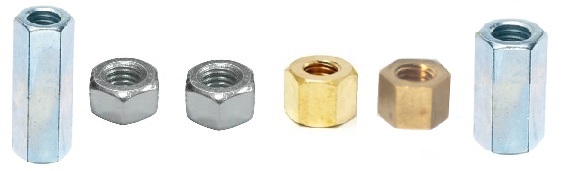
Nuts: M5x25, M6x5, M6x6, M6x8, M6x8, M6x18

H E A D  o r  E X H A U S T   N U T S
steel nut  M5 -0.8 x 5   $0.40  regular
steel nut  M5 -0.8 x 25 $1.50  tall, Morini 13.3023
steel nut  M6 -1.0 x 5   $0.30  regular
steel nut  M6 -1.0 x 6   $0.60  thick
brass nut M6 -1.0 x 8   $2.50  thick, Puch #902.2919
brass nut M6 -1.0 x 8   $1.80  thick, sharp corners

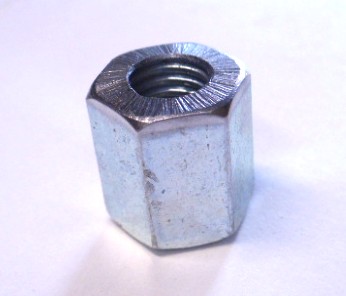
steel nut  M6 -1.0 x 18 $1.00  tall, coupling nut
steel nut  M7 -1.0 x5.5 $0.60  regular
steel nut  M7 -1.0 x 7   $0.60  thick, Grimeca hub sprocket

steel nut  M7 -1.0 x 10 $1.50  thick, Motobecane #00011

Choices: Tall nuts (aka coupling nuts) are for hard to reach places. Thick nuts are for the head. They have more strength, and can hold more torque. Brass nuts are for the exhaust flange. They expand more when hot and stay tight.


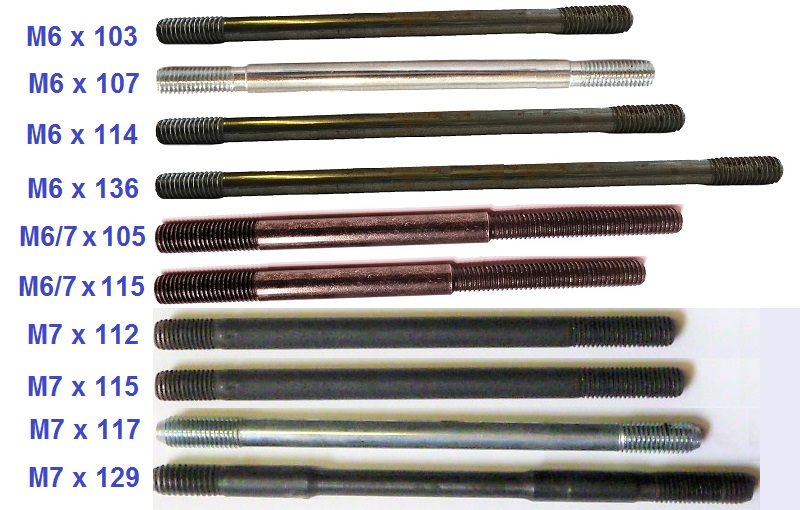
Cylinder studs, oriented top end at right

C Y L I N D E R   S T U D S
M6  x 105  $4.00  Puch E50, ZA50 1970-86, #360.110.0341
M6  x 107  $4.20  Laura M56 engine, Trac 1982-86 #E1-14
M6  x 110  $3.50  generic for Puch, M56, Morini MO1
M6  x 112 
$4.00  Jawa 207, 210 replacement

M6  x 114  none    Jawa 207, 210 1970-88+ #28-1112
M6  x 115  $14.0  Laura M48 used Batavus  #829680
M6  x 116  $7.50  Honda 92700-06115
M6  x 130  $4.00  unknown app
M6  x 136  $4.50  Minarelli V1 series engines, MMI #5530
M6/7  105  none  generic for stripped Puch case #6/7×105
M6/7  115  $6.00 Tomos A55 2002-13, #233716
M7  x 103  $5.00  Garelli horizontal-cyl eng, #205001.3.486
M7  x 112  $2.50  Peugeot 103, 102 eng. 1975-83 #827022
M7  x 113  $5.00  Garelli vert.-cylinder eng. #000351.3.486
M7  x 115  $2.80  Tomos A3, A35 engines 1974-06, #205386
M7  x 117  $4.50  Derbi Variant engines 1974-86, #31.30.050
M7  x 120  $3.50  Vespa (Piaggio) #S.595
M7  x 129  $4.00  Motobecane 50V, 50, 40 engines #14716

C Y L I N D E R   B O L T S
M6 x 100  none    Honda PA50 cylinder hex bolt 95801-0610000
M6 x 120 
$5.00  unknown app cylinder hex bolt


Studs, oriented top at right

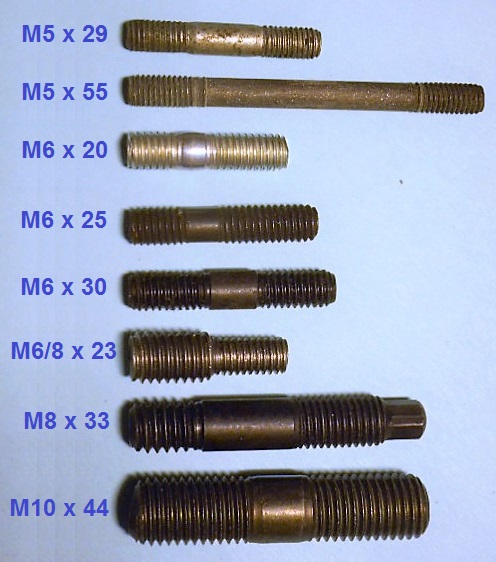
E X H A U S T  or  I N T A K E   S T U D S
M5  x 23  $3.50  Jawa exhaust #28-1410
M5  x 27  $3.00  Jawa intake #28-1408
M5  x 30  $2.50  Morini exhaust #23-5014
M5  x 33  $2.00  
M5  x 55  $2.00  
M5  x 62  $3.00  Motobecane air filter
M6  x 24  $2.00  12-4-8 uneven ends 

M6  x 26  $2.00  12-4-10 uneven ends 
M6  x 28  $3.00  12-4-12 Minarelli
M6  x 28  $2.00  14-4-10 uneven ends, Allstate

M6  x 30  $3.00  12-6-12 Tomos A55, Puch, others
M6  x 32  $2.50  14-4-14 
M5  x 62  $3.00  Motobecane air filter
M6/8  23  $5.50  step-stud for stripped thread repair
M8  x 33  $2.00  1.00 and 1.25 thread
M10 x44  $2.00  both ends 1.25 thread


223440 and 233718

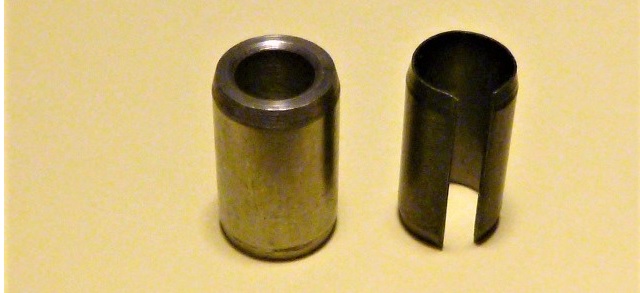
C E N T E R I N G   T U B E S   a n d   P I N S
type outer inner length price      applications

pin   ∅6.00 ∅6.0 x 19  $2.50  Tomos #037.290 A3 clutch & case
pin   ∅7.00 ∅6.0 x 20  $0.00  Derbi case
tube ∅9.74 ∅6.2 x 16  $4.50  Tomos #223440 A35/A55 clutch & mag


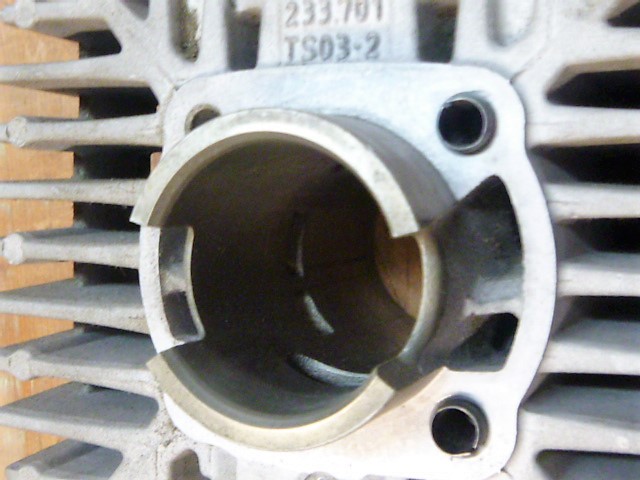
Tomos A55 cylinder

E L A S T I C   C E N T E R I N G   S L E E V E S
outer inner length price      applications
∅7.7   ∅6.7 x 15 
 N/A     Puch #328.910.1081 Magnum cylinder 
∅8.2   ∅7.2 x 16  $2.00  Tomos #233718 A55 cylinder base

Note: These elastic sleeves get smaller when installed, like piston rings.
The installed diameter is 8.2 but the free diameter is like 8.7 mm.
You can see the large gap in the photo, that closes when installed.


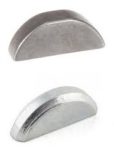
2   W O O D R U F F    K E Y S


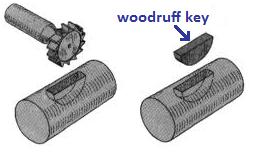
1. top key is normal, bottom key is beveled
2. cutter tool makes a circular key groove


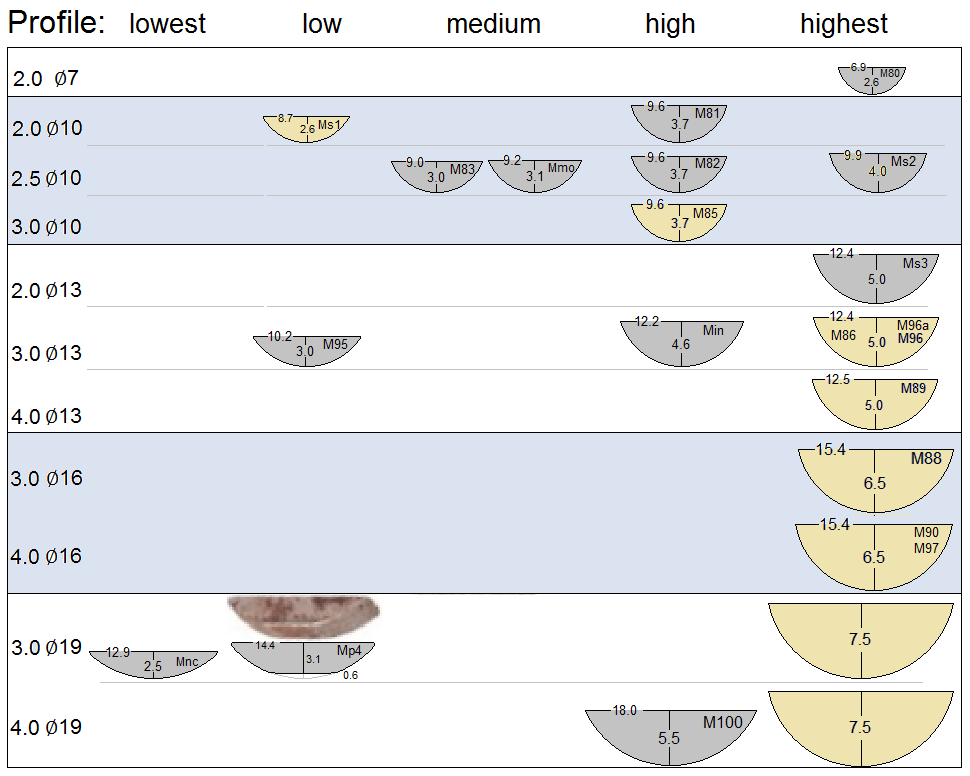
Chart of keys grouped by size and shape


Woodruff Keys for Sale

Key colors: Beige keys are in most assortments. Grey keys are not.

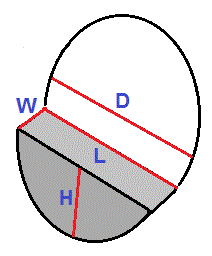
part#  price   W  x   H  x   L     D     7 mm circle
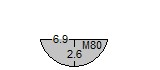
M80
   $2.00 2.0 x 2.6 x 6.9   ∅7   
Garelli 1-spd 273.511.0046, CEV 6933 flywheel


part#  price   W  x   H  x   L     D    10 mm circle
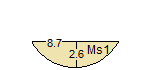
Ms1 
   $5.00 2.0 x 2.6 x 8.7   ∅10
made by grinding an M81 lower

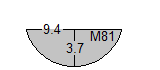
M81
   $2.00 2.0 x 3.7 x 9.4   ∅10    
Sachs 504 (KTM), CEV 6949 flywheel
Sachs 504, sm Bosch 0212 010 001 flywheel
Kreidler, sm Bosch 0212 010 002 flywheel
Italjet + Morini, Bosch 0212 010 003 flywheel
Batavus/Trac M56, sm Bosch 0212 010 004 flywheel

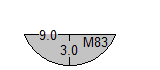
M83   $6.00 2.5 x 3.0 x 9.0   ∅10  
Garelli 2-spd 271.018.00, CEV 6939 flywheel
made by grinding an M82 lower

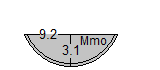
Mmo  none  2.5 x 3.1 x 9.2   ∅10  beveled
Morini #12-7025 MO1,MO2,M1   use M83

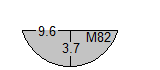
M82   $2.00 2.5 x 3.7 x 9.6   ∅10  
Derbi ’76-86 Motoplat & ’86-89 CEV flywheels

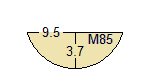
M85   $2.00 3.0 x 3.7 x 9.5   ∅10   
Puch #900.4503, big Bosch flywheel
Sachs 505 big Bosch flywheel
Minarelli #4720, 4730


part#  price   W  x   H  x   L     D    13 mm circle
M95 
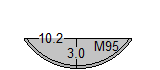
$8.00 3.0 x 3.0 x 10.2 ∅13  beveled
early Minarelli P4,P6 to 3-’74 pinion gear
made by grinding an M96 from 5.0 to 3.0

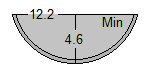
Min    $7.00 3.0 x 4.6 x 12.2 ∅13  beveled
Indian AMI-50 E606-00-50, WTEMCO flywheel

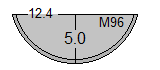
M96   $5.00 3.0 x 5.0 x 12.4 ∅13  beveled
pre-’78  Vespa #267 flywheel & rear clutch
Morini 12-7002 MO-1, MO-K sprocket, or use M86

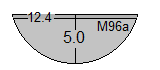
M96a $2.00 3.0 x 5.0 x 12.4 ∅13  top beveled 
post-78 Vespa #267 flywheel & rear clutch

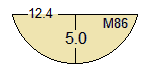
M86   $1.50 3.0 x 5.0 x 12.4 ∅13   
Puch 1-sp clutch
Batavus M48 big Bosch flywheel
Batavus/Trac M56 clutch
Kinetic flywheel & rear pulley
Morini 12-7002 MO-1, MO-K sprocket

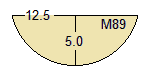
M89   none  4.0 x 5.0 x 12.5 ∅13 


part#  price   W  x   H  x   L     D    16 mm circle
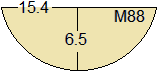
M88
   $3.00 3.0 x 6.5 x 15.4 ∅16   
Batavus, Trac #81031 M56 trans shaft

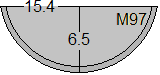
M97   $5.00 4.0 x 6.5 x 15.5 ∅16  beveled

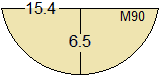
M90   none  4.0 x 6.5 x 15.5 ∅16   
Garelli 217.036.00 2-spd primary shaft, use M97


part#  price   W  x   H  x   L     D    19 mm circle
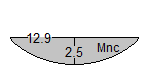
Mnc  
$6.00 3.0 x 2.4 x 12.9 ∅19  
Honda NC50, PA50 flywheel 90741-035-000

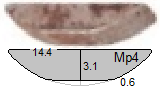
Mp4   $14.0 3.0 x 3.7 x 14.4 ∅19
early Minarelli P4, P6

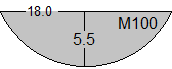
M100 $5.00 4.0 x 5.5 x 18.0 ∅19


part#  price   Other keys not woodruff

Mtr    $4.00 round (roller)  ∅3 x 4
 Tomos 200048 all years, all flywheels

Mts   $2.00 straight 5.0 x 5.0 x 12.0
Tomos 044835 countershaft key (race track shaped)


3   E N G I N E    N U T S

These are the engine nuts that go on rotating shafts, rather than stationary nuts, like the head nuts. For head nuts see Engine Top End. Some are very specific and others are more universal.   


ref  thread R or L   hex   E N G I N E  N U T S
ref  
0 thread 0 length     price   o.e.m. part#


A1 M8 - 1.00 R   5 10  $3.00 0242.121.000
plain nut Sachs 504, 505 starter push pin

A2 M8 - 1.00 R   7 13  $0.80 2842.001.000
plain nut Sachs 504, Batavus/Trac M56 flywheel

A3 M8 - 1.00 R   9 12  none  000361.8.446
tall nut Garelli ’74-76 1-speed flywheel


B1 M8 - 1.25 R   8 13  $0.80 020108
plain nut Vespa rear pulley, non-variator clutch

B2 M8 - 1.25 R   7 24  $7.00 131331
thin wide Vespa and Morini M101 variator

B3 M8 - 1.25 R 14  15  none  13-3007
tall nut Morini MO1, MO2, M1, M101,
tall nut S5, S5K, S5K2, S5R, S5N, S5E, S5T, S5GS

B4 M8 – 1.25 R 15 13 $8.00
tall nut Morini substitute

B5 M8 - 1.25 L   8 13  none  00 20 161
plain nut Odyssey (Solo) flywheel


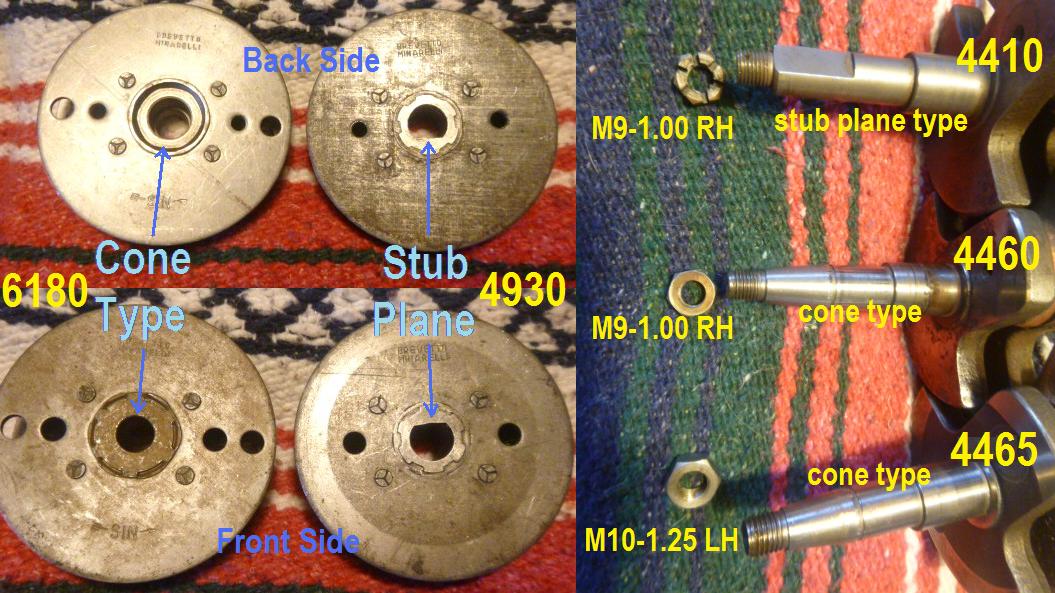
C1 M9 - 1.00 R   6 14  $4.00 4430 = 49.0326.0
plain nut Minarelli ’69-77 stub plane clutch use locktite

C2 M9 - 1.00 R   6 14 $10.0 5040 = 49.0311.0
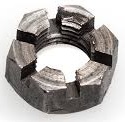
castle nut Minarelli pre-’78 stub plane clutch use C1

C3 M9 - 1.00 R 12 14  none  6270 = 49.0311.0
flange Minarelli ’78 to 9-79 early cone clutch use C1

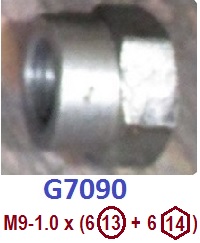
C4 M9 - 1.00 R 12 14  none  G7090
spacer nut Benelli ’65-73 GM, GK, GK65 use C8

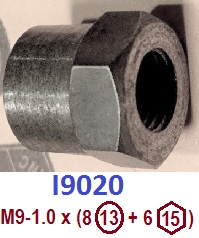
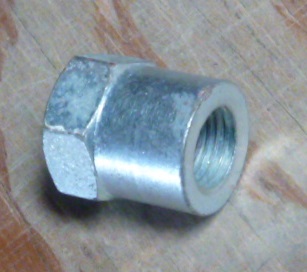
C5 M9 - 1.00 R 14 15  none  I9020
spacer nut Benelli ’65-77 4M, 4MS, 4M65 use C8

C6 M9 - 1.00 R 16 14   UI7090
spacer nut Benelli ’70-80 G2, G2K use C8

C7 M9 - 1.00 R   9 12  none  205011.8.446
tall nut Garelli horiz 1-sp flywheel use C8

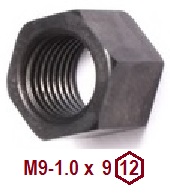
C8 M9 - 1.00 R 09 12  $7.00 C8
tall nut replacement for C1 to C7


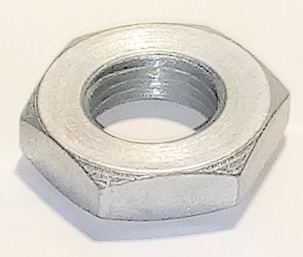
D1 M10-1.00 R   5 17  $4.00 D1
thin nut replacement Motobecane 20767

D2 M10-1.00 R   5 19  $4.00 D2
thin nut replacement Motobecane 20767

D3 M10-1.00 R   6 14  $8.00
thin nut Derbi 1976-86 variator/clutch nut

D4 M10-1.00 R   6 17  $4.00 828010
thin nut Sachs 504 & 505 and Batavus M48 clutch nut

D5 M10-1.00 R   7 21  $7.00 49812
flange nut Peugeot clutch nut

D6 M10-1.00 R 10 14  $5.00 901.2943
flange nut Puch flywheel nut

D7 M10-1.00 R   8 17  $1.80 900.2011
plain nut Solo, Sachs 505, Laura M48 flywheel
plain nut Tomos pre-’87 flywheel, Laura M56 pulley

plain nut Puch 1-spd and Solo clutch

D8 M10-1.00 R   9 17  $3.00 D8
plain nut replacement Motobecane 24284

D9 M10-1.00 R 14 14  none  000315.8.446
tall nut Garelli 2-spd 00315.8.446, flywheel

D10M10-1    R 15 15   none  D10
tall nut replacement flywheel

D11M10-1    R 15 16   $12.0 46768
tall nut Peugeot flywheel 

D12M10-1  R 14.5 19  $3.00 D12
spacer nut ∅18.5 replacement Motobecane 17567

D13M10-1    R 17 19   $3.00 D13
spacer nut ∅18.5 replacement Motobecane 24258

D14M10-1    R 18 17   $10 
tall nut Derbi flywheel pre-86 

D15M10-1    R 17 19   $8.00 D13 ground smaller
spacer nut ∅17 replacement for Garelli VIP


E1  M10-1.25 R   6 17 $2.50 4840 = 49.0323.0
thin nut Minarelli sprocket, Honda NC50 flywheel
thin nut Morini MO1, M1, MO2 clutch 13-1003

E2 M10-1.25 R   8 14  $2.50 H210-00-50
plain nut Indian flywheel
plain nut Honda PA50 clutch and flywheel

E4 M10-1.25 R 14 15  $7.00 4750 = 49.0312.0
tall nut Minarelli flywheel nut


F1 M10-1.00 L   8 14  $12.0 0F0.2600.401
plain nut Derbi flywheel and rear pulley 1986-91

F2 M10-1.00 L 30 17  none   0F0.2610.401
special Derbi clutch 1986-91 “Start” flat case reed

F3 M10-1.25 L   6 15  $2.00 6275
thin nut Minarelli after Sep ’79 cone clutch


G1 M11-1.00 R  6.5 17  $2.00
thin nut
Replacement axle nut

G2 M11-1.00 R   8 14  $6.00 17454
flange nut Motobecane clutch (non-var)

G3 M11-1.00 R 21 14  $12.0 17455
spacer nut Motobecane clutch (variator)

G4 M11-1.00 L 12 32  $10.0 143195
special Motobecane flywheel 1980-later

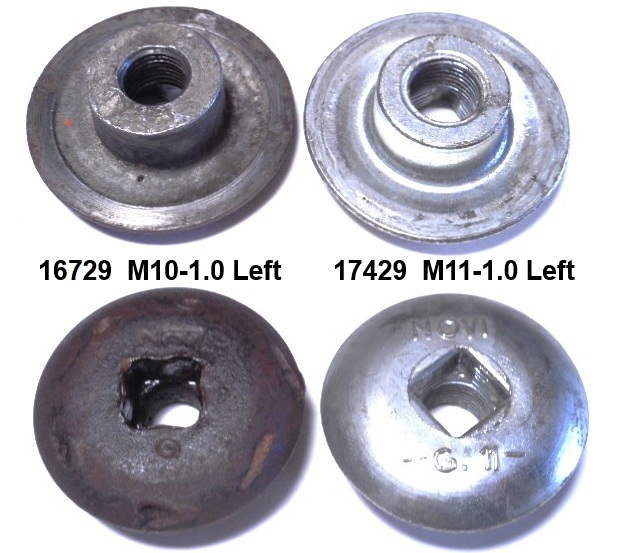
G5 M11-1.00 L 15 10  $13.0 17429
square hole Motobecane flywheel 1974-1979

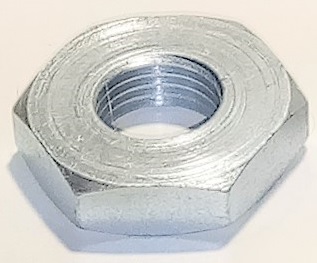
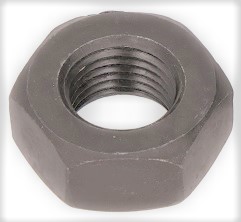
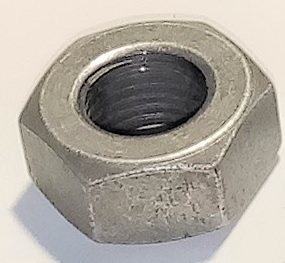
G6 M10-1.00 L 15 10  none  16729
square hole Motobecane flywheel 1960?-1964?


H1 M12-1.00 R   6 24  $3.00 H1
thin nut Replacement axle nut

H2 M12-1.00 R   7 19  $2.50 H2
thin nut Replacement axle nut

H3 M12-1.00 R   7 17  $9.00 201001.2.917
thin nut Garelli 2-speed clutch

H4 M12-1.00 R   7 19  $3.00 0242.124.000
thin nut Sachs sprocket


I1 M12-1.25 R   6 17  $10.0 13-1002
thin nut Morini MO1 sprocket

I2  M12-1.25 R 10 19  $3.00
plain nut Batavus/Trac M56 sprocket


J1 M14-1.00 R6.5 19  $3.00 H214-00-50
thin nut Indian clutch nut

J2 M14-1.00 R   7 19  $5.00 200141
thin nut Tomos A3, A35, A55 countershaft


K1 M14-1.50 R   5 19  $8.00
thin nut Derbi rear pulley 1976-1986


L1 M16-1.50 R   8 24  $7.00 902.2922
thin nut Puch 2-spd clutch nut


4.  W A S H E R S   a n d   S H I M S

10 x 16 x 2

14 x 20 x 2

15×21.7x.5

15 x 22 x 0.8

16 x 24 x 0.5


16 x 30 x 1.00

22 x 29 x 0.5

Peugeot


Shim (precision) washers, in blue, are always required. They are all the same size for every machine.
Adjustment s
him washers, in black, are “as required”. There are different sizes for each machine.

05.1 x 11.5 x 0.5.00  0.0.0.000 G369 $1.50 Benelli start clutch

10.1 x 16.0 x 2.00  0.0.0.0.223469 $3.00 Tomos A35-A55 trans cover, rear
10.1 x 14.0 x 0.20  0.0.0.0.209075 $5.00 Tomos A3-A35-A55 trans cover, rear
10.1 x 14.0 x 0.50  0.0.0.0.209076 $5.00 Tomos A3-A35-A55 trans cover, rear
10.1 x 18.0 x 1.00  0.0.0.0.175751 $2.00 Piaggio variator hub w/helical gears
10.1 x 20.0 x 0.60  321.1.13.637.1 $7.00 Puch ZA50 trans cover, rear
10.1 x 20.0 x 0.80  350.2.13.642.1 $8.00 Puch ZA50 trans cover, rear
10.1 x 20.0 x 1.00  321.2.13.637.1 $7.00 Puch ZA50 trans cover, rear
10.1 x 21.8 x 0.80  0.0.0.0.0. 4830 $5.00 Minarelli V1 sprocket, under nut
10.1 x 22.0 x 0.60  0.0.0.00.  5030 $5.00 Minarelli V1 clutch, under nut
10.1 x 24.0 x 0.80  0.0.0.0 491088 $5.00 Laura M56 drive shaft
10.3 x 22.4 x 1.20  0.0.0.0 120214 $3.50 Vespa-Piaggio rear var-clutch
10.1 x 29.3 x 4.0      0244.157.000 $3.00  Sachs 504, 505 clutch

11.9 x 23.0 x 1.0      0244.112.000 $5-$3 Sachs 504, 505 clutch

12.1 x 16.0 x 0.1 0000000 0000000 N/A    Kreidler clutch drum
12.1 x 16.0 x 0.2 0000000 0000000 N/A    Kreidler clutch drum
12.1 x 16.0 x 0.3 0000000 0000000 N/A    Kreidler clutch drum
12.1 x 17.0 x 0.4 
0.0.00.0.0  5730 none  Minarelli V1 idler shaft
12.1 x 21.0 x 0.2 0000000 25-4026 N/A    Morini MO2 trans

12.1 x 23.5 x 1.0 0000000 103556 $2.50 Vespa front pulley-clutch
12.1 x 24.0 x 0.5 0000000 480899 $7.00 Laura M48 clutch washer (25 & 30mph)
12.1 x 24.0 x 0.8 000000  480899a $5.00 Laura M48 clutch washer (as required)
12.05×23.95×0.5  000000 490814 $7.00 Laura M56 clutch washer
12.05×23.95×0.8  000000 490813 $5.00 Laura M56 clutch washer (as required)

13.2 x 18.0 x 0.2  000000 25-4040 none  Morini MO2

13.9 x 24.0 x 1.0 0.0.0.0.175747 $2.00 Vespa variator rear hub, after 1980
13.7 x 28.0 x 1.0 0.0.0.0.103386 $7.50 Vespa variator rear hub, before 1980

14.1 x 20.0 x 2.00  0.0.0.0.223468 $4.00 Tomos A35-A55 clutch, inner

15.2 x 20.0 x 0.10   00246.009.003 $8.00 Sachs 505 left crank, behind bearing
15.2 x 20.0 x 0.15   00246.009.004 none  Sachs 505 left crank, behind bearing
15.2 x 20.0 x 0.20 0 0246.009.007 $6.00 Sachs 505 left crank, behind bearing
15.2 x 20.0 x 0.30 0 0246.009.000 none  Sachs 505 left crank, behind bearing
15.2 x 20.0 x 0.50 0 0246.009.001 none  Sachs 505 left crank, behind bearing
15.2 x 20.0 x 0.80 0 0246.009.005 $4.00 Sachs 505 left crank, behind bearing
15.2 x 20.0 x 1.00 0 0246.009.002 $4.00 Sachs 505 left crank, behind bearing

15.2 x 21.7 x 0.50  0.0.0 old14562 $6.00 Motobecane clutch, var and 1-s
15.2 x 21.7 x 0.80  0.0.0.0.014562 $7.00 Motobecane clutch, var and 1-s
15.2 x 21.7 x 0.10  0.0.0.0.014931 $5.00 Motobecane clutch, var and 1-s
15.2 x 21.7 x 0.25  0.0.0.0.014932 $5.00 Motobecane clutch, var and 1-s
15.2 x 21.7 x 0.45  0.0.0.0.014933 $5.00 Motobecane clutch, var and 1-s

15.2 x 22.0 x 0.60  000.0. 25.4005 $12.0 Morini MO1, MO2 trans
15.2 x 22.0 x 0.60  321.1.13.627.1 $12.0 Puch ZA50 trans cover, front
15.2 x 22.0 x 0.80  321.2.13.627.1 $7.00 Puch ZA50 trans cover, front
15.2 x 22.0 x 1.00  321.3.13.627.1 $8.00 Puch ZA50 trans cover, front
15.2 x 22.0 x 1.10  0.0.0.901.3963 $9.00 Puch E50 clutch, outer
15.2 x 22.0 x 1.30  0.0.0.901.3929 $8.00 Puch E50 clutch, outer
15.2 x 22.0 x 1.50  0.0.0.901.3924 $7.00 Puch E50 clutch, outer
15.2 x 22.0 x 1.70  0.0.0.901.3930 $5.00 Puch E50 clutch, outer
15.2 x 22.0 x 1.80  0.0.0.901.3028 $5.00 Puch E50 clutch, outer
15.2 x 22.0 x 1.85  0.0.0.901.3972 $3.00 Puch E50 clutch, outer
15.2 x 22.0 x 1.90  0.0.0.901.3942 $2.00 Puch E50 clutch, outer
15.2 x 22.0 x 1.95  0.0.0.901.3973 $2.00 Puch E50 clutch, outer
15.2 x 22.0 x 2.00  0.0.0.901.3970 $5.00 Puch E50 clutch, outer
15.2 x 22.0 x 2.10  0.0.0.901.3049 $7.00 Puch E50 clutch, outer
15.2 x 22.0 x 2.20  0.0.0.901.3971 $8.00 Puch E50 clutch, outer
15.2 x 28.0 x 1.20  0.0.00 .131514 $2.00 Vespa rear hub, var and non-var
15.4 x 20.8 x 0.50  0.0.00 .113681 $5.00 Vespa crank washer, 1 per side
15.5 x 31.0 x 0.85  0.0.00    14588 $7.00 Motobecane Dimoby clutch

16.2 x 26.0 x 0.60  0.0.0.000 5790 none  Minarelli V1 pedal shaft
16.2 x 23.5 x 0.60  0.0.0.0.103557 $2.50
Vespa front pulley-clutch
16.2 x 24.0 x 1
.00  0.0.0.0.206391 $3.00 Tomos A3-A35-A55 pedal shaft
16.2 x 24.0 x 0.20  0.0.0.0.209087 $$.$$ Tomos A3-A35-A55 pedal shaft
16.2 x 24.0 x 0.50  0.0.0.0.200175 $$.$$ Tomos A3-A35-A55 pedal shaft
16.2 x 25.0 x 0.45  0.0.082.28.561 none  Derbi pedal shaft
16.2 x 25.0 x 0.60  0.0.082.28.562 $5.00 Derbi pedal shaft
16.2 x 25.0 x 0.70  0.0.082.28.563 none  Derbi pedal shaft
16.2 x 25.0 x 0.80  0.0.082.28.564 $5.00 Derbi pedal shaft

16.2 x 27.8 x 1.00  321.1.13.624.1 $9.00 Puch ZA50 2-speed main shaft, inner

16.2 x 30.0 x 0.10  0.0.00.0.14863 none  Motobecane pedal shaft
16.2 x 30.0 x 0.30  0.0.00.0.14865 $7.00 Motobecane pedal shaft
16.2 x 30.0 x 0.40  0.0.00.0.45818 $$.$$ Peugeot 102-103 clutch
16.2 x 30.0 x 0.60  0.0.0.00.45819 $$.$$ Peugeot 102-103 clutch
16.2 x 30.0 x 0.75  0.0.00.0.15001 $$.$$ Motobecane pedal shaft
16.2 x 30.0 x 0.80  0.0.0.00.45820 $$.$$ Peugeot 102-103 clutch
16.2 x 30.0 x 1.00  0.0.0.00.45821 $$.$$ Peugeot 102-103 clutch

16.2 x 32.0 x 2.00  ..200001.7.187  N/A   Garelli H1/H2 pedal shaft

16.8 x 30.5 x 1.00  .0 321.112.6141  N/A   Puch 2-speed start inner
16.8 x 30.5 x 1.00  .0 321.212.6141  N/A   Puch 2-speed start inner

17.0 x 24.0 x 1.00  .0 337.113.1751  N/A   Puch 2-speed start inner

17.2 x 24.0 x 0.10  0.0.0.0.212957 $5.00 Tomos pre-1986 A3 crank, left or right
17.2 x 24.0 x 0.15  0.0.0.0.212958 $8.00 Tomos pre-1986 A3 crank, left or right
17.2 x 24.0 x 0.20  0.0.0.0.212959 $9.00 Tomos pre-1986 A3 crank, left or right
17.2 x 24.0 x 0.50
17.2 x 24.0 x 1.10  0.0.0.901.3943 $9.50 Puch E50 1-speed clutch, inner
17.2 x 24.0 x 1.30  0.0.0.901.3927 $7.00 Puch E50 1-speed clutch, inner
17.2 x 24.0 x 1.50  0.0.0.901.3923 $7.00 Puch E50 1-speed clutch, inner
17.2 x 24.0 x 1.70  0.0.0.901.3928 $5.00 Puch E50 1-speed clutch, inner

18.0 x 22.4 x 0.20  44809-044-000 none  Honda ∅80 front brake speedo gear
18.0 x 22.4 x 0.20  000 1150-5079 none  Taiwan ∅80 front brake speedo gear

18.2 x 24.0 x 0.05  0.0.0.900.3992 $9.50 Puch ZA50 2-speed crank, left
18.2 x 24.0 x 0.10  0.0.0.900.3922 $8.00 Puch ZA50 2-speed crank, left
18.2 x 24.0 x 0.20  0.0.0.900.3923 $9.50 Puch ZA50 2-speed crank, left
18.2 x 24.0 x 0.30  0.0.0.900.3907 $4.00 Puch ZA50 2-speed crank, left

18.5 x 24.0 x 0.12
18.5 x 24.0 x 0.20
18.5 x 31.5 x 0.80 00. W216-00-50 $3.00 Indian AMI-50 axle dust cover
18.6 x 29.0 x 0.5  0.00.0.00 69280 $5.00 Leleu front wheel hub dust ring
19.0 x 22.7 × 0.80
  0.0.0.0 120215  N/A   Vespa-Piaggio rear var-clutch

18.9 x 23.9 x 0.1  0.0.0.000 01285 $4.00 Motobecane crank
18.9 x 23.9 x 0.2  0.0.0.000 01286 $4.00 Motobecane crank
18.9 x 23.9 x 0.3  0.0.0.000 01287 $4.00 Motobecane crank
18.9 x 23.9 x 0.5  0.0.0.000 01288 $4.00 Motobecane crank

19.2 x 25.8 x 0.10  0.0. old209073 $7.00 Tomos A3 2-speed clutch
19.2 x 25.8 x 0.20  0.0. old209119 $7.00 Tomos A3 2-speed clutch
19.2 x 26.0 x 0.30  0.0.0.0 209073 $5.00 Tomos A35 2-speed clutch
19.2 x 26.0 x 0.50  0.0.0.0 209119 $4.00 Tomos A35 2-speed clutch

19.5 x 31.5 x 0.80 00.  A216-00-50 $3.00 Indian AMI-50 axle dust cover

20.2 x 33.7 x 0.9  00.0 H120-00-50 none  Indian AMI-50 pedal shaft
20.3 x 33.0 x 1.2  0.00.0.0 131513 $2.50 Vespa rear hub, var and non-var
20.3 x 24.0 x 0.5  0.00.0.0 227393 $2.50 Tomos A35 oil pump

21.0 x 27.0 x 0.10  0.0.00.0.25892 $8.00 Puch ZA50 2-speed crank, right
21.0 x 27.0 x 0.20  0.0.00.25892.2 $7.00 Puch ZA50 2-speed crank, right

22.0 x 29.0 x 0.5  0.00.0.00 69680 $8.00 Leleu rear wheel hub dust ring

23.3 x 34.0 x 0.5  0.00.0.0 131512 $2.00 Vespa rear hub, var and non-var
23.5 x 32.0 x 1.0     0244.165.000 $0.00  Sachs 505 foot brake

24.8 x 44.0 x 0.2     0244.154.004 $3.50  Sachs 504, 505 clutch shim
24.8 x 44.0 x 0.3     0244.154.006 $7.00  Sachs 504, 505 clutch shim
24.8 x 44.0 x 0.5     0244.154.000 $4.00  Sachs 504, 505 clutch shim
24.8 x 44.0 x 0.8     0244.154.001 $3.50  Sachs 504, 505 clutch shim
24.8 x 44.0 x 1.0     0244.154.002 $2.50  Sachs 504, 505 clutch shim
24.8 x 44.0 x 1.2     0244.154.005 $5.50  Sachs 504, 505 clutch shim
24.8 x 44.0 x 1.7     0244.154.003 none  Sachs 504, 505 clutch shim

25.3 x 34.0 x 0.2     0246.008.003 $7.00 Sachs 505 left crank for centering

27.0 x 39.9 x 0.30  0.0.0.0. 37742 $8.00 Peugeot 102-103 case, right
28.0 x 46.9 x 0.40  0.0.0.0. 37034 $7.00 Peugeot 102-103 case, left
28.0 x 56.0 x 1.00  0.0.0.0. 25-4028 $0.00 Morini MO2 clutch

30.0 x 36.7 x 1.5     0244.153.000 $6.00 Sachs 505 right crank for centering


S P E C I A L   S H A P E S

thrust washer 1.5  0.0.0.45795 $$5 Peugeot 102-103 clutch, variator & 1-spd
thrust washer 1.8  0.0.0.47610 $$7 Peugeot 102-103 clutch, variator & 1-spd

folding washer   0.0.0.209074 $$6 Tomos A3 clutch


5.  C I R C L I P S

Circlips are circular clips. Officially they are known as retaining rings. The “size” is not the actual size, but rather the size of the shaft or hole that it is for. For external rings, the shaft size “For OD” is more than the groove OD, which is more than the actual ring ID. For internal rings, the hole size “For ID” is less than the groove ID, which is less than the actual ring OD.

There is a “click” sound when the spring-loaded clip-ring snaps into the clip-ring groove. The ring should be free to rotate, but with some friction from the spring tension. If the ring is too big it will rotate with no friction. If the ring is too small it will have to be over-stretched to get on, and will rotate with much friction. That’s how to tell if a clip-ring fits properly, by feeling, hearing and seeing.


External Retaining Ring

External Retaining Rings “circlips” or “snap rings”

8 x 0.8 $0.00 Puch #900.4608 3-shoe clutch

10 x 1.0  $1.50 Puch #900.4610, 1-speed clutch
10 x 1.0  $$.$$ Derbi #00.471.10, seat hinge pin
10 x 1.0  $$.$$
Benelli #90.20.10.10, clutch shoes

11 x 1.0  $2.00 Benelli #90.20.10.11, start clutch shaft

12 x 1.0  $2.00 Batavus #841505, M56 right crank shaft end
12 x 1.0  $$.$$ Morini #10-5006 MO2

13 x 1.0  $2.00 Sachs #0245.121.000, 504, 505 main shaft

14 x 1.0  $2.00 Minarelli #6000, V1 after Sep 79 with cone clutch
14 x 1.0  $$.$$ Puch 900.4766 1-speed start shaft

15 x 1.0  $1.50 Puch #900.4619, 1-speed clutch outer  
15 x 1.0  $$.$$ Minarelli #4860, V1 right drive shaft
15 x 1.0  $$.$$ Derbi #00.471.15, 75-86 Variant drive shaft
15 x 1.0  $$.$$ Benelli #90.27.10.15, 75-80 Benelli G2

16 x 1.0 $1.50 Puch #900.4616, drive sprocket
15 x 1.0  $$.$$ Minarelli #5800, V1 pedal shaft
16 x 1.0  $$.$$ Motobecane #14158, pedal shaft outer, before pulley
16 x 1.0  $$.$$ Tomos #032073, pedal shaft
16 x 1.0  $$.$$ Morini #10-0005, MO1

16 x 1.5   N/A   Sachs #0245.020.001, 505 pedal shaft

17 x 1.0 $2.00 Puch #900.4617, 1-spd and 2-spd clutch inner

20 x 1.0  $2.00 Tomos #032077, 2-speed counter shaft

22 x 1.0  $5.00  Morini #10-5009 MO2

26 x 1.2  $2.50 Vespa #006426, front clutch non-variator outer side
26 x 1.2  $0.00 Tomos 032082 clutch inner


Motobecane 14561

Motobecane 16566

Inverted External Retaining Rings

13 x 1.0  $2 Sachs 0245.121.000 504, 505 driveshaft

15 x 1.0  $2.50 Motobecane #14561, left crankshaft var. and non-var.

16 x 1.0  $2.50 Motobecane #16566, pedal shaft inner, after pulley


E-clips for jet needles

Side-Mount External Retaining Rings “E-clips”

1.4-2 x 0.3  $1 for 1.2 groove, this is Myrons smallest item!

2-2.5 x 0.4  $2 for 1.5 groove, Dellorto PHVA needle, 2.0 mm

2.5-3 x 0.5  $1 for 1.9 groove,

3 – 4 x 0.6  $1 for 2.3 groove,

4 – 5 x 0.6  $1 for 3.2 groove, Bosch M19A points pivot post

Side Mount External Retaining Rings

5 – 7 x 0.7 $2.50 for 4.0 groove, Derbi decomp

6 – 8 x 0.7 $2.50 for 5.0 groove, Vespa rear brake

7 – 9 x 0.7  $2 for 6.0 groove, Puch #900.4606, 1-spd starter shaft
7 – 9 x 0.7  $2 for 6.0 groove, Derbi #00.473.08, clutch shoes

While the other clips are named by the shaft size, these E-clips are often named by the groove size. Since they install from the side they don’t have to spread over the shaft. So the shaft size does not matter. Puch calls the “7-9 x 0.7” e-clip “BZ-circlip 6”. The groove is 6.0mm but the shaft is 7.6mm.


Low-Clearance Side-Mount
External Retaining Ring

Low-Clearance Side-Mount External Retaining Rings “C-clips”

14 x 1.0  $2 Puch #900.4766, 1-speed starter shaft


Internal Retaining Ring

Internal Retaining Rings “inner circlips”

12 x 1.0  $2.00 Peugeot #22309, piston clip

15 x 1.0

22 x 1.0  $2.50 Motobecane #14563 clutch

25 x 1.2  $2.50 Vespa #000674, front clutch non-variator inner side

32 x 1.2  $3.00 Derbi #00.472.32, clutch hub-drum

35 x 1.2  none   Benelli #90.27.20.35, left crankshaft


40 x 1.0  none  Minarelli #03.0317.9, P6R right crankshaft

Garelli 275.955.00

40 x 1.7  $5.00 Puch #900.4740, 2-speed drive shaft
40 x 1.7  $0.00 
Garelli #000315.1.193, vert. 2-sp left crankshaft
40 x 1.7  $0.00 Minarelli #03.0318.9, P6R right crankshaft

42 x 1.7  $5.00 Batavus #841512, Laura M48 left crankshaft
42 x 1.7  $0.00
Garelli #274.030.00, vert. 2-sp right drive shaft
42 x 1.7  $0.00
Benelli #90.27.20.42,  drive shaft

49 x 1.2  $5.00 Garelli #275.955.00, horizontal 1-speed clutch
49 x 1.2  $5.00 the installed outer diameter is 49, the free OD is 50


Motobecane 14563

Inverted Internal Retaining Rings

22 x 1.0  $2.00 Motobecane #14563, var. and non-var. clutch-pulley

24 x 1.2  $3.00 Vespa #16702, rear var. clutch-pulley 

40 x ?.?   $5.00 Puch #901.4656, 1-speed drive shaft


Puch 900.4635

External C Rings

05 x 0.80   $1.50 Puch #900.4635  1-speed start clutch center pin (4.4 x 0.8 x 6.0mm)


6.  V A R I A T O R  P A R T S

Table of Variator Rollers

Diam. Length Qty  Application
  15.0     18.0     3   Honda PA50I and PA50 II
 
  14.0     14.0     6   Honda Camino (Non US)
 
  14.4     14.0     5   Vespa Ciao, Bravo, Grande, Si
 
  14.6     19.6     3   Derbi 1974-1986
 
  14.0     13.0     ?   Morini M101
 
  14.0     13.0     6   Malossi variator for Motobecane
 
  15.0     12.0     3   Aftermarket guide Motobecane (instead of balls)
 
  16.0     13.0     ?  Malossi, Polini, TJT, DR (and many chinese scooters)


Now, do you feel like an engine nut?


Shaun has been organizing moped parts since 1986, when he made this seal and bearing chart on his Commodore 64. This actual paper was in daily use for 26 years.

Shaun has been organizing moped parts since 1986, when he made this seal and bearing chart on his Commodore 64. This actual paper was in daily use for 26 years, at Royal Cyclery and Myrons Mopeds!


Covers

May 14, 2016

Contents:  Avanti Batavus  Motobecane

Peugeot Puch  Sachs  Tomos  Vespa


Avanti (Garelli VIP remake)

2001 Avanti Autopower

Avanti cover set:  none


Batavus (Laura M48 engine)

Laura M48 magneto (right) and clutch (left) covers are the same.

Laura, Motobecane, Batavus, Badger, Solo, Angel, Speed Bird magneto covers all interchange, because they all have a 124 mm inner diameter. Here are some original examples:

Motobecane magneto cover

1970’s Motobecane

Batavus clutch cover

’70’s Batavus (Laura M48)

Laura engine cover

early 1970’s Laura M48

Angel

1970’s Angel (TYM)


Solo type 254/255

Solo type 236/237

Tas BE-48 (Solo 236)


Here are some examples with the 1980 Motobecane replacement covers installed. For Solo and Tas engines a piece of wire is required, wrapped around engine and the replacement cover tabs.

Replacement cover
installed on Solo

Batavus M48 with late Motobecane magneto cover

Replacement cover
installed on Batavus


1980’s Motobecane engine cover
124mm ID, black, with tabs, price $19.0

Above, this one cover fits and replaces all of those covers above. It is exactly for a early 1980’s Motobecane. But it fits anything that takes a 124mm ID round cover.  It is deep enough for stock mopeds. But it is not deep enough for some Motobecane CDI magnetos, or any that are much taller than stock. It comes with two rubber clips to hold it onto the metal “ears” on the engine case.


Motobecane

Motobecane side covers are listed in Motobecane 40, 50, 50V Parts, section 28-29 frame parts.


Motobecane 50 Leg Shields

   
This is an original leg shield set #20250, and mounting bracket set #20290.
It is new but there are some minor scratches, from years of being kept on parts shelves.
These have all sold. Only the lower mount kit is available.

Here is a diagram of some 1950-60’s Motobecane leg shields. The mounts are different.


Motobecane Flywheel Cover

70’s- 80’s Motobecane flywheel-magneto cover, 124mm ID

Motobecane magneto cover black new $19.0 with tabs
Motobecane magneto cover gray used $25-30 original without tabs


Peugeot

Peugeot 103, General and Taiwan clones

Peugeot 103 covers

Peugeot 103 original covers N/A

Peugeot 103 chrome covers $45/set
These are the same as the type 2 black ones below.


Peugeot 103 side covers,  1. original N/A2. repro plastic $45/set3. repro fiberglass $40/set
Type 2 fits well. It says PEUGEOT in raised letters. The new soft plastic has some scratches.
Type 3 requires rubber washers at front bolts. They have a small 1/4″ to 3/8″ gap at the frame.


Covers #3 have a 3/8″ gap where they are supposed to touch the frame.
Rubber risers go under the front screws. They make installation difficult.


All of these models take the same side covers:

1976 Peugeot 103 LVS

1976 Peugeot 103 LVS

1980 Peugeot 103 SPB

1980 Peugeot 103 SPB

1975 Peugeot Sport

1975 Peugeot Sport
General copied this

1981 General 5 Star

1981 General 5 Star
and many compatibles


Peugeot 102 covers

Peugeot 102 covers

Peugeot 102

L    L side cover, used, blue              N/A
L1  L toolbox, used, blue                 $50
L2  L toolbox, used, bluish silver      $45
L3  L toolbox, used, bluish silver      $45
L4  L toolbox, used, blu-sil, 1 knob   $35
R    R side cover, new, blue              N/A
R1  R toolbox, used, blue, 1 bracket $35
R2  R tool. used blu-sil, no brackets $25
R3  R tool. used blu-sil, no brackets $20
R4  R tool. used blu-sil, no brackets $20


magneto cover Peugeot alum rough  $25


1. Maxi 1-speed covers generic

Puch

Puch Maxi, Newport, Sport

1 410200 side panel set Puch 1-speed black generic     $39

2 000000 side panel set Puch 1-sp used black orig xlnt N/A
2 000000 side panel set Puch 1-sp used black rough    $30

Puch Maxi 1 and 2 speed covers

3 000000 side panel set Puch 2-sp used black rough    $60

5 204900 screw M5 x 46 with black knob  replica new   $3
5
204900 screw M5 x 46 with black knob original used  $8
204900 screw M5 x 46 with gray knob original used  $12
5 000000 screw M5 x 45 phillips head substitute new   50¢

6 000000 left side panel Puch 1-sp used black rough   $30
6 000000 left side panel Puch 2-sp used black rough   $45
6 000000 left side panel Puch 1-sp used grey rough    $55

7 000000 right side panel Puch 2-sp used black rough $45
7 000000 right side panel Puch 1-sp used black rough $25

Puch Maxi side covers exploded view

Puch Maxi side covers exploded view

7 000000 right side panel Puch 1-sp used grey rough  $45

8 205100 screw M5 x 36 with black knob  replica new   $3
8
205100 screw M5 x 36 with black knob original used  $8
205100 screw M5 x 36 with gray knob original used  $12
8 000000 screw M5 x 35 phillips head substitute new   50¢

Right screws: 2 long and 1 short.   Left:  1 long and 2 short

1977 Puch Maxi

1977 Puch Maxi


All of the Maxi one speed models have the same covers: Maxi, Maxi Luxe, Maxi Sport, Sport, Newport. All of the Maxi two speed models have the same covers: Maxi II, Maxi Sport LS 2, Sport MkII, Newport II.


magneto cover Puch used            $20-$40


Puch Rigid cover set

Puch Rigid cover set, black

Puch Rigid, GN, Maxi N

Puch 1978 GN

1978 Puch Rigid

This is the no rear suspension model.


Puch Magnum, Sears Free Spirit, Murray, JC Penney

Sears Free Spirit 1978 Magnum MkII
1. 1978 JC Penney, 2. 1981 Murray, 3. 1978 Sears Free Spirit, 4. 1978 Puch Magnum


1. side cover set, good condition used, requires six screws
2. cover screws sold separately, left aftermarket, right original

price     size    description .
none  side cover set, good used
$3.00 M5 x 15 side panel screw with knob aftermarket
$3.00 M5 x 15 side panel screw with knob original new
$3.00 M5 x 15 side panel screw with knob original used
$0.60 M5 x 16 substitute screw wide slot head


Sachs and Hercules

Sachs 504, 505 engines

Sachs 505 magneto cover Sachs 504 magneto cover

Left: 0244.067.100 magneto cover for Sachs 505
125.5 mm ID, chrome, good-used $22 or new $26

Right: 0244.167.100 magneto cover for Sachs 504
112.5 mm ID, chrome, new original $22


Hercules or Sachs mopeds

side covers (chain guards)      none available


Vespa (Piaggio)

Cover Fasteners (Quarter-Turn Slot-Head)

A 132872 named  total
A 132872 length  length

A 185818  34.0   43mm $4.00
A 1979-85 Si rear and middle
A 1982-on Bravo (all)
A 1986-on Si (all)

132871 00mm 41mm $4.00
B 1977-80 Bravo rear
B 1978-83 Grande rear
B 1979-85 Si front

C 143615  27.5   37mm $4.00
C 1972-80 Ciao rear and middle
C 1980-on Ciao PX rear and middle

132872 00mm 33mm $4.00
D 1977-80 Bravo front (can use E, 2mm shorter)
D 1978-83 Grande front, center-front and center-rear

143614  23.5   31mm $7.00
E
1972-80 Ciao front (can use D, only 2mm longer)
E 1980-on Ciao PX front

122957 spring  34mm $3.00 same for all

67-71 Ciao cover fasteners, different from 72-on
These can be purchased at UK Ebay.


Vespa Ciao Side Covers

1990’s Piaggio Ciao side cover set black none   Fits ’72-80+ Vespa Ciao. 
Includes the chrome emblems but not the fasteners.
Fasteners are front D, middle C, rear C.

Battery Boxes and Covers

Battery boxes were on early 70’s Ciao (US models with brake light), and late 70’s to early 80’s Ciao, Bravo, and Grande “blinker” models (equipped with turn signals and different switches and equipment). These side box covers have been scarce since the late 1980’s. They often fall off, and nobody is reproducing them. If you know of a source please tell Shaun by email.

The larger size box 227 x 160 mm is on Grande. Price $10 per box without lid, good-used.

The smaller box 222 x 158 mm is on Ciao and Bravo. $12 per box without lid, good-used.

Vespa battery boxes and covers have two sizes.
A large cover will fit a small box, but not visa versa.

Piaggio box sticker
42 mm aluminum
price $6 each


Vespa Ciao (small) side box cover set   N/A 


Vespa Grande (large) side box cover set  N/A


Motobecane Controls

April 11, 2016

Contents:   1. 1970’s controls
Contents:   2. 1960’s controls
Contents:   3. Parts Manuals


1. 1970’s Motobecane (model 40, 50, 7)

New price is green, used price is dark green.

 #   1978#  price   description   RIGHT SIDE
01x 53412 $75-50 right control assy silver #2 to 22, no grip
01x 54161 $75-50 right control assy black #2 to 22, no grip
02x 53414 $10-5 right brake lever chrome
02x 53414 $12.0 right brake lever chrome long
03x 22095 $2.00 throttle and brake pinch screw
04x 19692 $6.50 throttle slider bare
04x 23114 $8.00 throttle slider with screw
05x 19695 $7.00 twist tube metal
06x 16639 $3.00 twist tube retaining screw and nut
07x 23122 $3.00 spacer for decomp pinch bolt 8mm long

08x 21654   N/A   right grip grey  ribbed original 100mm long
08a 24028   N/A   right grip black ribbed original 100mm long
08b  #3&4 $12.0 set of black ribbed 70’s Magura grips 100mm
09x 23123 $6.50 decomp pinch bolt and nut 17mm long
10x 53416 $24.0 decomp knob, says engine stop, new, can use #40
10x 53416 $18.0 decomp knob, says engine stop, used
10a 53416   N/A   decomp black rubber cover pre-77, says M
11x 14903   N/A   throttle/choke cable adjuster 60’s style M5-0.9
11x 23089 $5.00 throttle/choke cable adjuster 70’s type M5-0.9
11a 23089 $5.00 decomp adjuster (pre-77 & 78-80) M5-0.9
11b 53819 $7.50 decomp adjuster (most 1976-77) M7-1.0
12x 21222 $4.50 brake adjuster A3c with nut
13x 21157 $1.50 star nut black plastic for brake adjuster M6-1.0
14x 52437 $3.50 clamp and pivot step-screw, right 27mm
15x 00057 $2.00 thin washer (see note below) Ø6 x Ø10 x 0.5?
16x 54168 $5.00 thumb lever left or right 77-on
16x 52326 $6.00 right (decomp) thumb lever pre-77

17x 53413 $40-25 right control housing silver
17x 54162 $35-20 right control housing black
18x 13392 $0.50 screw M5 x 10 slot
19x 53512 $2.00 stop light switch holder
20x 53415 $5.00 right brake helper spring
21x 20960 $2.50 pivot bolt chrome and nut
22x 01511 $1.50 nut for pivot bolt M5 flange

 #   1978#  price    description   LEFT SIDE
31x 53382 $75-50 left control assy silver #11 to 44, no grip
31x 54163 $70-45 left control assy black #11 to 44, no grip

33x 21457 $30-18 left control housing silver
45x 23428 $18-12 left control housing black
36x 20103 $3.50 clamp and pivot step-screw, left 23mm
37x 20053 $3.50 choke pinch bolt spacer 3mm long
38x 14322 $7.00 choke pinch bolt and nut 12mm long
39x 54168 $5.00 thumb lever left or right 77-on

36x
20025 $7.00 left (choke) thumb lever pre-77
40x 53417 $6.00 choke lever black rubber cover, says choke
41x 53417 $8.00 thumb lever white rubber cover, says M
43x 22337 $19-14 left brake lever chrome
43x 22337 $22-17 left brake lever chrome long
44x 21877 $13.0 left brake helper spring
46x 21655 $15-10 left grip grey  ribbed original used 100mm
46a 24029 $12-10 left grip black ribbed original used 100mm
46b  #3&4 $12.0 set of black ribbed 70’s Magura grips 100mm


#15 washer: 00057 goes under the lever, not over like shown.
It needs to be left out if the lever binds when the screw is tight.

Motobecane right (start) and left (choke) thumb levers.
Before 1977, right 53206 and left 20025 were different.
From 1977 on, both were the same 54168, but flipped.
54168 and 53206 are the same except for the handle.
Simply bend the handle to make one from the other.
20025 is from the 1960’s, and has a different fold.

1970’s Motobecane chrome steel brake levers,
135 mm long with brake light tab for US models.
Long levers 150 mm were only on 1980 bikes.
They were not in any ’78-’80 parts catalogs.


2. 1960’s Motobecane (Wards Riverside)

Cable parts are listed in Cables, Hardware/Cables K-Z

1979# 1960#  price   description  RIGHT SIDE
21654 15511    N/A   right grip grey ribbed
19695 16547    N/A   twist tube metal
53413 16546    N/A   right housing
20960 15517    N/A   pivot bolt
53414 15515    N/A   right brake lever aluminum
19692 15584    N/A   throttle slider
22095 00691  $0.00 throttle pinch screw


1979# 1960#  price   description  LEFT SIDE
21655 00000    N/A   left grip grey ribbed
20960 15517    N/A   pivot bolt
22337 50032    N/A   left brake lever aluminum
21457 15513    N/A   left housing
20025 15519    N/A   choke lever
20103 15520    N/A   choke pivot screw


3. Parts Manuals

1961 Wards Riverside Manual

These manuals are the source of the parts illustrations and information.


Translations:
In 1960’s Motobecane parts manuals,
“control” means cable (outer conduit and inner wire)
“cable” means inner wire
In 1970’s Motobecane parts manuals,
“cable complete” means cable (conduit and inner wire)
“cable (inner)” means inner wire
“handgrip” means control, “handgrip rubber” means grip
“handgrip body” means control housing


1979 Motobecane 50 Parts

1979 Motobecane 40 Parts

1977 Motobecane 40 and 50 Parts


Belts

October 24, 2015


1. Cogged Belts

These are also called timing belts and synchronous belts, because like a chain, they cannot slip. There are not many mopeds or mini-cycles with cogged (toothed) belts.

Besides different lengths and widths there are also different pitches and profiles (tooth shapes). So there are thousands of possible cogged belts. The belt length is the tooth count times the pitch. So a 610-5M belt has 610/5 = 122 teeth.

type T10 profile
10mm trapezoidal

type T5 profile
5mm trapezoidal

type S5M profile
5mm high torque

type 5M profile
5mm rounded teeth


610-5M-18

Di Blasi: The 1997-on DiBlasi R7E has a cogged drive belt 18mm wide, and has 122 teeth that repeat every 5mm (5mm pitch). 122 x 5 = 610 mm length. One replacement that is shorter is 600-5M-18, with 120 teeth. It fits and meshes correctly, but only when the adjustment slots are lengthened. A 610-5M-18 with 122 teeth is the original size.

Here is a 610-5M-18 in New Jersey.


T5x395-20 (395-T5-20)


Laura M56: This engine from Holland is on 1978-80 Batavus and 1982-85 Trac mopeds. The original belt was 20mm wide, had 79 teeth with 5mm pitch. 79 x 5 = 395 mm length. The tooth profile was T5, not 5M. Very similar belts 400-5M-20 and 395-5M-20 do not mesh right.

T5x395-20, price none 


T5x390-20 (390-T5-20)

Laura M56 with shaved teeth: For many years, there was only a shorter belt available. 78 x 5 = 390 length. It required shaving down the tooth tops of the big pulley. 100’s of bikes had that done. Those bikes would still need a one-tooth-less belt.

T5x390-20, price none 


T10x510-25 (510-T10-25)


Jawa 210 and 225: The 1983-1995 Jawa 210 and 225 moped models have a cogged belt 25mm wide, and has 51 teeth type T10, that repeat every 10mm (10mm pitch). 51 x 10 = 510 mm length. A 25T10/510 with 51 teeth is the original size.

Here is a 25T10/510 or 510-T10-25 or T10x510-25 in New Jersey. 


2. V-Belts


Angel or Speed Bird (non variator)
15.0 x 10.0 x 907 original xx $15  Sanwu (Taiwan) 895 3013

Batavus VA, HS50, Starflite (non variator M48 25,30mph)
13.0 x 10.0 x 820 480891 xx Laura (Holland) 480891 A
13.5 x 08.7 x 826 automotive $23.0 Gates XL-9319 13A0815
13.5 x 08.7 x 826 automotive none 17320 (32017)
12.7 x 07.9 x 813 industrial x  none 4L320

Batavus VA, HS50, Starflite (non variator M48 20mph)
09.5 x 09.0 x 860 480893 xx Laura (Holland) 480893
00.0 x 00.0 x 000 substitute  none

Derbi Variant SL, SLE, TT Var. Sport, DS50 (variator)
17.6 x 08.5 x 630  82 26 370  $2815 Derbi (Spain) Variant 82.26.37.0

Honda PA50 Hobbit/Camino (variator)
15.0 x 9.0 x 1085 23100-148-7030 B type Mitsuboshi (Japan)
13.5 x 8.7 x 1080 automotive none 17420 (42017) 13A1065
12.7 x 7.9 x 1067 industrial x  none A40 or AX40

Honda NU50 Urban Express (variator)
00.0 x 00.0 x 000 23100…    Mitsuboshi (Japan)
16.3 x 10.3 x 864 industrial   $18  B31 (also BX31)

Motobecane 7, 40, 50, 50V, ’57-64 Wards (variator and non-var.)
14.0 x 09.0 x 830 14756  Optibelt (Germany) 172 115 MB 112 030
16.3 x 10.3 x 864 industrial x none B31 (also BX31)
13.5 x 08.7 x 826 automotive $10 17320 (32017) 13A0815 slips a little
14.0 x 07.9 x 828 substitute  $21 D24 Ventico (France)
12.7 x 07.9 x 813 industrial    none AX30

Peugeot 103 models (variator)
13.0 x 08.5 x 870 48815  Hutchinson 5497 Peugeot N°11 048815
13.5 x 08.7 x 877 automotive $21  17340 (34017) 13A0865
12.7 x 07.9 x 864 industrial    $21  AX32 (also A32)

Peugeot 103 (non variator)
09.5 x 08.5 x 845 48987  Hutchinson 5379 Peug. N°11 048 98700
09.5 x 09.0 x 845 substitute $12  D 255 Ventico (France) D 255

Peugeot 101, 102 (non variator)
09.5 x 8.0 x 735   46068 xxx $12  Hutchinson 5378 Peug. N°11 046 06800
09.5 x 8.3 x 737   industrial  none 3V290 or 3VX290
09.5 x 8.0 x 740? substitute $14  D 213 Ventico (France) D 213

Solo Odyssey (non variator 1 or 2 sp)
10.0 x 06.0 x 730  00 57 176 $18  Optibelt (Germany) Solo 00 57 176
09.5 x 08.3 x 725 industrial   none 3V285 or 3VX285

Vespa Ciao C7N, C7E (non variator)
09.7 x 09.0 x 970  102905 x  $19  Pirelli (Italy) 2931-102905/9
11.9 x 07.9 x 978 automotive $15  15380 (38015) 11A0965 orig pulley 94
09.5 x 09.0 x 972 automotive none 10A0960C  original pulley 94mm
09.5 x 09.0 x 952 automotive none 10A0940C  smaller pulley 75-80mm
09.5 x 09.0 x 937 automotive none 10A0925C  smaller pulley 65-70mm

Vespa Ciao C7V (variator)
13.0 x 07.0 x 975 102906 xx $15  Pirelli (Italy) 2632-102906/9
12.7 x 07.9 x 965 industrial  none A36 AX36

Vespa Bravo, Grande (variator)
13.0 x 7.0 x 1050 130937 xx Pirelli (Italy)
12.7 x 7.9 x 1041 industrial x none 2410 (4L410)
12.7 x 7.9 x 1041 industrial x $19.0 AX39
11.9 x 7.9 x 1042 automotive none 15405 (40515) 11AV1030 slips a little

Vespa Si, Boxer (non variator)
09.5 x 9.0? x 1143? 124593   Pirelli (Italy)
09.5 x 1140/1150 substitute  none

Vespa Si, Boxer (variator)
13.0 x 7.0 x 1143? 122192 xx Pirelli (Italy)
12.7 x 7.9 x 1092 industrial x none  2430 (4L430)

Vespa (unknown) (non variator)
09.7 x 8.5 x 1050 unknown    $15   TD? 5332


V-Belts Explained

The smooth sides of V-belts are what grips the pulley. The harder the pull, the more it grips, because of the V angle. The top and bottom do not touch anything. 

Moped V-Belts

First is a graphic showing the cross-sectional shapes and sizes of replacement V-belts that can be used on mopeds and small scooters. V-belts for variators (variable pulleys) are the “low profile” type, called “variable speed belts”. V-belts for fixed pulleys are the “high profile” type, called either “classic” or “cogged”, see below.  

V-belts are made by Gates in different styles, widths, and lengths. Here the width choices from 9.5 to 17.5 mm. Larger or smaller sizes are omitted. 

9.5 mm  3L, 3V, 3VX
10.0 mm 10X, SPZ, XPZ
11.9 mm automotive 15
12.7 mm 4L, A, AX
13.0 mm 13X, SPA, XPA
13.5 mm automotive 17
15.9 mm 5V, 5VX
16.0 mm SPB, XPB
16.7 mm 5L, B, BX

17.0 mm 17X
17.5 mm automotive 22

Smooth or Notched: The notches, or cogs, on V-belts are not teeth, like on toothed belts. They are relief slots that help the belt bend easier, for less friction and more efficiency. Equipment that originally had smooth belts can use cogged belts, and visa versa.


Laura M48 engine versions

Batavus/Laura M48 20mph v-belt: So far there is only a part number and a photo, but no width, length or belt number available. It’s size can only be estimated from this photo. If anyone knows, please tell Shaun by email.


More about V-belts: http://www.smex.net.au/reference/Vbelts02.php


History of L.A. to Anaheim Roads

September 2, 2015

El Camino Real bell

As you drive the same streets everyday, you know your local streets by name, and where they go to. But did you ever wonder how the streets in your local area came to be the way they are?

The author, Shaun Strahm did, in his local area of Fullerton California. He wanted to know 1) where all the streets came from, and 2) where the “real” El Camino Real went. That is what this blog is about.

CONTENTS

Introduction
Coverage Area

Coverage Area

The History of the Land
Native People Period
Spanish Period 1697-1821
Mission San Gabriel Arcángel
Spanish Ranchos
Mexican Period 1821-1846
Red Hill
Rancho Los Coyotes
Rancho Santa Gertrudes
Rancho San Juan Cajón de Santa Ana
Rancho Santiago de Santa Ana
Rancho Paso de Bartolo
Rancho Cañada de La Habra
Rancho San Joaquin
Rancho Los Alamitos
Other Mexican Ranchos
American Period 1846-on
Newport Boulevard
1889 Finley Map of Orange County
Anaheim
Anaheim Transportation

The Oldest Maps
Kirkman 1860 Map of L.A. County

One Mile Square Grid
1870 Stearn’s Ranchos Map
Garden Grove Boulevard
1873 Stearn’s Ranchos Map
The Horse-Drawn Wagon Roads
Railroads Revolutionize Transportation
1915 Auto Club Map
(coverage area added)

The Oldest Maps Combined
Myron’s 1860 All-In-One Topographic Map 
Old Roads on the Map
El Camino Real (viejo)
El Camino Real (nuevo)
El Camino Real (nuevo abajo)
Spanish Period Roads
Other Early Roads
Stage Routes


Introduction

There are several different possible routes through the coverage area, north Orange County and southeast Los Angeles County, for the early mission road. There are also many places that claim to be on the El Camino Real. Since the early 1900’s the romance of the Spanish missions and trails have been used to attract visitors to places or customers to products. There are many historic maps that approximate the route. At right is one, that uses the nearest automobile road of the day, to make a glamorous automobile tour. In general, the actual trail never went due north or due west. It was always at some angle, generally northwest.  

In order to understand the places names on early maps, much other information had to be gathered, especially names of places and land owners, families, and dates. Old adobe home sites are called by different names on different maps, depending on who owned them at the time. The early Spanish maps were distorted because they did not use observation balloons, instead they paced off distances and measured angles. So several historic maps had to be combined to reduce omissions or distortions. 


Here is the history of the Los Angeles to Anaheim area, relating to the layout of the land. 

History of the Land

The Tongva people were here first.

The Tongva people lived in reed huts.

Native People Period

Southern California is believed to have been inhabited by semi-nomadic hunters since 8000 BC. Three thousand years later in 5000 BC, seed and shellfish gatherers lived among large game hunters in this region. By 800 AD, the people of this region had developed a diversified hunting and gathering economy with extensive trade networks, social and political structures, and religious institutions. The descendants of these people are believed to have been those whom the Spaniards of the 1500s encountered and would later name the Gabrielino—derived from Mission San Gabriel—in the late 1700s. See below, the 1860 Map of Los Angeles County that shows dozens of Indian settlements/campsites. Many Indian settlement names became modern city or place names, like Cahuenga, Cucamonga, Topanga, Temescal, Tujunga.
 

Actual Camino Real in Baja

Actual Camino Real in Baja

Spanish Period 1697-1821

Starting in the 1500’s, Spanish ships sailed along the coast of the South and North America, looking for harbors and a short cut back to Europe. From their ships, they made maps and named all of the coastal places after religious figures. Most of the San and Santa place names were established in the 1600’s, as Spain was planning it’s colonization of the Americas.

The first Europeans to walk on California land was the Portola Expedition in 1769, led by Gaspar de Portolá, to look for the best routes and places for missions and settlements. They charted and named the rivers, mountains, and places along the way. The first European settlements in Orange County and southern Los Angeles County were Mission San Gabriel in 1771, Mission San Juan Capistrano in 1776, El Pueblo de Los Angeles in 1781, Rancho Los Nietos in 1795, Santa Ana Viejo (Olive) in 1812, and the Diego Sepúlveda Estancia in 1823.
 

Old Mission San Gabriel site

Old Mission San Gabriel site in Montebello

Mission San Gabriel Arcángel

From Wikipedia: Mission San Gabriel was founded on September 8, 1771 by Father Junipero Serra. The planned site for the Mission was along the banks of the Río de los Temblores (the River of the Earthquakes—the Santa Ana River). The priests chose an alternate site on a fertile plain located directly alongside the Rio Hondo in the Whittier Narrows. The site of the Misión Vieja (or “Old Mission”) is located near the intersection of San Gabriel Boulevard and Lincoln Avenue in Montebello, California (known to the natives as Shevaanga). In 1776, a flash flood destroyed much of the crops and ruined the Mission complex, which was subsequently relocated five miles closer to the mountains in present-day San Gabriel (the native settlement of ‘Iisanchanga). The Mission is the base from which the pueblo that became the city of Los Angeles was sent.

Legend has it that the founding expedition was confronted by a large group of native Tongva peoples whose intention was to drive the strangers away. One of the padres laid a painting of “Our Lady of Sorrows” on the ground for all to see, whereupon the natives, designated by the settlers as the Gabrieliños, immediately made peace with the missionaries, because they were so moved by the painting’s beauty. Today the 300-year-old work hangs in the Mission’s sanctuary.


Spanish Ranchos
1834 Diseño de los parages llamados

1834 Diseño de los parages llamados (design of the places called) Santa Gertrudes, Coyotes, Bolsas, Alamitos y Sierritos

In 1802, Spanish governor José Joaquín de Arrillaga gave to Juan Pablo Grijalva, a Spanish soldier who was with the De Anza expedition, permission to use the 63,414-acre land known as Rancho Santiago de Santa Ana. Upon Grijalva’s death in 1806, the land passed to his son-in-law, Jose Antonio Yorba and his grandson, Juan Pablo Peralta.

In 1784, Spanish governor Pedro Fages gave to Manuel Nieto, a former sergeant in the Spanish army, and a member of the Portola expedition in 1769, permission to use all of the 167,000 acres of land known as Rancho Los Nietos, between the Santa Ana River and the San Gabriel River, and from present day Whittier to the Pacific Ocean. Neito built an adobe home in 1795 near the Indian village of Sejat, on the San Jose Creek. Upon Manual Neito’s death in 1804, the land passed onto his wife and four children. The flood of 1867-68 destroyed the original home.  

The Nieto family operated the cattle ranch until 1834, when Mexican Governer Jose Figueroa officially declared the Rancho Los Nietos land under Mexican rule and ordered its partition into six smaller ranchos. The partitioning of Rancho Los Neitos was done as follows:
Los Alamitos (little poplars), 28,612 acres, to (son) Juan Jose Nieto
Las Bolsas (pockets), 33,460 acres, to Catarina Ruiz (widow of (son) Jose Antonio Nieto)
Los Cerritos (little hills), 27,054 acres, to (daughter) Maria Manuela Nieto de Cota and her husband Guillermo Cota
Los Coyotes (coyotes), 48,806 acres, to (son) Juan Jose Nieto
Santa Gertrudes, 21,298 acres, to Josefa Cota (widow of (son) Antonio Maria Nieto)
Palos Altos (tall woods), not illustrated, unknown acres, to (son) Juan Jose Nieto
 

1823 Carta esferica de Alta California

1823 Carta esferica de Alta California

Mexican Period 1821-1846

The first ranchos of Los Angeles and Orange Counties are on the 1823 Carta at right, Berdugo, Bernardino, Flores, Gutierrez, Nieto, Yorba, as well as the missions and pueblos. 

There were not many maps made in the Spanish and Mexican periods. The Spanish land surveyors used natural landmarks like rivers, trees, rocky outcrops, or distant mountain peaks as corner points for their property lines. One prominent rocky outcrop is Red Hill, in what is now Tustin. It is the corner of Rancho Santiago de Santa Ana, Rancho San Joaquin, and Rancho Lomas de Santiago. A nearby plaque at 11911 Red Hill Ave commemorates the landmark. 

Red Hill 

Red Hill was identified on Spanish maps as Serrita de las Ranas (translation: Hill of the Frogs). The original route for El Camino Real ran close to the hill. The landmark peak was used by the Spanish and Mexican explorers traveling up and down the coast. The nearby frogs thrived because of a swampy bog that connected the hill and the back bay in Newport Beach. The bog disappeared with the development of the city of Tustin. The red color results from the mineral cinnabar (mercuric sulfide, HgS, the major source of mercury). Mercury was mined there up into the 1930s. The mines are closed off and the appearance of the hill is preserved as a California historical landmark.
 

Coyote ranch house

Rancho Los Coyotes headquarters in 1900

Rancho Los Coyotes

In 1840, Juan Jose Nieto sold Rancho Los Coyotes to Juan Bautista Leandry, an Italian immigrant who settled in California in 1827, and was married to Maria Francisca Uribe. They built an adobe house on the hill, in what is now Buena Park, near the south end of Lockhaven Drive. Leandry died in 1842, and his widow, Maria Francisca Uribe, married Francisco O’Campo. Uribe renamed the ranch “La Buena Esperanza” (the good hope) but it was still generally known as Los Coyotes. Rancho Los Coyotes would later become the cities of Buena Park, Cerritos, Cypress, La Mirada, and Stanton


Rancho Santa Gertrudes

Rancho Santa Gertrudes was a 21,298-acre 1834 Mexican land grant, resulting from a partition of Rancho Los Nietos. It included the former Tongva site known as Nacaugna.  

From Wikipedia: At the request of Manuel Nieto heirs, governor José Figueroa in 1834, officially declared the 167,000-acre Rancho Los Nietos grant under Mexican rule and ordered its partition into five smaller ranchos: Las Bolsas, Los Alamitos, Los Cerritos, Los Coyotes, and Santa Gertrudes. Josefa Cota (widow of Antonio Maria Nieto, son of Manuel Nieto) received the Rancho Santa Gertrudes grant. Lemuel Carpenter (1808–1859), who had married Maria de Los Angeles Dominguez, a niece of Josefa Cota, bought the rancho in 1843 from Josefa Cota, his aunt by marriage.

With the cession of California to the United States following the Mexican-American War, the 1848 Treaty of Guadalupe Hidalgo provided that the land grants would be honored. As required by the Land Act of 1851, a claim for part of Rancho Santa Gertrudes was filed Lemuel Carpenter in 1852. Carpenter, who was deeply in debt to John G. Downey, killed himself in 1859. In 1859 the rancho was sold at a sheriff’s auction to John G. Downey and James P. McFarland. 17,602 acres of the grant was patented to McFarland and Downey in 1870. A claim for part of Rancho Santa Gertrudes was filed by Thomas Sanchez Colima with the Public Land Commission in 1852, and 3,696 acres of the grant was patented to Thomas Sanchez Colima in 1877. Rancho Santa Gertrudes would later become the present-day cities of Downey and Santa Fe Springs.
 

1852 Diseño del parage llamado (design of the place called) Coyotes Viejos y Rincon de Santa Ana

1852 Diseño del parage llamado (design of the place called) Coyotes Viejos y Rincon de Santa Ana

Rancho San Juan Cajón de Santa Ana

East of Rancho Los Coyotes was 35,971 acres of land, granted to Juan Pacifico Ontiveros in 1837, by Mexican Governor Juan B. Alvarado. Ontiveros built an adobe house in 1841, in what is now Placentia, on Crowther Ave and Porter Way. In 1853, Ontiveros sold 21,527 acres to Abel Stearns. In 1855, Ontiveros bought a rancho in present-day northern Santa Barbara County, then built an adobe house and lived there until his death.

In 1857, Ontiveros sold 1,160 acres that would become Anaheim, to George Hansen who was working for 50 German-American families from the San Francisco area. In 1863, Juan Pacifico Ontiveros gave his sons Juan Nicolas Ontiveros and Patricio Ontiveros 3,900 acres of Rancho San Juan Cajón de Santa Ana. At this time, they were both married. Juan Nicolas and Patricio did not keep their share very long, and in 1864, both deeded their share to their brother-in-law, Augustus Langenberger (married Pietra Ontiveros).

In 1865, Daniel Kraemer started the influx of settlers to Placentia in 1865, when he purchased 3,900 acres. Rancho San Juan Cahon de Santa Ana would later become the cities of Anaheim, Brea, Fullerton, and Placentia


Rancho Santiago de Santa Ana

Old Santa Ana Historical Lamdmark

Old Santa Ana
Historical Lamdmark

Juan Pablo Grijalva, a Spanish soldier who traveled to Alta California with the De Anza expedition, was the original petitioner for the 63,414-acre land that became known as the “Rancho Santiago de Santa Ana”, formerly “Rancho Lomas de Santiago”. He died in 1806 before the grant was approved and in 1810 the land went to his son-in-law, Jose Antonio Yorba and his grandson, Juan Pablo Peralta

Juan Pablo Grijalva built an adobe, in about 1801, one of the first in Orange County, at what is now 1087 N Santiago Blvd in Orange. A few years later and a mile north of there, where the Santa Ana River bends around the Peralta Hills, Juan Pablo Peralta and Jose Antonio Yorba built small adobe homes. Those early adobes were ruins by 1860. A plaque commemorates the site, that was first called “Santa Ana” but later “Old Santa Ana” after the city of Santa Ana was formed in 1869 several miles south. It is also the place where the original Camino Real crossed the Santa Ana River. Jose Antonio Yorba built an elaborate adobe hacienda, El Refugio (the Refuge), located near present-day First and Sullivan Streets in Santa Ana.

After the Mexican Cession of California to the United States, grant was patented to Bernardo, Teodoro and Ramón Yorba in 1853 by Mexican governer Jose Figueroa. Bernardo Yorba built his famous “Hacienda de San Antonio” on the north bank of the Santa Ana River, at what is now Esperanza Rd and Echo Hill Ln in Yorba Linda. The spacious two-story adobe had living quarters, guest rooms, and space for craftsmen, laborers and servants. Ramon Peralta built an adobe at what is now 6398 E Santa Ana Canyon Rd, That is the only adobe in the Santa Ana Canyon still standing today. It has a small museum featuring artifacts excavated at the site, and timeline mural, and other exhibits. In 1854, the Yorba family sold Rancho Santiago de Santa Ana to José Antonio Andrés Sepúlveda. Sepúlveda later lost the land due to bankruptcy caused by fighting to uphold his land claims in court. In 1869, William Spurgeon and Ward Bradford purchased 74.27 acres of the ranch to form the city of Santa Ana. Santa Ana became the county seat of government when Orange County was formed in 1889. Rancho Santiago de Santa Ana would later become Santa Ana. Orange, Villa Park, Anaheim Hills, El Modena, Tustin, Costa Mesa, and a part of Irvine.
 

1853 Pio Pico adobe in 1910

1853 Pio Pico adobe in 1910

Rancho Paso de Bartolo

From Wikipedia: Rancho Paso de Bartolo was given in 1835 by Governor Jose Figueroa to Juan Crispin Perez. The name refers to a San Gabriel River ford called Paso de Bartolo Viejo (Old Bartolo’s Crossing). 

Initially property of the San Gabriel Mission, the Rancho Paso de Bartolo land became a part of the original 300,000-acre Rancho Los Nietos grant. After an appeal by the mission padres, Rancho Los Nietos was later reduced to 167,000-acre, and Rancho Paso de Bartolo was once again a possession of the mission. Following secularization of the missions, Rancho Paso de Bartolo was granted in 1835 to Juan Crispin Perez, a manager at the mission.

In 1843, Bernardo Guirado, a worker at the mission, acquired 876 acres of Paso de Bartolo from Perez. Later, Joaquina Ana Sepulveda, widow of Juan de Jesus Poyorena, acquired another 208 acres. In 1847, Juan Crispin Perez died leaving the rancho to his family. After the Mexican-American war, former Governor Pío Pico began purchasing pieces of the estate from the heirs of Perez, and by 1852, he acquired 8,991 acres of the rancho. The land grant was patented with 876 acres to Bernardo Guirado in 1867, 208 acres to Joaquína Sepulveda in 1881, and 8,991 acres to Pio Pico and Juan C. Perez in 1881.

Pío Pico built a home in 1853. The home was damaged by the flooding of 1867, which set the San Gabriel River to its present course, and was nearly destroyed in 1882 by flooding. The structure was completely redone into its current form, adding American-style elements into the traditional Califorino design. In 1892, Pio Pico was evicted from the property by Bernard Cohn, an American lawyer. When taking what he thought was a loan from Cohn in 1883, Pico, who could not read or write English, had conveyed the deed for the property, and courts ruled with Cohn. Pico died a pauper two years later at his daughter’s home. Rancho Paso de Bartolo would later become the cities of Montebello, Whittier, and Pico Rivera.


Rancho Cañada de La Habra

From WikipediaRancho La Habra (also called “Rancho Cañada de La Habra”) was a 6,698-acre Mexican land grant given in 1839 by Governor Juan Alvarado to Mariano Reyes Roldan. The name refers to the “Pass Through the Hills”, the natural pass to the north between the Chino Hills and Puente Hills into the San Gabriel Valley, first discovered by Spanish explorers in 1769. The La Habra grant was shaped like a wedge pointed south.

California’s Mexican Governor Juan B. Alvarado awarded the land grant of 1.5 square leagues to Mariano Reyes Roldan, a 40-year-old ayuntamiento (municipal council member) of Los Angeles. Roldan named it Rancho Canada de le Habra. Roldan sold the rancho to Andrés Pico. As required by the Land Act of 1851, a claim for Rancho Paso de Bartolo was filed with the Public Land Commision in 1852. The grant was patented to Andrés Pico and Francisco de Uribe de Campo in 1872. Abel Stearns purchased the land in 1861, however, after the drought in 1863, and forced to sell. Most of the new purchasers were Basque sheep growers. Domingo Bastanchury and Jose Sansinena were partners until 1889, when Sansinena acquired a 5,000-acre sheep ranch that included most of La Habra and La Habra Heights. Jose Sansinena died in 1896.  Rancho La Habra would later become the cities of La Habra and La Habra Heights.


Rancho San Joaquin
1841 Sitio de San Joaquin

1841 Sitio (site) de San Joaquin (later Irvine Ranch)

This interesting color map of Rancho San Joaquin (before it was Irvine Ranch) shows approximately where El Camino Real went through Irvine. The map is tilted so that north is the upper left. The Camino Real crosses the southeast lindero (boundary) on the right. The lindero goes southwest into Cañon de Lagos (Canyon of Lakes, later called Laguna Canyon), to the playa (beach). The southwestern half of the rancho is the golden colored Lomarios de la Costa (Hills of the Coast, later called San Joaquin Hills). Along the top of the map are the Sierra de Santa Ana (Santa Ana Mountains), which form the northeast boundary. Shown are the aguajes (springs), and the mojoneros (corner points). Prominent on the lower left is the Boca de San Joaquin (later called Newport Bay). There are three successive lagoons illustrated, heading inland, which are lower and upper Newport Bay. The original casa is shown near where the University of California Irvine is now. At the left the Camino Real passes la Cienega de las Ranas (marsh of frogs) which is shaded blue. The royal road has to veer east to avoid the frog bog. That is why the El Camino Real (nuevo) does not go straight through Irvine to Santa Ana. During the wet season the marsh would extend from Upper Newport Bay almost all the way to Red Hill. 

Rancho San Joaquin became Irvine, Tustin, Santa Ana Heights, Newport Beach, Corona del Mar, Laguna Beach 
 

Populus Fremontii sapling in wash

Populus Fremontii sapling in wash

Rancho Los Alamitos

This southern fragment of Rancho Los Neitos was granted to Juan Jose Nieto, son of Manuel Nieto. Where the Los Angeles River, San Gabriel River, the Rio Hondo and Coyote Creek all empty into the San Pedro Bay, are areas that flooded each year. The native Fremont cottonwood trees, also known as Alamo cottonwoods, would sprout each year in the riverbeds and grow to a few feet tall. Then the seasonal winter rains would flood the riverbeds and wash everything away. So the wide riverbeds with many small Alamo trees were given the name Los Alamitos.

Fremont Cottonwoods (Populus Fremontii) are native and very common in Southwestern USA riparian settings, where there is water below ground. In winter the leaves turn yellow, in stark contrast to surrounding golden brown or pale green trees and brush. From a distance, in winter, you can tell where water is at. Follow the ribbons of yellow to where the most Alamo cottonwoods are, then hope for an above-ground spring.    

There is a rich history spanning all the periods. Read more at http://www.rancholosalamitos.com/

Rancho Los Alamitos became Los Alamitos, Seal Beach, and Long Beach
Freemont Cottonwood trees along Los Angeles River

Fremont Cottonwood trees in fall/winter along the Los Angeles River


Other Ranchos of Orange County and southern L.A. County:

orange Rancho Lomas de Santiago became Irvine and some of the Cleveland National Forest

green Rancho Trabuco became Mission Viejo and Rancho Santa Margarita

grey Rancho Niguel became south Laguna Beach, Laguna Niguel, Aliso Viejo

grey Rancho Cañada de los Alisos became Lake Forest

pink Rancho Mission Viejo (never had a mission but was near one) became Ladera Ranch

orange Rancho Boca de la Playa became north San Clemente

orange Rancho Las Bolsas became Huntington Beach, Garden Grove, Westminster, Fountain Valley

yellow Rancho Cañon de Santa Ana (St. Anne Canyon) became Yorba Linda

grey Rancho La Bolsa Chica became Huntington Beach

Too many to go into details.
 

1889 (The First) Map of Orange County

1889 (The First) Map of Orange County
Before this it was southern Los Angeles County.

1846-on American Period

Newport Boulevard

Rancho Santiago de Santa Ana is the largest and longest rancho, shaded green on the map, that extends all of the way across the county. It’s southeast boundary, with Rancho San Joaquin and Rancho Lomas de Santiago, would later become the most important line in Orange County. The line runs perpendicular to the coastline from Newport Bay to Red Hill, and then on to a certain spot on the Santa Ana River. All of the streets in central Orange County are parallel or perpendicular to that Red Hill-to-Newport Bay boundary line. Newport Blvd is parallel to the line and about a mile north. Northwest of Newport Blvd the streets are not tilted (except Anaheim) and the cites of Anaheim, Santa Ana, Tustin, Orange were developed in the 1800’s. Southeast of Newport Blvd the streets are tilted, and the land was not developed until the 1900’s. Read how Mr. James Irvine did not want his land farmed or developed. Visit Irvine Historical Society at http://irvineranchhistory.com/, or the Irvine Historical Museum at 5 San Joaquin, or the Irvine Historical Park and Library at 13042 Old Myford Rd.


Anaheim

The 1857 settlement of Anaheim was situated twenty-seven miles southeast from Los Angeles on the crossroads of wagon trails between San Pedro, San Bernardino, and Salt Lake City, and on the stage road between Los Angeles and San Diego. The boundaries were:

“Commencing at a point on said rancho where there is a stake, and which stake is 9 chains and 50 links south, 70 1/2 degrees west of the western comer of a small garden belonging to said Ontiveros, and which is situate about 3 1/4 miles westerly of the house now occupied by said Ontiveros, and running thence . . . from said point north 15 1/2 degrees west 42 chains, thence south 74 1/2 degrees west 116 chains and 50 links, thence south 15 1/2 degrees east 100 chains, thence north 74 1/2 degrees east 116 chains and 50 links, thence north 15 1/2 degrees west 58 chains to the place of beginning, and containing in all 1165 acres of land …”

The location and angle of Anaheim was chosen to make the main wagon trail from Los Angeles to San Diego go through the center of town. The location also allowed a down-sloping irrigation channel to bring water from the Santa Ana River. The nearly square boundary was originally a living fence made from thick rows of willow, with a gate on each side, to keep the cattle out. The paths around the fences eventually became the North St, South St, East St, West St of early Anaheim. There is a plaque marking the “San Pedro Gate” on the west side, that stages and horse-drawn wagons moved to and from the Port of San Pedro, or the closer Anaheim Landing in Seal Beach. Anaheim vinyardists hauled their wine several miles to the landing for shipment to San Francisco.

Here is a excerpt from “The German Settlement at Anaheim” by Dorothea Jean Paule.
Stagecoach fording a river

Stagecoach fording a river in the late 1800’s.

Anaheim Transportation

To transport products of Anaheim to market was a major problem. Roads in the early days were little more than wagon trails and did not allow for rapid transportation. Rivers had to be forded for lack of bridges, and there was constant danger from bandits. There was a stage carrying mail and express which passed through the colony every Tuesday from San Francisco and Los Angeles to San Diego, returning through on Saturday. There was also passenger and express service to and from San Pedro, thirty-five miles distant, on the arrival and departure of the steamer from San Francisco. This service, however, was far from adequate for shipment of viticultural produce to the main Pacific Coast port, San Francisco. Ocean travel was the only expedient means of transportation from the southern coast to the metropolis of the north. It was essential that Anaheim have a seaport, not only as a point of embarkation for products being sent to market, but also as a receiving point for goods and materials needed for the course of living in the colony.
It was very shortly after the first residents arrived at their Anaheim homes that search for a near seaport began. In the January 4, 1860, edition of the Daily Alta California, complaint was registered in a letter from an Anaheim resident of having to trade at San Pedro. “Some of our citizens are going down soon to the beach – only ten miles distant – to see whether we cannot have a port of our own. ” At one time in the quest for a port closer than San Pedro, a site fifteen miles east of the colony was examined. This location was sixty miles from San Bernardino, twenty miles from San Juan Capistrano, and thirty-five miles from El Monte. There was an estuary here of one-half mile which entered into the land for a distance of eight or ten miles. A sand spit half a mile wide ran parallel with the shore at this point. Water inside the spit and in the estuary was about twenty feet deep. A chart was made of this location and displayed in the store of J. P. Zeyn and Co. in Anaheim, and it was agreed that the Superintendent of Coast Survey should be asked to have the place examined. It was rumored that silver mines were discovered between Anaheim and San Juan Capistrano, and an agent of a company of miners who wanted to send machinery for crushing and amalgamating auriferous quartz in Bear Valley in San Bernardino County also examined this prospective port to see whether machinery could be landed there.
The Los Angeles Star on February 23, 1861, mentioned that a project for a landing on the coast about twenty miles from Anaheim was temporarily given up, but not abandoned, “as the trade to the tin mines, San Bernardino, etc. may yet render it necessary.” It is possible that this is the same location as that stated above as fifteen miles from the settlement.
A site for Anaheim’s port was ultimately selected in October, 1864, on the ocean twelve miles south of the town. The Anaheim Lighter Company was formed in the early sixties by citizens of the community for the purpose of financing this port. Each member of the company was assessed to build a and from the steamers which called at the port, one end of the cable being fastened at the warehouse and the other anchored near where the steamer would stop. Eight or ten men pulled the cable. Depth at the port was seven feet in the slough at low tide. A hard, level road was built across the twelve miles to the Landing. At last a shipping point for wine, corn, wool, and other products not only from Anaheim but also from the neighboring country was established. Freight was landed at this port for points as far distant as Salt Lake City, being taken by wagon team to San Bernardino and by pack mules from there to Salt Lake City. A record from the year 1872 shows that thirty or forty teams were making the trip daily from the Landing to Anaheim, and one day’s report mentioned seventy teams. Usually two coast steamers stopped at the Landing each week. Anaheim Landing served Los Angeles, San Bernardino, and Arizona, as well as Anaheim, for many years, but never achieved a major seaport name for itself. The Lighter Company was terminated with the coming of the railroads to Anaheim.

The Southern Pacific Railway came to Anaheim with a branch in January, 1875, its terminus there for nearly two years before it extended to Santa Ana. The community had wanted a railroad for many years, so when the Southern Pacific constructed this branch, there was great rejoicing. The editor of the Anaheim Gazette in relating the advent of the railroad wrote: … there is assured a paradise of wealth and refinement in Southern California. All praise to God, who, after years of frowning, smiled upon our land with an exceedingly gracious smile. Santa Fe built its road into Anaheim in 1887, and as a result of its depot being some distance out of town, the boom hotel, Hotel del Campo, was built and a streetcar company organized with a track down Center Street connecting the stations of the two railroads.
Just as Anaheim needed a port, it needed an irrigation system, for without irrigation there could not have been an agricultural colony at Anaheim. The colony site near the Santa Ana River was selected because of proximity of water. Procurement of water from the Santa Ana was of vital importance in the early days and continued to be important for many years in the life of Anaheim, until the population of the Santa Ana Valley became greater than the river could adequately supply.


El Camino Real bellThe Oldest Maps of Los Angeles 

Kirkman 1860 Map of Los Angeles County

This is one of the best historical maps of Los Angeles County, compiled by George W. Kirkman in 1937. Towns in parentheses were not founded until after 1870.

  • Portola’s first exploring route is shown as a thick red dashed line with flags at each campsite.
  • El Camino Real (official Spanish roads) are shown as double red stripe.
  • Mission roads (created before 1851) are shown as double green stripe.
  • Old roads (from ancient, up to 1890) are shown as a thin double black stripe.
  • Historic battle fields, Indian villages, gold mines are also shown.
  • Look up your neighborhood to see what it once was, if anything besides empty land.
 

1860 Map of Los Angeles County
Layer 1: Earliest “layer” of Indian campsites or settlements, from before 1769.
Some Indian names lasted, like Azusa, Cucamonga, Malibu, Temescal, Topanga.
Other names did not, like Abahagna, Gaucha, Pubugna, Pasinogna, Tequisquite.
Layer 2: Over that in red is the route traveled by the Portola Expedition in 1769.
Little red flags mark the places they camped as they walked north from San Diego.
Many inland places were named that year, usually after royal or religious figures.
Layer 3: Over that are the 1770-1830 missions and connecting roads (caminos).
The Camino Real turned north in Tustin, and crossed the Santa Ana River in Olive.
Then it went northwest through Whittier. There a branch went north to San Gabriel.
Layer 4: Over that are 1830-1870 towns, stagecoach routes and wagon roads.
Anaheim-San Pedro road ran southwest to Anaheim Landing and Port of San Pedro.
Anaheim-Los Angeles road became Harbor Blvd, merging with Camino Real.


Stearn’s Ranchos Maps

Abel Stearns was born in Massachusetts in 1798, and moved to Los Angeles in 1829. He bought his first rancho, Los Alamitos, from Juan Jose Nieto in 1842. He bought more ranch land from Nieto in 1853. By the 1860’s, Abel Stearns owned much of the land in the Los Angeles basin. Besides being a cattle rancher, businessman, and land developer, Stearns was also a talented amateur surveyor and map maker. His maps were made independently, and so include certain things that other maps do not. Stearns chose to include or omit things on the map, ultimately to sell parcels of land. Having accurate, complete maps would help sell the parcels. Also helping to increase the lands value was creating a one square mile grid of access roads, orientated north and south, east and west. The property boundaries (grid lines on the map) were dirt access roads that later became the major streets of north Orange County. Some of them are still called “road”, such as Ball Rd.

One Mile Square Grid: If you are familiar with northern Orange County, California then you know how easy it is to navigate and estimate distances with the square grid of major streets spaced one mile, and minor streets spaced 1/2 mile apart. You can thank Mr. Stearns for that.   


1870 Stearns Ranchos Map of Los Angeles

1870 Stearn’s Ranchos Map with modern streets overlay


First Standard South

First Standard South is 2 miles north of Red Hill (Cerrita de las Ranas), a rancho corner point.

Garden Grove Blvd: Garden Grove Blvd is on a major survey line called First Standard South, which is exactly 24 miles south of the San Bernardino base line. Somehow the survey teams north and south of the line did not know or care that they disagreed with each other. The squares north of Garden Grove Blvd do not line up with those to the south. As a result, all of the north-south streets had to end, turn left, and resume a block over, at Garden Grove Blvd. Since the 1950’s most of those have been made to gently curve left where they cross, so that a non stop flow can occur, on a green light. A few have been made to curve way to the right. Other than that, everyone loves the square grid street system. Learn about ranges, townships, sections and the U.S. Rectangular Survey System here http://www.landprints.com/LpRectangularSurveySystem.htm


1873 Map of Stearns Ranchos

1873 Stearn’s Ranchos Map


The Horse-Drawn Wagon Roads: Whether you had a pony, a horse, a mule, an ox, a donkey, a burro, a horse drawn carriage or wagon, or a team of horses or mules pulling a carriage or wagon (the bus or big rig of the day), you took bumpy dirt roads and had to cross rivers and streams. Crossing places were chosen with hard flat bottoms. It took three days to go from Los Angeles to San Diego by stage, with two overnight stops. So going 40 miles then, averaging 5 mph, was an 8 hour trip. That was like driving 400 miles today at a 50 mph average, time-wise, but felt worse because of all the bumps. If it had rained recently then the streams would be too deep to cross. So you would not be able to go certain places, until the streams and rivers returned to normal. Only some river crossings had bridges, on well used major roads. 


Olive in about 1880

View of Olive in about 1880. Olive is the oldest non-native community in Orange County besides San Juan Capistrano.
The view is east, looking down what is now Lincoln Ave on the right, with Orange-Olive Rd crossing to the left.
In 1780 this was a junction on the El Camino Real that 100 years later became this bustling American community.


1912 Los Angeles Railway Map portion

1912 Los Angeles Railway Map portion


Railroads revolutionize transportation: What a difference those perfectly flat straight and smooth steel rails make, compared with hard packed dirt, or sometimes mud or sand. Railroads came to Los Angeles in the late 1860’s. First was the north-south straight line from Los Angeles to San Pedro. More to follow about railroads and stagecoach routes…


The Oldest Maps Combined into One

This is the result: Detailed and precise early roads, combined with modern roads, on one map. 
 

1896 LA to Anaheim combined topo

1896 LA to Anaheim combined topo


The Oldest Roads in the Area:

Portolá Routes (green dot dashed red line) The Portolá Expedition made two journeys in 1769 and 1770, looking for places for missions and settlements. Along the way they charted the land and named all of the places they saw. The routes hugged the hills and often crossed into and over the hills. The Kirkman 1860 Map above shows the Portola routes 1 and 2, and the campsites with the dates they stayed at. Most of the El Camino Real followed the Portola Routes, but not where it crossed over hills.

One can only imagine what Gaspar de Portolá, Father Crespi, and soldiers Manuel Nieto, José Antonio Yorba, Juan José Domínguez and the others were thinking as they walked. Was it easier to cross streams where the ground is sloping? Yes. Were there less swamps and marshes where the ground is sloping? Yes. Could you see distant landmarks better when on higher ground? Yes. Were you more likely to find natural resources such as edible plants and animals, minerals, wood, or even gold? Yes, if you were lucky. 


El Camino Real (viejo) (purple dot dashed red line) The original 1771 camino real viejo (old royal road) stayed close to the hills. From Mission San Juan Capistrano it went first north following San Juan Creek, past Rancho Mission Viejo, Rancho Trabuco, Rancho Niguel, and then turned northwest through Rancho Cañada de los Alisos, and through Rancho San Joaquin (later Irvine Ranch) to just before Tustin. 

From there the ECR turns north to get around the marsh called “Cienega de las Ranas” and passes close to Red Hill. It becomes Foothill Blvd, then Old Foothill Blvd, followed by Hewes Av, passing close to El Modena (now Panorama Heights), Hewes St, through Orange, across Santiago Creek, through Villa Park, along Santiago Blvd to Olive. The “Old Santa Ana Site”, at present day Orange-Olive Rd and Lincoln Ave, is where the Yorbas and the Peraltas built their adobe homes, creating the first settlement after the founding of Mission San Juan Capistrano in 1776. The original Camino Real passed by there, and crossed the Santa Ana River at the community of Olive. It says that on the “Old Santa Ana” site marker there, shown above. Visit “Olive through the Ages” at http://dragoon1st.tripod.com/olive/menu.html.
Santa Ana River historic crossing point near Olive

Santa Ana River crossing

The 1770’s crossing point and route through Placentia is only estimated, with a dashed red line. The evidence for that is the “Old Santa Ana” site marker inscription, the 1855 Anaheim Site Map and 1852 Diseño of Rancho San Juan Cajon de Santa Ana, all shown above, and the graphic on the right. They show the El Camino Real (viejo) through Placentia, but not accurately. The alternate crossing point farther east upstream must have been used in the early 1800’s, because there was no trace of the 1700’s crossing and road on the earliest 1896 USGS Topographic Map. The bedrock mouth of the Santa Ana canyon held the river steady there, but further down it was free to change directions, and did after large floods. That could explain how the original river crossing place and trail segment became unused, erased and forgotten.  

After crossing the Santa Ana River (originally called “Rio de los Temblores” river of earthquakes), the ECR went north through Placentia, through Rancho San Juan Cajón de Santa Ana, turning westward at Palm Dr, then skipping over Fullerton Creek to form part of Imperial Hwy, in Brea. A short piece of east-west running Lambert Rd is on the trail. Then it angles northwest through the La Habra valley, and becomes the eastern end of Whittier Blvd.  This route follows the hills, but does not hug them, like the exploratory route taken by Portola. Later years would see the camino nuevo coming north up Harbor Blvd, to rejoin with the camino viejo in La Habra. Northwest through Rancho La Habra it passed by 201 E La Habra Blvd, the birthplace of La Habra. A historic marker there says “The first post office, officially naming this settlement “La Habra,” was granted in 1896 and was established in a corner of Coys Store, located on this site. El Camino Viejo, the old road between the missions, passed this corner, which became a central trading point in the fertile La Habra Valley.” Further on northwest, the trail would come to be known as Whittier Blvd, through Whittier and Pico Rivera.

After crossing the San Gabriel River (which changed course in places after floods), the ECR continues still in a northwest direction, following Whittier Blvd all the way into East Los Angeles. There Telegraph Rd used to meet Whittier Blvd. Before that it was the junction of El Camino Real (abajo) and El Camino Real (viejo). Skipping over to Boyle Heights, the trail approached  “El Pueblo de Nuestra Señora la Reina de los Ángeles” (the Town of Our Lady the Queen of the Angels), along what is now Ceser E Chavez Ave. From Los Angeles the El Camino Real continued northwest along Sunset Blvd, through Hollywood and the Cahuenga Pass, along the 101 Hollywood Freeway towards Mission San Fernando.


El Camino Real bellEl Camino Real (nuevo) (white dot dashed red line) Sometime, perhaps around 1775, el camino real nuevo (the new royal road) came into use. It did not stay close to the hills, like the camino viejo. In Tustin it split off from the camino viejo, and headed north-west, instead of north.  It passed through what later would become Santa Ana. El Camino (nuevo) Real crossed about 4 miles downstream of El Camino Real (viejo), and then turned almost north, to pass through what later would become the centers of Anaheim and Fullerton. The new Santa Ana River crossing point allowed a straighter path from Tustin to Los Angeles that was about 3/4 the distance. It soon replaced the camino viejo.

The official El Camino Real route, in Wikipedia, is  I-5 to Anaheim, Anaheim Blvd, Harbor Blvd, Whittier Blvd to Los Angeles. South of La Habra and north of Tustin, the official “El Camino Real” is not the original camino (viejo). The official “El Camino Real” is the camino (nuevo), there. In La Habra the camino nuevo merges with the camino viejo. So north of there they are the same, and the official ECR is el camino real viejo, the old royal road.


 El Camino Real (nuevo abajo) (yellow dot dashed red line) Sometime, perhaps around 1780, el camino real nuevo abajo (the lower new royal road) came into use. South of Anaheim, el camino nuevo abajo splits to the northwest, from the northbound camino nuevo. This path follows a more straight line to Los Angeles, by crossing the San Gabriel River at a lower point, and just missing the southwest corner of the Coyote Hills in Buena Park. It follows the I-5 from Anaheim northwest, up to Gilbert St, then splits more north, passing under the 5-91 interchange and through Buena Park High School just north of Magnolia and Orangethorpe. Part of Dale Ave is the camino nuevo abajo, where it curves, for no reason, at the west end of the Fullerton Airport. Parts of Malvern Ave, La Mirada Blvd, and Rosecrans Ave were the trail. Further north through Santa Fe Springs, Meyer Rd and then the northern part of Telegraph Rd were the camino real (nuevo abajo).
 

Evidence of El Camino Real (nuevo abajo) through Buena Park and La Mirada

Evidence of El Camino Real (nuevo abajo) through Buena Park and La Mirada
1. 1870 Stearns Ranchos Map of Los Angeles – uniquely provides old trails, in detail 
2. Modern Map – La Mirada Blvd and Malvern Ave are the old trail on the 1870 map
3. (maps 1 & 2) Combined 1870 Stearns Ranchos map with illustrated modern roads
4. 1896 USGS Topographic Map – provides accurate terrain and scale for a base map
5. 1860 Kirkman Map – provides El Camino Real versions and trails, but not accurate
6. (3, 4, 5) Combined Historic and Modern All-In-One – map 4, with 3 & 5 illustrated


The above mosaic of six small maps of the La Mirada – Buena Park area shows the process that was used throughout the large map. By comparing landmarks, maps are correlated in scale and in position. Once the known landmarks agree, then historic items can be be illustrated onto a modern map, or modern items can be drawn on a historic map. It’s like having clear sheets or layers, over a base map. Peeling back the clear sheets is literally turning the pages of history. 


The camino real nuevo abajo crosses the floodplain of the San Gabriel River at Telegraph Rd, about 3 miles south of where the camino viejo crosses at Whittier Blvd. So the northern part of Telegraph Rd is older than the telegraph. Further on northwest it passes through Pico Rivera, Commerce, then East Los Angeles, where the camino abajo rejoins the camino viejo at Whittier Blvd near Gage Ave in East Los Angeles.       


More historic routes to follow…


Jawa Parts

August 28, 2015

                      Jawa 207 Parts List

Sources: Below is a combined list made from the above seven manuals. MM notes or names are in aqua blue.
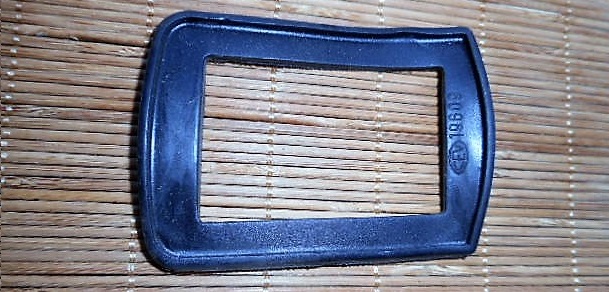
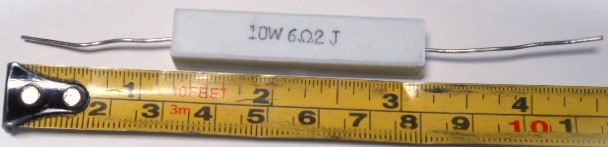
N/A means not available   Link goes to that part’s By Type section    $10 means on sale for $10


# qty  part no.  price  description 
–    207 17 005  N/A  Engine complete (207.011 with 8.5 compression ratio)
–    207 17 105  N/A  Engine complete (207.111 with 8.5 compression ratio)
–    207 17 302  N/A  Engine complete with Bing carburetter
–    207 17 320  N/A  Engine complete (207.300, 207.311 with 8.5 comp ratio)
–    000 00 000  N/A  Engine complete (207.392, 207.394 with 9.2 comp ratio)
1.   1  28-1101  N/A  Engine boxes cases complete
2.   1  28-1103  N/A  Engine boxes with bushes

Jawa 207 parts 1

Jawa 207 Parts Diagram 1: Engine Cases and Bearings

3.   1  28-1131  N/A  L.H. transmission cover
4.   2     43204 $9.00 Bearing 6203 open 17x40x12
5.   2     43006 $8.00 Bearing 6004 open 20x42x12
6.   2     43005 $6.00 Bearing 6001 open 12x28x8
7.   2     50112 $6.50 Crank seals 17x28x7
8.   1     50113 $7.50 Trans. seal 28x38x7
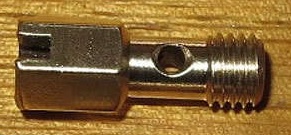
9.   1     50101 $7.50 Drive seal 20x30x7
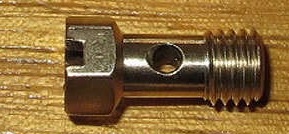
10  1  28-1113    $7  crankcase gasket
11  1  28-1132  $10  transmission gasket
12  4  28-1112  Link  Cylinder stud M6x114
13  1  28-1116  $25  Ignition magneto cover
14  1  28-1119  $15  Spring clip for cover
15  4  01-1115    $4  Centering bush 6.5×7.8×7.8
16  2     20211  Link  Screw M6x45 pan slot
17  4     20209  Link  Screw M6x35 pan slot
18  6     20208  Link  Screw M6x25 pan slot
19  1  01-1114  $10  Screw M14-2.0×12 oil filler
20  1  01-1119    $3  Seal washer Ø14
21  1     20112    $4  Screw M8-1.25x12 oil drain
22  1  01-1123    $2  Seal washer Ø8.3 Ø15 x 2
23  1     20308  Link  Screw M5-0.8x10 oil check 
24  1  28-1141  Link  Seal washer Ø5


Jawa 207 Parts Diagram 2

Jawa 207 Parts 2: Piston and Crankshaft

# qty  part no.  price  description
1   1   28-1205  $120  crankshaft (with 2 & 3)
2   1   28-1201    $40  Con. rod with bottom bearing
3   1   28-1212    $20  piston pin bushing Ø14x16x12
4   1   28-1218    N/A  Piston “B” std. 38.97 (for 39.02)
4   1   28-1218/1 Link  Piston “B” 1st  39.23 (for 39.28)
4   1   28-1218/2 N/A  Piston “B” 2nd 39.47 (for 39.52)
4   1   28-1218/3 N/A  Piston “B” 3rd 39.73 (for 39.78)
4   1   28-1218/4 N/A  Piston “B” 4th 39.97 (for 40.02)
5   2   28-1220    Link  Piston ring  std   39.02 x 2.0 GI
5   2   28-1220/1 Link  Piston ring 1st  39.27 x 2.0 GI
5   2   28-1220/2 Link  Piston ring 2nd 39.52 x 2.0 GI
5   2   28-1220/3 Link  Piston ring 3rd 39.77 x 2.0 GI
6   1   28-1221    N/A  Piston pin  Ø14 x 32 
7   2   05-1222    Link  Lock ring  piston clip for Ø14 pin
8   1 355-12-033  $6   Pin Ø4 x 6 (for ignition timing)

Jawa 207 piston 14mm pin

Jawa 207 piston

Jawa Pistons: Jawa 39mm cylinders, pistons and rings are slightly bigger than others. A Motobecane mid-size “E” cylinder is 38.99, while a Jawa “B” cylinder is 39.02 mm. Jawa pistons have “rounded M” and “circled S” logos stamped on top, the size code “B  Y” (or “1B Y” or “2B Y” etc), and the arrow that points toward the exhaust side. Jawa pistons are classified in the manuals as A, B, or C by tiny (100 microns) size differences. The actual replacements are all “B”. To see the pistons for sale, with prices and more info, click the link in the price column to go to the Pistons section. Scroll down to Pistons with 14mm Pins, at the bottom of the list. To see the rings for sale, click the price link to go to the Rings section. Scroll down to 39mm rings, for standard rings, specifically “39.02 x 2.00 GI”. 


Jawa 207 Parts Diagram 3

Jawa 207 Parts Diagram 3: Cylinder and Head

# qty  part no.  price  description
1   1  28-1303  N/A  Cylinder head bare
2   1  28-1305  $15  Decomp body with 3+4
3   1  28-1308  N/A  Washer trapped in body
4   1     50007    $6   O-ring 8od 4id (in body)
5   1  28-1314  $12  Decomp Valve
6   1  28-1315    $7  Decomp Support
7   1  28-1316    $5  Decomp Spring
8   1  28-1317    $3  Decomp Valve clamp
9   1     30018    $3  Split pin 1,6×10
10  1     50302   $5  O-ring 2.5 x 3 (8od) 
11  1     62106   Link   Spark plug NGK B5HS
12  1  28-1400 $180 Cylinder w/matching piston
12  1  28-1400 $120 Cylinder new, but no piston
13  2  28-1408    $5  Stud  M5 x 23 exhaust stud
14  2  28-1410    $3  Stud  M5 x 27 intake stud
15  1  28-1006    $8  cylinder base gasket
16  4     25103  Link  Nut M6 for head
17  4     27007  Link  Plain washer 6,4


Jawa 207 parts 4

Jawa 207 Parts 4: Intake Pipe, Air Cover

# qty  part no.  price  description
1   1  28-1511  $35  Suction Branch  air cover
2   1  28-1514    $8  Piping  air intake hose
3   1  28-1505  $30  Suction piping  intake pipe
4   1  28-1504    $8  Sealing 30 x 5 carb gasket
5   2     20114  Link  Screw M5x12 hex bolt
6   4     27401  Link  Lock washer 5.1
7   2     21020    $3  Screw M4x25 countersunk slot
8   1  28-1008   $9  Insulator 32 x 5  heat block
9   2     25101  Link  Nut M5
10  2    10006    $5  Sealing 32 x 5  intake gasket


# qty  part no.   price   description
–   1  2-66232     N/A  Carburettor Jikov 2909 9 for 25mph)
–   1  2-66232     N/A  Carburettor Jikov 2912 (Ø12 for 30mph)
1   1  2-65258    $70  Carburettor body Ø9 bare, no choke rod
2   1  2-3219      $15  Emulsion tube  needle jet M9-1.0
3   1  2-65254    $18  Cover  carb top cover with choke
4   1  2-21218    $10  Mover  throttle slide Ø14 x 26
5   1  2-31155    $15  Mover needle  jet needle Ø2.0 x 35
6   1  2-3350       $8  Lock  jet needle clip and spring plate
7   1  2-4838       $6  Mover spring  throttle spring Ø9.5 x 35
8   4  1-2455       $2  Screw M4-0.70 x 12 sunk-slot head
9   1  2-2434       $7  Cable guide adjuster M6-0.75
10  1  2-2516      $2  Nut  adjuster thin nut M6-0.75
11  1  2-2358      $7  Mover stop screw (idle speed) M5-0.8
12  2  2-4825      $3  Spring Ø8 x 13 (for both idle screws)
13  1  2-2503      $5  Regulation screw (idle mixture) M5-0.8
14  1  1-3130/58 N/A Main jet 58 M6-1.0 for 2909 carb
14  1  1-3130/63 $15 Main jet 63 M6-1.0 for 2912 carb
15  1  2-3160/35 $20 Idle jet 35 M4-0.7 thread
16  1  2-65257   N/A  Double float complete  float
17  1  2-31159   N/A  Suspension shaft  float hinge pin
18  1  2-65253   $30  Float needle and seat M7 x 13.5
19  1  2-5213      $3  Sealing Ø5/2,5 fiber washer Ø2.5 x Ø5
20  1  2-2751     $12  Diaphragm  choke plate
20a 1  2-xxxx     N/A  Choke rod with spring
21  1  2-4836     N/A  Diaphragm spring  choke spring
22  1  2-24145   $10  Diaphragm screw  choke pivot screw
23  1  2-2491     $10  Branch  fuel inlet banjo Ø6 hole Ø7 hose
24  1  1-2596     $10  Branch screw  banjo bolt M6-1.0 hollow
25  3  1-5209      $2  Sealing Ø10/6,2 fiber washer Ø6.2 x Ø10
26  1  2-21221   $15  Float chamber  float bowl bare
27  1  2-5312     N/A  Sealing of float chamber  float bowl gasket
28  2  1-4308  $0.25  Spring washer 4,1  M4 lock washer
29  1  2-2753  $7.00  Drip tray
30  2  1-4106   $0.50  Screw w/cylindrical  head  M4-0.7 x 8 
31  1  2-65255 $3.00  Drain plug M6-1.0 x 8


Jawa 207 parts 6

Jawa 207 Parts 6: Exhaust, above Welded, below Clamp-on

# qty    part no. price description
–   1 207 01 100  N/A  Exhaust welded complete
1   1 207 01 104  N/A  Exhaust welded bare
1a  1   07-1604   N/A  Front pipe (clamp on)
1b  1 228 01 042 N/A  Rear pipe (clamp on)
1c  1    28-1641  N/A  Clamp (clamp on)
1d  1    28-1649  $10  Gasket (clamp on)
1e  1       20122  Link  Screw M6 x 14 (clamp on)
2   1 228 01 048  $30  Insert complete
3   1 228 01 054  $35  End piece complete
4   1    28-1007     $8  Exhaust flange gasket
5   1    28-1610   N/A  Sealing Ø2 x 180 asbestos
6   2       20103   Link  Screw M6 x 12
7   2       25103   Link  Nut M6
8   2       25101   Link  Nut M5
9   2       27401   Link  Washer 5,1
10  2       27003   Link  Washer 6,1
11  3       27402   Link  Washer M6


Jawa 207 Parts 7: Running Clutch and Starting Clutch
6a & 7a (ring spring) is in the 207.011 and 207.311 manuals
6 and 7 (3-spring) is in the 207.111 (1978) parts manual only
So they had the 3-spring running clutch shoes for one year only.

# qty    part no.   price   description
1   1 00 28-2103 $48.0 running clutch drum
2   2 00 28-2128 $9.00 starting clutch jaw
3   2 00 28-2113 $7.00 starting clutch spring
4   2 00 28-2114 $2.00  starting clutch clip
5   1 00 28-2116 $42.0 starting clutch drum
6   3 228 21 046 $16.0 clutch jaw for 3-spring
6a 3 00 28-2127 $23.0 clutch jaw for ring-spring
7   3 228 21 049 $9.00 spring for 3-spring clutch
7a 1 00 28-2121 $13.0 spring for ring-spring clutch
8   1 000  50115 $6.00 sealing ring 15 x 24 x 7
9   1 000  50009 $2.00 external retaining ring 15
10  1 00 28-2138 $40.0 outer flywheel-plate
11  1 00 28-2132 $12.0 Screw M8 x 25 (thin 24 hex)
12  1 00 28-2133 $7.00 tab washer  
13  1 00 28-2136 none  felt ring
14  1 000  50305 $11.0 sealing ring Ø100 x 5
15  3 000  21007 $1.50 screw M5 x 10 sunk slot (12 max)


Jawa Clutch

Jawa Running Clutch “ring spring” type


Jawa Flywheel

Jawa Flywheel/Drum


Jawa 207 Parts Diagram 8

Jawa 207 Parts Diagram 8: Drive Shaft and Drive Gears

# qty part no. price  description
1   1  28-2205 $45  Crankshaft Gear 20T
2   1  28-2209 N/A  Shaft w/Gears 12/34T
3   1  28-2214 N/A  Driveshaft w/Gear 36T
5   1  28-2221  $8  Engage spring
6   1  28-2222  $3  Engage washer
7   1  28-2225 $12  Engage shaft
8   1  28-2226  $5  Engage wheel knob
9   1  28-2206  $7  Crank washer 15 x 24 x  1.9
10 26 28-2207  $1  Loose needles Ø2×12
11  3    40003 Link  Ball Ø5
12  1    34001  $3  Lock ring 19
13  1    34004  $3  Lock ring 18
14  1    33013  $2  Engage pin Ø3 x 26 (or 22)
15  1    45010 N/A  Chain 97 links 086-1
16  1    45005 Link  Master link 086-1 (MM #6c)


# qty  part no.  price  description
4   1  08-????    N/A  Sprocket 10 teeth (for 25km/h models, 208.450, 208.502, etc)
4   1  08-2220   N/A  Sprocket 11 teeth (for 30km/h models, 207.011, 207.111, 207.377 etc)
4   1  28-2220  $25  Sprocket 12 teeth (for 40km/h models, 207.011, 207.111, 207.385, etc)
4  207-27-306  $25  Sprocket 13 teeth (for 50km/h models, 207.300, 207.311, etc
4  207-27-302   N/A  Sprocket 14 teeth (for 50km/h models, 207.385, 207.392, etc)

Jawa Chain: The Jawa motor chain is not a standard 415 moped chain, although it has the same pitch and width. It has thicker pins, 4.4 instead of 4.1mm. More importantly, it has bigger rollers, 8.4 instead of 7.7mm. Because the Jawa sprockets are made for bigger rollers, they look similar to worn out standard sprockets. The valleys between the teeth are wider and deeper, making the tops of the teeth more pointed. So a 415H moped chain will work OK, but not great, on unworn Jawa sprockets. But if the Jawa sprockets are worn, the chain might skip and jump off.   


Jawa 207 Parts Diagram 9

Jawa 207 Parts Diagram 9: Pedal Shaft and Pedals
Standard 9/16-20 thread pedals and 1/2 x 1/8 chain

# qty  part no.  price  description
1   1 07-2254  $45  Pedal shaft welded
2   1 28-2260  Link  Pedal arm 5.3″ straight left
3   1 28-2259  Link  Pedal arm 5.3″ straight right
4   1    70090  Link  Bicycle 9/16″ pedal left
5   1    70091  Link  Bicycle 9/16″ pedal right
6   2    00000  Link  Wedge pin 9.5 mm
7   1    25103  Link  Nut M6 (comes with pin)
8   1    27007  Link  Washer 6.4 (comes with pin)
9   1 28-2268   $3  Washer 17 x 36 x 1
10  1    45011  Link  Bicycle 1/2 x 1/8 chain 86 link
11  1    45008  Link  master link (comes with chain)


Jawa 207 Parts Diagram 10a

Jawa 207 Parts 10: Rear Shocks

# qty    part no.  price  description
—  2  207 39 165  N/A Shock Ø8 Ø8 x 330 lite grey
—  2  207 39 170  N/A Shock, heavy duty chrome
1   2  207 35 101  N/A Bottom body black
2   2  207 35 109  N/A Top body with rod
3   2  207 35 112  N/A Rubber bottoming block
4   2  207 39 ???  N/A Chrome cover  (207.111, 311)
4   2  207 39 166  N/A Light grey cover (207.011)
5   2  207 35 116  N/A Spring
6   4  200 35 008  N/A Rubber bushing
7   4  200 35 009  N/A Steel sleeve Ø8 x Ø12 x 25?


Jawa 207 Parts Diagram 10a: Swinging Fork Frame


Jawa 207 pedal chain

Jawa 207 swing arm 
spiral chain adjusters.
Pedal shaft is swing arm pivot.

#b #a qty   part no.   price   description
— —         207 39 306  N/A  Frame welded bare   (207.305)
— —         207 39 305  N/A  Frame w/swing arm (207.305)
— —         207 31 100  N/A  Frame welded bare   (207.111)
—  1   1    207 30 101  N/A  Frame w/swing arm (207.111)
4   2   1        28-3018  $15  Intake silencer aluminum
5   3   1           70105  N/A  Air filter metal netting use foam
5   3   1       70105sub   $2  Air filter foam type 1.2×1.6×0.4″
10 4   1        05-2127    $1  Rubber hose 5/16″ ID, 1″ long
6   5   1           20205  Link  Screw M5x 40
13 6   1           20225  Link  Screw M5 x 10
7   7   12         20308  Link  Screw M5 x 10
8   8   20         25101  Link  Nut M5
9   9   20         27401  Link  Washer 5,1
19 10  8          27003  Link  Washer 5,3 thick

Jawa 206 pedal chain

Jawa 28, 207 rigid
M5 eye-bolt adjusters

Jawa 207 pedal chain

Jawa 207.311 “late”
M5 eye-bolt adjusters
with back plates

12 11  1       28-3028  $15  Seat tube Ø25.8 Ø22 x 220
—  12  1  207 37 150  $65  Center stand swing arm type
14 13  1       28-3032   $7  Stand spring Ø15 x 95mm
—  14  1  207 30 120  N/A  Stand pin Ø10 x 68mm
17 16  2          34201   $2  Ring 7  Eclip Ø7 for Ø10 pin
30 17  3          20114  Link  Screw M5 x 12
27 18  4          25103  Link  Nut M6
28 19  6          27402  Link  Washer 6.1
29 20  2          27007  Link  Washer 6.4
—  21  1 201 208 050  Link  Screw M8 x 50 post clamp
35 22  2          20024  Link  Screw M8 x 60 rear engine
55 23  1          21204  Link  Screw M8 x 45 front engine
22 24  7          25104  Link  Nut M8
23 25  7          27403  Link  Washer 8.2

Jawa ID sticker

ID plate (1970’s USA)

—  26  6 210 120 084  Link  Washer 8.4  upper shock washer
—  27  4 732 900 060   $2  Ring 6 E-clip Ø6 for Ø8  pin
—  28  1 203 206 030  Link  Screw M6 x 30
39 29  1       28-3204 $10  Guide “U”-shaped metal
40 30  1       28-3205  $7   Roller original phenolic
41 31  1       28-3206  $7   Bushing 6.6 x 9 x 11
—  32  1  207 30 111  N/A  Sleeve spacer for chain “line”
46 33  1  207 39 050  $30 used Rear fender light grey
—  34  2  207 30 115  N/A  Rod  rear fender brace
56 35  1  207 39 052  N/A  Tail lamp bracket for round type
— 35a 1  207 39 171  N/A  Tail lamp bracket for square type
50 36  1         50700  N/A  Grommet for tail lamp wires
—  38  1  207 32 101  N/A  Swing arm
—  39  1  207 30 110  N/A  Swing arm pin
—  40  2  207 32 120  N/A  Bushing  swing arm bushing
—  41  1  207 56 191  $10  Chain adjuster LH  spiral type
—  42  1  207 56 193  $12  Chain adjuster RH  spiral type
52 43  2  359 31 011  N/A  Cup  steering bearing cups
63 44  1      28-0002   $5   Tranzimo protector

62 45  2         20103  Link  Screw M6 x 12  tranzimo protector bolts
—  46  2  228 43 011  N/A  Holder  rear fender brace eye bolt
—  47  2  228 43 012  N/A  Cup  rear fender brace cup
60 48  1         70092  $15  Frame plate  identification sticker
61  —  2      28-0003   $6  Adjuster eyelet type M5 (not shown)
—  50  549633011000 N/A  Steering lock with keys


Jawa Center Stands

Left, Jawa 207 37 150, swing arm type stand, goes outside the frame
Right, Jawa 28-3400, rigid frame centerstand, goes inside the frame

Chains opposite: See below about how the Jawa pedal chain is on the left side of the bike. and so is not like most other mopeds and bicycles. Weird!

Motor chain is special: See above and in the link to Chains, how the Jawa moped chain has bigger rollers than all other mopeds. Weird!


Jawa 28 and 206 Parts 10b: Rigid Type Frames
This “b” section is for rigid frame only items.
Parts that are on both “rigid” and “swing arm”
frames are combined in the “a” section above.

# qty  part no. price  description
1   1  07-3001  N/A  Frame
11  2  05-0023  N/A  Support
15  1    28-3033  $8  Pin Ø10 x 88
16  2     27010  Link  Washer 10.5
18  1  07-3037  N/A  Rear support
20  1  07-3053  N/A  Bracket
21  2     20330  Link  Screw M6 x 14
24  2     20109  Link  Screw M8 x 16
25  1  28-3060  $15  Chain cover
26  2     20148  Link  Screw M5 x 16
32  1  28-3073  N/A  Upper clamp
33  1  28-3074  N/A  Lower clamp
34  1  28-3075  N/A  Tube for seat
36  1     20015  Link  Screw M8 x 65
38  1  28-3203   $4  Roller arm
42  1     21603  Link  Screw M6 x 22
43  1  07-3301  N/A  Luggage carrier
44  1  07-3305  N/A  Support LH
45  1  07-3306  N/A  Support RH
47  1  07-3353  N/A  Fender bracket
48  2  07-3311   $7  Bracket
51  1  28-3400  $35  Center stand
53  2  01-6052  N/A  Band
54  2  01-6053  N/A  Lug
57  1     70095  N/A  Reflecting glass
64  2  28-3036  N/A  Bushing pedal shaft


Jawa 207 Parts Diagram 11 Wheels
Not shown: the two rear bearings #10, rear center tube #2,
and the right rear bearing shields #6, #4 and felt seal #5.

# qty part no. price  description
1   1 28-4003 N/A  Front wheel
2   2 28-4004  $5  F/R Center spacer 16x42
3   1 28-4005 N/A  Front wheel hub
4   4 28-4008  $5  Front shield Ø18/29×5
5   4 28-4009  $5  F/R Felt ring Ø17/27×7 
6   4 28-4010  $5  F/R Shield 17.7 27.8 0.5
6a 0 28-4767 N/A  Stepped washer/spacer
7   2 07-4019 N/A  F/R Rim 1.5″ for 2.25-16
7  207 57 019 N/A  F/R Rim 1.5″ DOT 2.25-16
8  36 07-4016 Link  F/R Spoke inner 2.6x160
9  72    25001 Link F/R Spoke nut M3-0.50
10  4    43001 $6.00 F/R Bearing 6001-Z
11  2    34104  $4  F/R Inner-type circlip 28
12  1 28-4024 $50 used Front brake assy.
13  1 28-4026 N/A  Front cover, no hole
13 207 57 018 $40 F cover, inspection hole
14  4 28-4027 $35 F/R Brake jaw Ø85 x 20
14 4 EBC 804 brakes see treatland.tv
15  4 28-4031 N/A  F/R Brake spring 43mm
15  4 Grimeca  $2  F/R Brake spring 39mm
16  2 28-4032 $15 F/R Brake cam
17  2 28-4033  $5  F/R Brake arm (lever)
18  2 28-4034 Link  F/R Washer 10,2
19  2    27007 Link  F/R Washer 6,4
20  2    25103 Link  F/R Nut M6

Jawa Brake Plates

Jawa Brake Plates/Panels/Covers, both on right side

21  8    27402 Link  Washer 6,1
22  1 28-4040  $7  Front axle Ø12 x 130
23  3 28-4041 $10 F/R Spacer Ø17 x 8
24  1 28-4042 N/A  F. Ring for no speedo
24a 0 07-4755 $35 Speedometer driver
25  2    55032 Link  F/R Tyre 2.25 – 16
26  2    55023 Link  F/R Tube 2.25 – 16
27  2    55012 Link  F/R Rim strip
28  3    27011 Link  F/R Washer 13 plain
29  2    26101  $3  F/R Axle Nut M12-1.5

30  2    27405 Link  F/R Lock washer 12,2
31  1 207 57 023  N/A  Rear hub with rim
32  1     28-4070  N/A  Rear wheel hub

Jawa Front Wheel Parts

Jawa Front Wheel Parts

33  1 207 57 021  $55 used Rear brake assembly
34  1     28-4073   $7  Rear helper spring torsion type
35  1     28-4076  N/A  R. brake cover bare, no insp. slot
35  1 207 57 022  $40 R. brk cover bare, inspection slot
36  1     07-4091  $40 Sprocket 35 teeth for 086 chain
37  1 228 56 020  $10 Rear shield Ø18/28 x 5
38  1     28-4095  $25 Rear axle Ø12 x 170
39  1     28-4097   $7  Rear outer spacer Ø17 x 35
40  1        21401  Link  Screw M6 x 16
41 36    07-4021  Link   F/R Spoke outer Ø2.6 x 160
42  1        70040  $35  L.H. freewheel M35-1.0 18 teeth


Jawa brake shoes
L, 2.5 lining for Ø85 drums
(on Jawa spoke wheels)
R, 5.0 lining for Ø90 drums
(on aluminum wheels)

Jawa Spokes: Jawa spokes for 16″ rims are all 160mm long (198mm for 19″ rims). There are two kinds, inner and outer. The outer ones go through the hub holes from inside to outside, and have a longer and sharper bent section. The inner ones go through the hub holes from outside to inside, and have a shorter bent section. Each wheel has 18 inner and 18 outer spokes, alternating, for a total of 36. It was an educated guess which part number was for which type. Inners were 07-4016 and outers were 07-4022, at least in this list. Nowhere else is this difference noted. It does not matter much, since either type of spoke will work, with some minor bending during tensioning/truing. 

Jawa Freewheel

Jawa Brakes: Jawa brake shoes are not like any other western European or Asian brake shoe. Most are for a 85mm drum diameter. Some Jawa mopeds with aluminum “mag” wheels have 90mm drums. For those Jawa made the same brake shoes, but with thicker lining, 5mm instead of 2.5. 

Jawa Left Hand Freewheels made by Velo

Jawa LH 18T Freewheels made by Velo, say what year they were made, here 1976, 77, 78.

Jawa Freewheel: The “free wheeling hub” with sprocket, for the pedal chain is on the left side of the bike. All other US mopeds, except Benelli, and virtually every bicycle, with a freewheel, has a pedal chain on the right side. A right side freewheel screws onto a hub and tightens clockwise, as the bike is pedaled. So the hub has a standard right hand thread. But a left side freewheel needs an opposite thread, so it tightens counter-clockwise, as the bike is pedaled. Jawa specifies the freewheel thread in the Model 28 Parts List. It is M35 x 1.0 L.H. (left hand). So Jawa freewheels and rear hubs are special.

Notice how the back side of a Jawa freewheel, lower right, looks like the front side of a conventional freewheel, top left, except for no removal slots. For many years Shaun mistakenly thought Jawa freewheels were conventional right hand thread ones that were missing the removal tool slots. It is not easy to tell the direction of such a fine thread. Tragically some of those special left hand freewheels got thrown away in the 1990’s along with a few Taiwan bicycle ones that were truly missing the removal slots.

Just a reminder, freewheels tighten by pedalling. No tool is needed to install one. But removal requires a special tool, which comes in different styles and sizes. If the bicycle or moped is pedaled hard, then the freewheel will become very tight and difficult to remove. 


Jawa 207 Parts Diagram 12

Jawa 207 Parts Diagram 12: Fork 1979 to 1983 (207.300 series)

#  qty   part no.  price  description
1    1  207 47 300  N/A  Forks complete
2    2  207 41 336  N/A  Ball race seat
3    1  207 41 321  N/A  Slider L/H
4    1  207 41 331  N/A  Slider R/H
5    2  228 41 007  N/A  Spring
6    2  207 41 327  N/A  Upper spring catch
7    1  207 41 337  N/A  Head bolt M12
8    1  207 41 xxx  N/A  Headlight holder (Euro)
9    2  207 41 326  N/A  Stop
10   2  207 41 335  N/A  Bellows
11   2  207 41 315  N/A  Bush
12   2  228 40 008  N/A  Guide bush
13   2  220 00 007  N/A  Strap
14   2  359 41 147  N/A  Clip
15   2        xxxxxx  N/A  Split pin
16  42         40001  Link  Ball 5mm
17   1  207 47 310  N/A  Front mudguard
18   1  207 43 302  N/A  Mudguard stay
19   1  207 43 003  N/A  Mudguard stay
20   1         26101  Link  Nut 12
21   1         27011  Link  Washer 13
22   6         20308  Link  Screw M5 x 10
23   4         25101  Link  Nut M5
24   8         27401  Link  Washer 5,1
25   8         27003  Link  Washer 5,3
26   3         20330  Link  Screw M6 x 14
27   1         25103  Link  Nut M6
28   1         27402  Link  Washer 6, 1
29   2         27007  Link  Washer 6, 4


Jawa 207 Parts Diagram 12a

Jawa 207 Parts 12a: Fork 1970 to 1978 (28, 206, 207)

#  qty  part no.  price  description
1   1   28-5100  N/A  Front suspension complete
2   1   28-5016  N/A  Upper goggles  
2   1   07-5713  N/A  Upper goggles  (for 207.011)
3   1   28-5022  N/A  L.H. slide piece (for 19″ rim)
4   1   28-5023  N/A  R.H. slide piece (for 19″ rim)
3   1   07-5030  N/A  L.H. slide piece (for 16″ rim)
4   1   07-5024  N/A  R.H. slide piece (for 16″ rim)
5   2   28-5032  N/A  Spring
6   2   28-5033  N/A  Upper spring catch
7   2   28-5034  N/A  Nut
8   2   28-5037  N/A  Plug
9   1   28-5047  N/A  Headlight holder (Euro)
10  1   28-5012  N/A  Nut
11  151-41-007  N/A  Nut open 
12  1   28-5013  N/A  Washer 27
13  1   28-5018  N/A  Plate 
14  1   28-5018  N/A  Plate
15  4   28-5113  N/A  Guide bush
16  2   07-5115  N/A  Sealing cup 
17  2      50003  N/A  Sealing o-ring 20 x 16
18  42    40001  Link  Ball 5
19  1   07-5155  N/A  Front mudguard (for 16″ rim)
20  1   07-5160  $12  Upper front mudguard strut (for 16″ rim)
21  1   07-5165  N/A  Lower front mudguard strut (for 16″ rim)
22  6      20308  Link  Screw M5 x 10
23  2      20309  Link  Screw M5 x 12
24  4      25101  Link  Nut M5 
25  8      27401  Link  Washer 5,1
26  8      27003  Link  Washer 5,3
27  1      20330  Link  Screw M6 x 14
28  3      25103  Link  Nut M6 
29  3      27402  Link  Washer 6,1


Jawa 207 Parts 13: Controls, Cables
1970-78 sliding-block type throttle: In the 207.011 parts list, the throttle was not sold complete, only separate. It had a spiral ridge inside the twist tube, a 5 inch slot in the handlebar, and a slider inside. The cable ran inside the handlebar.
1977-81 wrap-around throttle: In the 207.111 parts list, the throttle was sold only complete and not separate. It had no slider and only a 1/2 inch slot in the handlebar. The cable exited away from the bar. 

# qty  part no.  price  description
1a 1 207 47 028 $65  Handlebars for slide throttle (207.011)
1b 1 207 47 064 N/A  Handlebars for wrap-around (207.111)
1c 1 207 47 316 N/A  Handlebars bolt-on for wrap (207.300, 305)
1d 1    28-5213  N/A  Spindle bolt M8 long (207.011, 111)
1e 1       27008  Link  Washer 8,4  (207.011, 111)

1f 1    07-5216  N/A  Handlebars cowl  (207.011, 111)
1g 1 550 46 022  $5  Spindle taper cone  (207.011, 111)

2a 1 353 46 112 $15  Catch throttle slide, early (207.011)

3   1 228 46 043 $22  R.H. lever holder
4   1 220 46 002 $25  L.H. lever holder was 20-5102
5   2 228 46 041 $25  Lever R or L, ball end, was 28-5227
6a 1    ??-?????  N/A  Throttle assembly slide type (207.011)
6b 1    36-5380  N/A  Throttle assembly wrap type (207.111)
6b 1 236 46 005 N/A  Throttle assembly late wrap (207.300, 305)
7a 1 353 46 101 $22  Twist tube with grip for slide (207.011)

7b 1 236 46 014 $22  Twist tube with grip for wrap (111,300,305)
8a 1 353 46 105 $15  Housing for slide throttle (207.011)
8b 1 236 46 015 N/A  Housing for wrap throttle (111, 300, 305) 

9   1    36-5388  $10  Plug  throttle plug aluminum (207.011, 111)
9   1 236 46 013 N/A  Plug  throttle plug late type (207.300, 305)
10  1 228 46 012  $7  Lever  lever, decompression

11  1 353 46 112 $10 Catch  lever mount, decomp
12  1 228 46 053 N/A  Spacer tube for decomp lever
13  1    28-5223  N/A  L.H. rubber grip
14 to 21                 Cables    see below                       
25  1       70088  $25  Brake light switch
26  1       20602  Link  Screw M6 x 5
27  1       21007  Link  Screw M5 x 10
28  2       20229  Link  Screw M5 x 20
29  2       20205  Link  Screw M5 x 40
30  2       25101  Link  Nut M5
31  2       27401  Link  Washer 5,1
32  1       27003  Link  Washer 5,3
33  4 203206025 Link  Screw M6 x 25
34  4       27402  Link  Washer 6.1
35a 1 220 65 000 N/A Light/horn switch body
35b 1 550 65 150 $30 Light/horn switch body (207.011, 111)
35  1 550 65 150 $30 says “353 65 140” 
35c 1 220 65 013  N/A  Light/horn switch body (207.300)
37  1       20316  Link  Screw M3.5 x 28
38  1       27407  Link  Washer
39  1       25110  Link  Nut M3.5
40a 1 220 65 001 $15 Lt/horn switch cover grey with no label
40b 1 220 65 012 $15 Lt/horn switch cover chrome chrome label 
40c 1 220 65 012 $15 Lt/horn switch cover chrome w/black label 
41   1     51 120  N/A  Decomp lever sleeve says “engine stop”

Jawa Switches

Jawa 207 Switches


Jawa throttles 1970-1981

Jawa 207 slide type and wrap around throttles

Jawa Supreme with Domino controls

Jawa Supreme with Domino controls


Jawa Cables
Each cable was made in long or short versions. Long is for tall hi-rise handlebars like on the 207.311.
US models 1976-81 had Jawa controls. Those had inline brake light switches on the brake cables.
US models 1982-83 had Domino controls. Those had brake light switches on the controls, not the cables.
The 1982-83 top tank had low bars, short cables. The 1981-83 step thru had high bars, long cables. 

Jawa 207 Cables

14. Throttle Cables
14a 1    28-5240  N/A  short grey 2-end for slide (207.011)
14a 1    28-5240  N/A  short black 2-end for slide substitute
14b 1 207 47 068 N/A  short black 2-end for wrap (207.111)
14b 1 207 47 068 N/A  short black 2-end for wrap substitute
14b 1 207 47 320 N/A  long black 2-end for wrap (207.300)
14b 1 207 47 320 N/A  long black 2-end for wrap substitute
14c 1 
207 ?? ???? N/A  
long black 1-end Domino (207.3xx)
14c 1 207 ?? ???? N/A  long black 1-end Domino substitute

15. Rear Brake Cables
15a 1 207 47 057 N/A  short grey 1-end with gap w/switch (207.011)
15a 1 207 ?? ???? N/A  short black 1-end with gap w/switch (207.111)
15b 1     28-5246 N/A  short grey 1-end (no gap for switch) (207.0xx)
15c 1 207 47 325 N/A  long black 1-end with gap for switch (207.300)
15c 1 207 ?? ???? N/A  “bare” long black 1-end with gap substitute
15c
 
1 207 ?? ???? N/A  “bare” short black 1-end with gap substitute
15d 1     28-5246 N/A
 “bare” long black 1-end (no gap) substitute
15d 1     28-5246 N/A  “bare” short black 1-end (no gap) substitute
16  2    28-5271   $3  Cable stop step-ferrule Ø8-Ø4 x 9

17. Front Brake Cables
17a 1 207 47 047 N/A  short grey 1-end with gap w/switch (207.011)
17a 1 207 ?? ???? N/A  short black 1-end with gap w/switch (207.111)
17b 1    28-5255  N/A  short grey 1-end (no gap for switch) (207.0xx)
17c 1 207 47 322 N/A  long black 1-end with gap for switch (207.300)
17c 1 207 47 322 N/A  “bare” long black 1-end with gap substitute
17c 1 207 47 322 N/A  “bare” short black 1-end with gap substitute
17d 1 207 47 322 N/A  “bare” long black 1-end (no gap) substitute
17c 1 207 47 322 N/A  “bare” short black 1-end (no gap) substitute
18  1    28-5272  N/A  Cable spring assist spring

19. Decomp. (Start) Cables
19a 1 228 46 050 $32  short grey 2-end w/lever (207.011) 34″ conduit
19a 1 228 ?? ???? N/A  short black 2-end w/lever (207.111)
19b 1 228 46 056 N/A  long black 1-end no lever (207.300)
19c 1 228 ?? ???? N/A  “bare” long black 1-end substitute
19c 1 228 ?? ???? N/A  “bare” short black 1-end substitute

20-23 Cable Ends
20  3 353 46 031   $7  Cable pinch bolt Ø8 with set-screw
21  3 550 46 031   $2  Cable pinch bolt M6-1.0 set-screw
20  3 353 46 031  $3  Cable pinch bolt substitute
22  2 228 46 011 N/A  Brake cable upper end (adapter pin)
23  2       34404  N/A  Brake upper end ring (adapter pin clip)


Jawa 207 Parts Diagram 14

Jawa 207 Parts Diagram 14

#  qty   part no.  price  description
1   1     28-7107  $40  R.H. cowl side cover
2   1     28-7116  N/A  L.H. cowl side cover
3   1     28-7122  $35  Upper cowl center cover
4   2        25104  Link  Nut M8
5   8        20308  Link  Screw M5 x 10
6   9        27003  Link  Washer 5,3
7   1        25101  Link  Nut M5
8   1     28-7205  N/A  Tank welded
9   1     28-7218  N/A  Cover  felt
10  1    05-3340  Link  Plug  gas cap 40mm push-in
11  1      70-053  Link  Discharge cock type 14 K
12  1    28-7218         Gasket Ø13 fiber washer
13  1    28-7227   N/A  Hose  fuel line (ID 1/4″)
14  2    28–????  N/A  Label “Babetta”
14  2    28-7701  N/A  Label “Jawa”
14  2    28–????  N/A  Label “Transistor 40”
15  1    01-9999  N/A  Seat complete
16  1 302620011  N/A  Bolt  special stud
17  1 420620007  N/A  Socket of seat fitting
18  2 503200504  N/A  Adapter 28
19  2 100620030        Washer 28


Jawa 207 Parts Diagram 15

#  qty   part no.  price  description
–   1 207-61-140  N/A  Alternator assembly for 
–   1 228-61-150  N/A  Alternator assembly for 207.011
–   1 207-61-120  N/A  Alternator assembly 207.111, 300
1   1     28-6002  $85  Rotor internal 6-pole magnet
2   1     28-6010  N/A  Stator assembly early type
2   1 228-61-151  N/A  Stator assembly for 207.011
2   1 228-61-121  N/A  Stator complete 207.111, 300
3   1     28-6011  $30  Ring with pulse coil white wire for 207.011
3b 1 207-61-003  N/A  Ring w/pulse coil yellow wire 207.111, 300
4   1     28-6020  N/A  Ignition coil 207.011
4b 1 228-61-005  $35  Ignition coil 207.111, 300
5   2        20201  Link  Screw M4 x 14
6   1 228-61-153  $30  Horn/Stop coil  207.011, 111, 300
7a 1      28-6027  $45  Lighting coil I
7a 1 228-61-027  $35  Lighting coil I  207.011, 111, 300
7a 1 207-61-142  N/A  Lighting coil I
7b 2      28-6036  $60  Lighting coil II
7b 2 228-61-036  $40  Lighting coil II  207.011, 111, 300
7b 1 207-61-143  N/A  Lighting coil II
8   6        20202  Link  Screw M4 x 30
9  10       27400  Link  Washer 4,1
10  1       20131  Link  Screw M5 x 25 rotor bolt
11  1       27401  Link  Washer 5,1
12  1       27003  Link  Washer 5,3
13  2       20247  Link  Screw M4 x 22
14  1    28-6226  N/A  Alternator wiring (early)
14a  207-60-171  N/A  Alternator wiring 207.011
14b  207-60-331  N/A  Alternator wiring 207.111, 207.300
14c  207-60-152  N/A  Alternator wiring
15  1 150-49-005 N/A  Bushing grommet

Jawa Magneto Coils

Jawa Magneto Coils

Jawa 207 magnetos have four source coils (and one pulse coil). Two of them are combined in series to make one. So there are three independent generator outputs, ignition (coil 4b), lighting (coil 7a plus 7b), and horn or brake light (coil 6). The ignition never has anything to do with the lights. The brake light does not make the head light dim at all. So it is like three separate little generators, all in one place. More about Jawa electrical can be found in the Wiring Diagrams gallery. Scroll down to “J” Jawa.


Jawa 207 Parts Diagram 16

Jawa 207 ’76-80 Parts Diagram 16

#  qty   part no.  price  ’76-80 Headlight
1   1  207 47 060  N/A  Headlight housing for no switch
1a 1  223 42 001  N/A  Headlight housing for switch
2   1         70093  $35 Rim chrome bezel
3   1  207 47 048  $12 Ring adapter
4   1         70094  Link  Sealed beam 6V 25W
5   6         55033   $3  Spring clip 207 34 594
6   1         62042  $30 Ignition switch
7   2         21002   $2  Screw M4 x 8
8   2         20117  Link Screw M8 x 25
9   2         27008  Link Washer 8.4
10 2         25200  Link Nut M8
11 2         21030  Link Screw M4 x 16
12 2         25109  N/A  Nut M4 special shape plastic
13 1 408 2870.13  $2 Screw M5 x 20 slot
14 1 408 1040.06  $3 Distance ring 9mm
15 1        14002  $50 Speedometer with clamp
16 1 555-40-010   $7 Rubber ring
17 1      07-4780 $18 Cable M10-1 caps, 2.2mm square ends


#  qty   part no.       price  description
–   1 443 311 199 101 N/A Headlight complete
2   1 443 958 111 217 N/A Cover
3   1 443 950 711 316 N/A Cover
4   1 443 954 221 002 N/A Adapter
5   2 443 952 121 003 N/A Screw w/inner thread
6   1 443 953 203 001 N/A Insulating washer
7   1 443 954 600 001 N/A Compression spring
8   2 443 952 001 003 N/A Lock washer
10 1 443 950 522 959 N/A Clip

Jawa 207 Parts Diagram 16a

Jawa 207 Parts 16a (Euro head light)

12 2 443 950 287 674 Link Screw M3 x 6
13 2 443 950 021 009 Link Screw M4 x l4
14 2 311 214 420 041 Link Washer 4,1
15 1 443 950 287 678 Link Screw M6 x l6
16 1 443 950 288 238 Link Washer 6,1
17 1 443 950 286 102 Link Nut M6
18 1 345 355 201 630 N/A Switch
19 1 443 958 113 002 N/A Bush
20 1 443 958 111 218 N/A Parabolic mirror
21 1 443 958 118 005 N/A Cable
22 1        228 60 129 Link Bulb 6V 15/15W


Jawa 207 Parts Diagram 17

Jawa 207 Parts 17 Transistor Ignition

# qty  part no. price  description
1   1 30-6500  N/A Transimo
2   1 30-6514  N/A Transistor KD-602
3   2    20220  Link Screw M3 x 6
4   2    27406  Link Washer 3,1
5   1 30-6573   $4 N/A Cover
6   1    62038  N/A Protection cover rubber boot
7   1 28-6234  N/A Plug wire with spark plug cap
8   1    62039  N/A Cable terminal OKS-12 plug cap
9   2 01.1787  N/A Cable eyelet
10 1 01.1787  N/A Cable eyelet
11 1 28-6206  N/A Conductor #15  black
12 1 28-6223  N/A Conductor #58 yellow
13 1    62011   N/A Flat tube female blade connector
14 5    62012  $2  Cylindrical tube female bullet connector
15 5 30-6214  N/A Insulating tube Ø8 x 30mm
16 1 28-6227  N/A Insulating tube 0,5m

Here is some Jawa Ignition Info Jawa Moped Electrics


Jawa 207 Parts Diagram 17a

Jawa 207 Parts 17a Thyristor Ignition

# qty     part no.        price  description
1  1  443 213 220 810  N/A Thyristor
2  1  443 212 210 800  N/A Coil
3  1  443 930 220 560  N/A Bracket
4  1  0000 207 66 001  N/A Bracket
5  1  0000 207 60 015  N/A Plug lead
6  1  371 511 341 000  N/A Plug cap
7  6  443 858 000 012  N/A Cable end
8  2  443 858 008 002  N/A Cable end
9  3  443 858 006 032  N/A Cable end
10 1  0000 359 60 122  N/A Cable end
11 6  0000 228 60 015  N/A Cable end
12 1  273 125 031 534  N/A Grommet


Jawa Service Bulletin Aug 1981

Jawa Service Bulletin Aug 1981

Jawa Ignition Upgrade Kit

Jawa Ignition Upgrade Kit

In 1981 Jawa moped dealers across the US were sent this Service Bulletin #1. It says how to update pre-1978 (model 207.011) ignitions by replacing the old red Tranzimo unit, and the old stator ring with pulse coil, with the newer system, shown at right. The new system had been in use for two years on the 207.111 models, and was proven to be more reliable. Too bad MM does not have any more of those ignition upgrade kits.


Jawa 207 Parts Diagram 18a

Jawa 207 Parts 18a Rear Lamp (’76-78)

Jawa Tail Light PM428

Tail, stop, license lamp
PM420 (stud mount)

# qty part no.  price  description
–  –   3296-061  N/A  Tail Lamp PM420-15
1  1   3296-061  N/A  Lamp housing
2  1   3296-061 Link Lens used
3  2 34544-001 $0.50 Screw
4  1       34213 $1.00 Nut 3/8-24 fine
5  1       34213 $0.50 Lock washer 3/8″
6  1       60507  Link  Bulb 6V #1154

PM made Jawa tail lights

1976-80 tail lamps are made by PM


Jawa 207 Parts Diagram 18b

Jawa 207 Parts 18b Rear Lamp PM421 (’78-80)

# qty part no.   price  description
–  1  70106 Link Tail lamp PM421-15
1  1  70100 Link Lamp housing (body)
2  1  70101 Link Lens
3  2  70102  N/A Screw
4  3  70103  N/A Screw
5  1  60507  Link Bulb 6V 10/3W

Peterson PM421 tail light

Tail, stop, license lamp PM421


Jawa 207 Parts 20: Tool kit, all metal pump
says made in Czechoslovakia by Velamos

Parts Diagram 19 was Speedometer Parts. The speedometer and cable were merged with the headlight parts. The speedo driver and special stepped spacer were merged with the wheel parts.

# qty     part no.    price  description
1  1       207 00 101  N/A  tool tray
2  1       228 75 002  N/A  universal wrench
3  1       200 75 012   $7  spark plug socket
4  1       220 75 009   $5  socket 13/17mm
5  549 900 006 700  $10  screwdriver
6  1       555 71 024   $8  socket 10mm
7  1       555 71 023   $4  handle rod
8  1     413 035 001  $25  air pump original with new hose

Jawa Tail Light

Tail, stop and license lamp PM421
Under rack are pump and tool tray


Jawa Hardware: Original screws (bolts), nuts, washers, from the parts sections above are listed again below. Above, they all have a link in the price column, that goes to the Parts by Type/Hardware page. Any metric nuts and bolts with the same dimensions will substitute for the Jawa originals, but some things, like screw heads, might look slightly different. Some of the original hardware items are still available, listed below, with photos. 

Jawa Original Hardware List
20024 Screw M8x60 hex head
20103 Screw M6x12 hex head
20109 Screw M8x16 hex head
20112 Screw M8x12 hex head
20114 Screw M5x12 hex head
20122 Screw M6x14 hex head
20131 Screw M5x25 hex head
20148 Screw M5x16
20201 Screw M4x14 pan slot
20202 Screw M4x30 pan slot
20205 Screw M5x40 pan slot
20208 Screw M6x25 pan slot
20209 Screw M6x35 pan slot
20211 Screw M6x45 pan slot
20220 Screw M3x6 pan slot
20225 Screw M5x10 pan slot
20229 Screw M5x20 pan slot
20247 Screw M4x22 pan slot
20308 Screw M5x10 dome slot
20309 Screw M5x12 dome slot
20316 Screw M3.5×28
20330 Screw M6x14
20602 Screw M6x5 set screw
21002 Screw M4x8 sunk slot
21007 Screw M5x10 sunk slot
21020 Screw M4x25 sunk slot
21204 Screw M8x45 hex head
21401 Screw M6x16 hex head
21603 Screw M6x22 pan slot
25101 Nut M5-0.80 plain
25103 Nut M6-1.00 plain
25104 Nut M8-1.25 plain
25109 Nut M4-0.70 plain
25110 Nut M3.5-0.60 plain
26101 Nut M12-1.50 plain
27003 Washer 5,3 Ø5 thick
27003 Washer 6,1 Ø6 plain
27007 Washer 6,4 Ø6 plain
27008 Washer 8,4 Ø8 plain
27010 Washer 10,5 Ø10 plain
27011 Washer 13 Ø12 plain
27400 Lock washer 4,1 Ø4 split
27401 Lock washer 5,1 Ø5 split
27402 Lock washer M6 Ø6 split
27403 Lock washer 8,2 Ø8 split
27405 Lock washer 12,2 Ø12 split
27406 Lock washer 3,1 Ø3 split
27407 Lock washer


Where else to get Jawa moped parts

Jawashop.com has many things that MyronsMopeds.com does not, and visa versa.

http://www.jawashop.com/Jawa-50-type-207-Babetta


Eastern2Stroke.com also has many things.

http://eastern2stroke.com/bikes/Jawa_(Babetta)_moped/206,_207,_Transistor_40
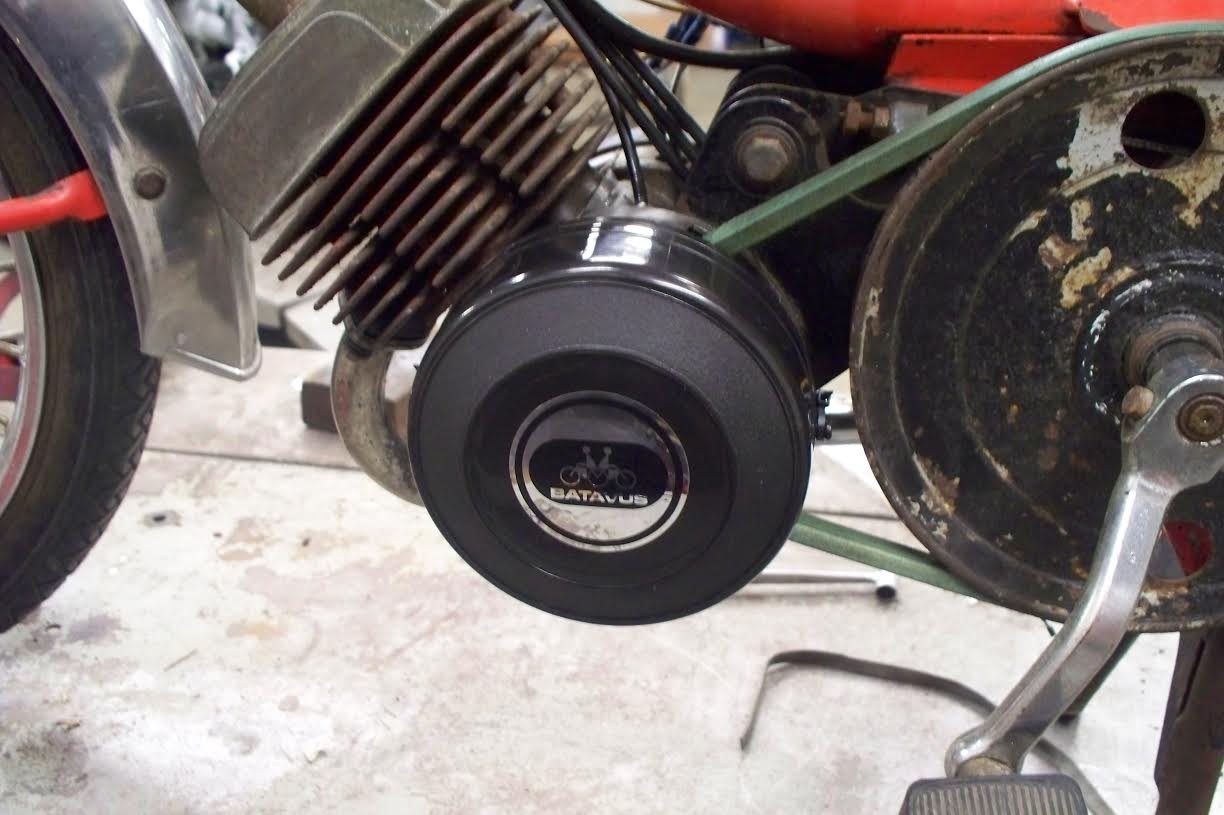
 

Where else to get Jawa moped information

Jawamoped.hu has more useful information and photos. Translate from Hungarian.

http://jawamoped.hu/regi/babettahonlap/szereles/b207vaz.htm


Frequently Asked Questions

August 22, 2015

Do you have any 6 volt ignition coils?

No. A 6 volt coil is for a 6 volt battery ignition. The only vehicles that I know of, that have 6 volt ignition coils are vintage ones from before the 1970’s and 80’s. 1980’s and later cars and big motorcycles all have 12 volt ignition coils. Big motorcycles, like cars have “battery ignitions” where the ignition power source is a battery. Small motorcycles and mopeds have “magneto ignitions” where the ignition power source is a generator. The ignition coils for small motorcycles and mopeds do not say any voltage.

Do you have a rebuild kit for my engine?

You cannot accurately guess what it needs. You will need to get a tech person to:
1. Get the engine unfroze
    feel if it has compression, if not then

2. Disassemble and diagnose what is bad

the least might be just piston rings, which I have

    if the crankshaft and cylinder are bad, then it is not worth fixing
I do not have a engine for sale. Generally, you need to find another whole bike to get that. You hopefully won’t need an engine, but you do not know yet. There is not any engine/transmission that I know of that would fit, although people do occasionally put an engine from a different bike. That requires engineering skills and some luck. For any given moped or motorcycle, the engine costs almost as much as a whole bike.

Do you have the original ignition coil for my moped?

Chances are that if you did find the original ignition coil, and put it on, it would still have the same problem. That coil does not have to be the original one. Any ignition transformer coil for a magneto points ignition (not a 6V or 12V battery ignition coil), would function, if the rest of the ignition was good. Read about ignition troubleshooting online and on my website. Get help from a technical person if necessary. Here are the most likely causes of weak or intermittent spark:

Is there an external ignition ground that goes outside to power the brake light, that must be grounded to get spark?

Is there continuity through the points, when they are closed? Or are they “dirty”?

Is the condenser bad, causing heavy sparks to jump across the points?

Do the points even open enough, or is the points cam rusty, and the points wiper worn so there is no gap?

Has the flywheel been put in the wrong position, so that the spark is at the wrong time, and/or weak?

Has anything been changed, like a different flywheel?

These are the likely things, in order of most likely first.